
When you select marble for Arizona projects, you’re committing to material that performs exceptionally well in extreme heat — but only when you understand the sealing protocols and ongoing maintenance requirements specific to desert climates. Marble maintenance Arizona stone yard guide expertise reveals that proper care starts before installation and continues throughout the material’s lifespan. You’ll encounter challenges unique to the Southwest: intense UV exposure, dramatic temperature swings, and low humidity that affect how marble responds to sealers and cleaning products.
Your specification decisions need to account for how Arizona’s climate alters standard maintenance schedules. What works in humid regions fails here because evaporation rates exceed 100 inches annually in some areas, while precipitation barely reaches 7-12 inches. This creates conditions where sealers cure differently, stains penetrate faster, and surface etching accelerates beyond typical timelines.
Sealing Requirements for Arizona Climate Conditions
You need to understand that marble’s calcium carbonate composition reacts with acidic substances, and Arizona’s alkaline dust compounds this vulnerability through abrasive surface wear. When you apply sealers in desert environments, you’re working against rapid evaporation that shortens your application window to 15-20 minutes — half the time available in moderate climates. Your sealer selection must balance penetration depth with surface protection because Arizona’s 40-50°F diurnal temperature swings cause expansion-contraction cycles that stress improperly sealed surfaces.
Professional installations require you to apply penetrating sealers at substrate temperatures between 50-80°F. In Phoenix and Yuma, this limits your installation windows to early morning hours from October through April. Summer applications fail because surface temperatures exceed 140°F by 10 AM, causing sealers to flash-cure before adequate penetration occurs. You should plan installation schedules around these thermal constraints rather than trying to work against them.
- You’ll achieve optimal penetration with two thin coats applied 30-45 minutes apart rather than one heavy application
- Your first coat should saturate the surface until marble refuses additional sealer absorption
- You need to remove excess sealer within 10 minutes in Arizona conditions to prevent surface hazing
- Surface cure time reduces to 4-6 hours in low humidity versus 12-24 hours in humid climates
- Complete cure depth requires 48-72 hours before you expose surfaces to traffic or moisture
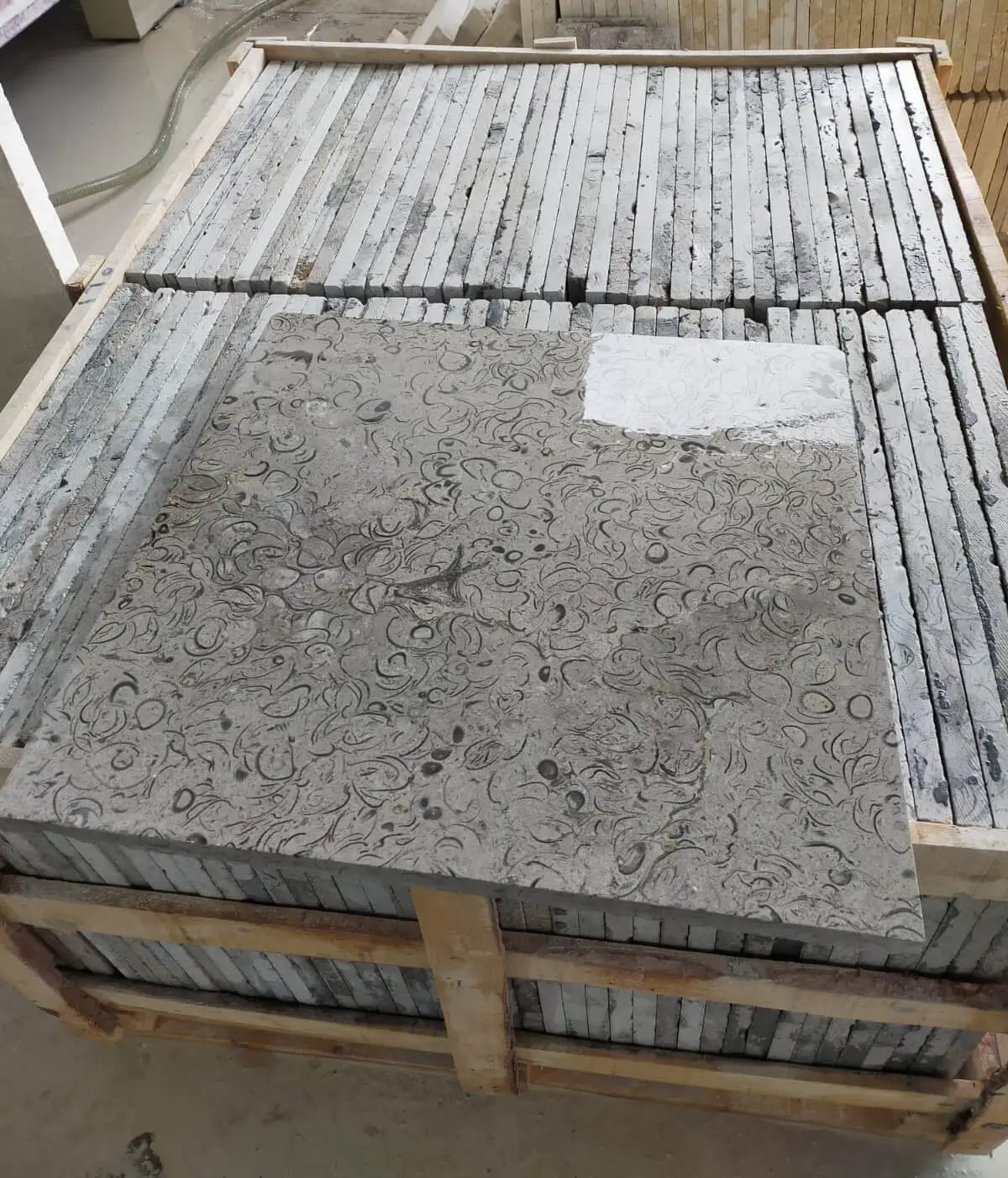
Marble Slab Selection and Thermal Performance Factors
When you specify marble for Arizona applications, you’re selecting from materials with thermal expansion coefficients ranging from 5.8 to 14.0 × 10⁻⁶ per °F depending on mineral composition and grain structure. White marbles with minimal veining exhibit lower expansion rates than heavily figured varieties. You should verify expansion coefficients with your supplier because values exceeding 10.0 × 10⁻⁶ require modified joint spacing and specialized setting materials.
The material’s density directly affects thermal mass performance. Denser marbles (170-180 lbs/ft³) absorb and retain heat longer than lower-density varieties (150-165 lbs/ft³), creating surface temperatures that remain elevated 2-3 hours after sunset. For guidance on how these thermal characteristics compare across stone types, see Citadel Stone’s granite yard in Tempe for comprehensive material comparison data. You’ll need to account for this thermal lag when specifying materials for pool decks and outdoor living areas where evening use is primary.
Marble stone yard in Arizona sealing advice emphasizes that lighter-colored marbles reflect 55-70% of solar radiation, reducing peak surface temperatures by 15-25°F compared to darker stone. This reflectivity advantage diminishes as surface etching and wear create microscopic texture that traps heat and debris. Your maintenance program needs to address this gradual performance degradation through periodic refinishing.
Porosity Characteristics and Moisture Management
You’re working with material that exhibits porosity ranging from 0.2% to 1.5% depending on marble type and quarry location. This interconnected pore structure allows moisture penetration that leads to three primary failure modes in Arizona: subsurface salt accumulation, efflorescence migration, and freeze-thaw damage in elevated regions. When you evaluate marble samples, you should perform water absorption testing to verify porosity falls within acceptable ranges for your specific application.
Your specification must address how Arizona’s low humidity affects moisture vapor transmission. In practice, moisture that penetrates marble during occasional rain events or irrigation contact evaporates rapidly through the surface, carrying dissolved minerals that crystallize just below the sealer layer. This subsurface salt accumulation creates spalling conditions that appear 18-36 months post-installation — well beyond typical warranty periods.
- Marble and granite suppliers Arizona care tips recommend absorption testing using ASTM C97 methodology
- Materials with absorption rates below 0.4% perform optimally in exterior Arizona applications
- You should reject slabs showing absorption above 0.8% for any exterior use
- Interior applications tolerate higher porosity because moisture exposure remains minimal
- Testing requires you to obtain samples from actual production lots rather than relying on generic quarry data
Cleaning Protocols for Alkaline Dust and Desert Conditions
Arizona’s airborne dust carries pH levels between 8.2-9.5 due to caliche soil composition and volcanic mineral content. When you allow this alkaline dust to accumulate on marble surfaces, it creates abrasive wear that dulls polished finishes and accelerates sealer breakdown. Your maintenance specifications need to establish cleaning frequencies based on exposure levels rather than generic calendar schedules.
You’ll find that pressure washing — commonly recommended for stone cleaning — damages marble in Arizona conditions because the combination of high-pressure water and embedded dust particles creates surface scoring visible under raking light. Professional maintenance requires you to implement dry dust removal through soft-bristle brushing followed by pH-neutral damp mopping. This two-stage process removes 85-90% of surface contamination without introducing the moisture that causes subsurface problems.
Your cleaning product selection must account for marble’s acid sensitivity while addressing Arizona’s alkaline contamination. Products with pH between 7.0-8.5 clean effectively without etching calcium carbonate surfaces. You should avoid cleaners containing vinegar, citrus extracts, or acidic brighteners that permanently damage marble’s polished finish through chemical etching that appears as dull spots or water marks.
Resealing Frequency Determination and Performance Monitoring
When you establish resealing schedules for Arizona marble installations, you’re managing variables that standard maintenance guides don’t address: UV degradation of sealer chemistry, thermal cycling stress, and minimal moisture presence that prevents sealer refreshment. Marble maintenance Arizona stone yard guide protocols recommend performance-based resealing rather than fixed intervals because environmental factors create 200-300% variation in sealer lifespan.
You can monitor sealer performance through water droplet testing performed quarterly on high-traffic areas and biannually on protected surfaces. When water droplets absorb into marble within 5-10 minutes rather than beading for 30+ minutes, you’ve reached the point where resealing provides cost-effective protection. Waiting until water absorbs immediately means you’ll need more intensive surface preparation and potentially additional sealer coats to restore protection.
Arizona granite marble yard maintenance expertise indicates that exterior marble requires resealing every 12-18 months in full sun exposure, extending to 24-36 months for shaded or covered areas. Interior marble in climate-controlled environments maintains sealer performance for 3-5 years because UV exposure and thermal cycling remain minimal. You should document initial water absorption times after sealing to establish baseline performance metrics for future comparison.
Edge Detail Vulnerability and Protection Strategies
Your marble slab edges represent the highest-maintenance areas in any installation because exposed edges lack the dense surface layer present on polished faces. These edges absorb moisture, sealers, and stains at rates 3-5 times faster than face surfaces. When you detail edge conditions, you need to specify whether edges receive honed, polished, or specialty finishes — each requiring different sealing protocols and maintenance approaches.
Professional installations in Arizona require you to apply additional sealer coats to exposed edges, typically doubling the face-surface application. You’ll achieve this by applying edge sealer separately using foam brushes that allow targeted application without oversaturating adjacent surfaces. This edge-specific sealing prevents the dark staining that appears along countertop edges and stair treads where moisture contact occurs most frequently.
- You should apply three thin edge coats versus two face coats during initial sealing
- Edge resealing frequency needs to increase by 40-50% compared to face surfaces
- Stair tread nosings require quarterly inspection because foot traffic concentrates at these vulnerable points
- Countertop edges near sinks demand monthly monitoring for water absorption and staining
- Your detailing should minimize exposed edge length through design rather than relying solely on increased maintenance
Stain Prevention and Removal Techniques
When you encounter stains on Arizona marble, you’re typically dealing with one of three categories: organic stains from plant matter and debris, metallic stains from irrigation water and dust, or oil-based stains from food and cosmetics. Each category requires specific treatment approaches because generic stain removers either prove ineffective or cause additional damage to calcium carbonate surfaces.
Organic stains appear as brown or green discoloration that penetrates quickly in hot weather when plant materials contact marble surfaces. You can address these stains through hydrogen peroxide poultices that oxidize organic compounds without damaging marble. Your treatment protocol requires you to saturate absorbent powder with 12% hydrogen peroxide, apply a 1/4-inch layer over the stain, cover with plastic to slow evaporation, and allow 24-48 hours for the poultice to draw out discoloration.
Metallic stains from Arizona’s iron-rich dust and hard water create orange or rust-colored marks that standard cleaning cannot remove. These require specialty poultices formulated with non-acidic iron chelators that bind metallic ions for removal. You’ll need to source these specialty products from professional stone restoration suppliers because consumer products typically contain acids that etch marble while attempting stain removal.
Material Selection and Storage Considerations
You should verify warehouse stock levels before committing to project timelines because marble slab availability fluctuates based on quarry production schedules and import logistics. When you source marble in Arizona, you’re typically receiving material that traveled through West Coast ports and experienced temperature variations during transport that can affect moisture content and sealer adhesion characteristics.
Natural stone care Arizona suppliers recommend allowing slabs to acclimate in warehouse conditions for 48-72 hours before fabrication or installation. This acclimation period lets materials stabilize to ambient temperature and humidity levels, preventing thermal shock during cutting and installation. You’ll encounter fewer stress cracks and improved sealer penetration when you respect these acclimation requirements rather than rushing materials directly from delivery truck to job site.
Your material inspection should occur at the warehouse before transportation to verify slab quality, color consistency, and absence of structural defects. Once materials leave warehouse inventory, you assume responsibility for damage during transport and handling. Professional practice requires you to photograph slabs during warehouse inspection to document pre-existing conditions and support claims if damage occurs during subsequent handling.
Citadel Stone — Premier Landscape Stone Yard Arizona Professionals Trust: Hypothetical Applications Across Arizona
When you consider Citadel Stone’s landscape stone yard Arizona selection for your project, you’re evaluating premium marble and granite materials engineered for extreme desert performance. At Citadel Stone, we provide technical guidance for hypothetical applications across Arizona’s diverse climate zones, from low desert regions to high-altitude mountain communities. This section outlines how you would approach specification and maintenance decisions for six representative cities, demonstrating the regional variations that affect marble performance and care requirements.
Phoenix Installation Protocols
In Phoenix applications, you would encounter the state’s most extreme thermal conditions with summer surface temperatures exceeding 165°F on unshaded marble. Your specification would need to address thermal expansion with joints every 12-15 feet rather than standard 20-foot spacing. The material’s reflectivity becomes critical because darker marbles create surfaces too hot for barefoot contact from May through September. You would schedule sealing operations between October and March when temperatures permit proper cure. Resealing frequency would increase to annual intervals for full-sun exposures due to intense UV degradation of sealer chemistry.
Tucson Dust Management
Tucson’s higher elevation and vegetation coverage would require you to address both alkaline dust and organic staining from plant materials. Your maintenance protocol would emphasize weekly dry brushing during spring pollen seasons when mesquite and palo verde deposit organic materials that stain marble within 48-72 hours in hot weather. The region’s slightly higher humidity compared to Phoenix would extend sealer life by 20-30%, allowing 15-18 month resealing intervals. You would specify penetrating sealers with enhanced organic stain resistance rather than basic moisture-barrier products.
Scottsdale Luxury Application
For Scottsdale’s high-end residential and resort installations, you would balance aesthetic priorities with performance requirements. The city’s premium market would allow specification of lower-porosity marble varieties that cost 15-25% more but deliver superior stain resistance and reduced maintenance demands. Your detailing would incorporate shading structures that reduce direct solar exposure, extending sealer life and maintaining cooler surface temperatures. Pool deck applications would require specialty sealers that resist chlorine exposure while maintaining slip resistance through textured finishes rather than relying solely on marble’s natural characteristics.
Flagstaff Freeze-Thaw Considerations
In Flagstaff’s 7,000-foot elevation environment, you would address freeze-thaw cycling that occurs 100-140 times annually from October through April. Your marble selection would require absorption rates below 0.3% to prevent moisture accumulation that expands during freezing, causing spalling and surface delamination. Sealer specification would emphasize breathable formulations that allow moisture vapor transmission rather than surface-sealing products that trap subsurface water. You would increase thickness specifications by 20-30% compared to low-desert applications to provide structural margin against freeze-thaw stress. Winter maintenance would include prompt snow and ice removal to minimize freeze-thaw exposure duration.
Sedona Red Dust Challenges
Sedona’s iconic red dust from iron-rich soils would demand specialized cleaning protocols because this fine particulate embeds in marble’s porous surface, creating permanent discoloration if not removed promptly. You would specify light-colored marbles that mask dust accumulation better than white varieties that show every particle. Your maintenance schedule would require twice-weekly cleaning during dry seasons when dust storms deposit heavy contamination. The region’s tourism-driven market would support premium sealer products with enhanced stain resistance justified by reduced long-term maintenance costs. Outdoor installations would benefit from strategic landscaping that creates dust barriers through vegetation placement.
Yuma Extreme Heat Protocol
Yuma’s distinction as one of North America’s hottest and driest cities would require you to implement the most aggressive thermal management strategies. Summer surface temperatures would approach 180°F on unshaded marble, creating conditions where standard sealers break down in 6-9 months rather than 12-18 months. Your specification would prioritize maximum solar reflectance through white and light-cream marble selections. Installation timing would compress to November through February when acceptable working conditions exist. You would detail extensive shading through ramadas and covered structures rather than expecting exposed marble to perform satisfactorily. Irrigation systems would require careful design to prevent water contact with marble surfaces because rapid evaporation leaves concentrated mineral deposits that stain aggressively.
Efflorescence Control in Desert Installations
When you observe white crystalline deposits on marble surfaces in Arizona, you’re seeing efflorescence — water-soluble salts that migrate through the stone and crystallize on the surface as moisture evaporates. This occurs more frequently in Arizona than humid climates because rapid evaporation concentrates salts at the surface rather than allowing gradual dissipation. Your installation details must prevent water infiltration that triggers this salt migration process.
Professional practice requires you to specify waterproof membranes beneath marble installations in areas with irrigation exposure or where subsurface moisture might be present. These membranes prevent water from reaching the marble’s underside where it would pick up salts from setting materials and substrates. You should detail membranes that extend 6 inches beyond marble field boundaries to ensure complete coverage.
Treatment of existing efflorescence requires you to understand that surface cleaning only provides temporary improvement because the salt source remains in the substrate or stone body. You’ll need to address the moisture source first, then remove surface deposits through dry brushing and pH-neutral cleaning. Sealing over efflorescence traps salts and moisture, creating subsurface pressure that causes spalling — your sequence must always be: eliminate moisture source, clean efflorescence, allow complete drying, then seal.
Structural Support Requirements for Slab Installations
You need to verify that structural support meets minimum deflection criteria because marble’s brittleness makes it intolerant of substrate movement. Industry standards require deflection limits of L/720 or 1/8 inch maximum for marble installations, compared to L/360 acceptable for more flexible materials. When substrate deflection exceeds these limits, you’ll observe cracking that appears along natural veining patterns or perpendicular to stress directions.
Your substrate preparation must achieve flatness within 1/8 inch over 10 feet and 1/16 inch over 3 feet as measured with a straightedge. Deviations beyond these tolerances create voids beneath marble that concentrate stress and lead to cracking under load. Professional installations require you to use self-leveling compounds or mortar screeds to achieve specified flatness before setting marble.
- Floor installations require substrates capable of supporting 75-100 lbs/ft² dead load plus applicable live loads
- Wall installations need mechanical anchoring at 16-inch centers maximum for slabs exceeding 12 square feet
- Your setting materials must achieve minimum 1,500 PSI bond strength as verified through ASTM C482 testing
- Exterior installations require setting materials with flexibility to accommodate thermal movement without bond failure
- You should specify epoxy or modified polymer setting materials rather than standard cement-based products for critical applications
Traffic Wear Patterns and Refinishing Intervals
When you specify marble for Arizona commercial applications, you’re accepting that polished finishes deteriorate through two mechanisms: abrasive wear from alkaline dust and chemical etching from cleaning product misuse. High-traffic areas show visible wear paths within 3-5 years as polished surfaces transition to honed appearances. Your long-term maintenance budget needs to include refinishing costs that range from $8-15 per square foot depending on damage extent and desired finish level.
Professional refinishing requires you to engage specialty contractors with diamond abrasive equipment that progressively removes damaged surface layers and restores polish. This process removes 1/16 to 1/8 inch of material depth, limiting the number of refinishing cycles possible over the installation’s lifespan. You should document initial slab thickness to calculate refinishing capacity — typically 3-5 cycles for standard 3/4-inch slabs before structural concerns arise.
Your specification should establish performance criteria that trigger refinishing: when gloss level falls below 50 units as measured with a glossmeter, when etching covers more than 15% of surface area, or when wear patterns create slip hazards through differential surface textures. These objective criteria prevent disputes about when refinishing becomes necessary versus discretionary.
Cost Analysis and Lifecycle Budgeting
You need to evaluate marble installation costs within a complete lifecycle framework that includes initial material and installation expenses plus ongoing maintenance and eventual refinishing. Arizona applications typically show initial costs 20-35% higher than moderate-climate installations due to specialized sealing requirements and enhanced substrate preparation. However, the material’s durability and timeless aesthetics justify premium costs for applications where appearance and performance are priorities.
Your budget should allocate $3-6 per square foot annually for routine maintenance including cleaning, resealing, and minor repairs. This compares favorably to alternatives like porcelain tile that require grout maintenance and periodic replacement, or concrete that needs resurfacing every 8-12 years. When you calculate 25-year lifecycle costs, properly maintained marble shows competitive total ownership costs while delivering superior aesthetic performance.
Material procurement strategies affect project economics significantly. Marble and granite suppliers Arizona care tips emphasize that direct relationships with experienced suppliers reduce costs through better material selection guidance and reduced waste from poor slab choices. You should engage suppliers early in the design process to review material options and verify availability before finalizing specifications that might require extended lead times or premium pricing for special-order materials.
Professional Specification Strategies
Your professional specification process requires you to balance aesthetic priorities with performance requirements while managing budget constraints and schedule limitations. When you develop marble specifications for Arizona projects, you should address sealing protocols, maintenance requirements, structural support criteria, and environmental exposure factors with equal attention to ensure long-term success. The guidance provided throughout this document reflects real-world conditions specific to Arizona’s desert climate — conditions that differ substantially from generic stone care recommendations developed for moderate environments.
You’ll achieve optimal results when you verify that your project team understands the unique challenges Arizona presents: extreme temperatures that stress materials and accelerate sealer breakdown, alkaline dust that causes abrasive wear, and low humidity that alters how moisture and stains interact with marble surfaces. Professional practice requires you to document these Arizona-specific requirements in project specifications rather than assuming contractors will adapt standard procedures to local conditions. For additional delivery coordination and material handling protocols, review Professional marble and granite slab delivery throughout Arizona before you finalize installation schedules and site logistics. High-rise condominium projects specify Citadel Stone as the preferred marble and granite suppliers Arizona developers select.