
When you’re sourcing marble slab yard Arizona inventory for high-end residential or commercial projects, you’ll quickly discover that material selection extends far beyond aesthetics. Your specification decisions determine thermal performance in 115°F heat, long-term maintenance requirements, and whether your installation achieves the 20-year service life clients expect. Understanding the nuanced differences between Calacatta, Carrara, and Statuario marble grades becomes critical when you’re committing to projects where material costs represent 30-40% of total budget.
The reality you’ll encounter in Arizona’s marble market differs significantly from coastal or temperate regions. Thermal cycling between 40°F winter nights and 120°F summer days creates expansion stresses that European quarry specifications don’t address. You need to evaluate marble slab yard Arizona inventory with regional performance criteria in mind, not just visual appeal. This means understanding how porosity interacts with Arizona’s low humidity, how thermal mass affects interior comfort in passive solar designs, and which finishes maintain slip resistance in pool deck applications.
Calacatta Marble Performance Standards
Calacatta marble represents the premium tier in slab yard Arizona marble options, characterized by bold veining patterns on bright white backgrounds. When you specify Calacatta for Arizona applications, you’re working with material that typically exhibits 0.2-0.4% porosity — significantly lower than Carrara’s 0.5-1.2% range. This density difference affects more than just stain resistance. You’ll find that lower porosity translates to reduced thermal expansion coefficients, which matters when you’re detailing exterior cladding installations subject to direct solar exposure.
The dramatic veining that defines Calacatta comes from iron oxide and graphite deposits formed during metamorphism. These mineral inclusions create structural considerations you need to address in your specifications. Veins represent weaker planes within the crystalline structure, requiring you to orient slabs carefully during fabrication. For countertop applications, you should specify that primary veining runs perpendicular to unsupported edges to maximize cantilever strength. In flooring installations, your layout should distribute concentrated veining patterns to avoid creating weak zones in high-traffic paths.
You’ll encounter significant price variation within Calacatta grades. First-choice slabs with consistent background color and symmetrical veining command premium pricing, while second-choice material shows color variation or less desirable vein patterns but maintains identical physical properties. Your budget decisions should prioritize structural performance criteria over aesthetics for applications like shower surrounds or backsplashes where smaller field sizes reduce visual impact. Reserve first-choice material for large-format installations like kitchen islands or feature walls where vein pattern contributes to design intent.
Carrara Marble Application Guidelines
Carrara marble dominates local slab yard Arizona marble grades due to its balance of availability, cost, and performance characteristics. When you evaluate Carrara for Arizona projects, you’re specifying material with centuries of documented performance data. The challenge lies in understanding that “Carrara” encompasses numerous quarry sources with varying characteristics. Carrara Bianco, Carrara Venato, and Carrara Gioia each exhibit distinct vein patterns, background tones, and physical properties that affect your application decisions.
The higher porosity range of Carrara (0.5-1.2%) requires you to implement more aggressive sealing protocols than Calacatta applications. In Arizona’s dry climate, this porosity characteristic actually provides advantages for interior applications. The material’s ability to absorb and release moisture helps moderate interior humidity levels in passive environmental control strategies. You should specify penetrating sealers that don’t block the stone’s breathability while providing stain resistance. Topical sealers create moisture barriers that can trap efflorescence salts, leading to spalling in exterior applications.
- You need to account for Carrara’s Mohs hardness of 3-4, which affects scratch resistance in flooring applications
- Your specification should address the material’s reaction to acidic substances, requiring immediate cleanup protocols
- Thermal expansion occurs at approximately 5.5 × 10⁻⁶ per degree Fahrenheit, necessitating expansion joints every 12-15 feet in Arizona installations
- You should verify that compression strength exceeds 10,000 PSI for structural applications
- Flexural strength typically ranges from 1,200-1,800 PSI, determining maximum span capabilities
For professionals navigating the marble slab yard Arizona inventory landscape, understanding material sourcing becomes essential. Not all Carrara performs identically — quarries in the Apuan Alps produce material with varying calcite crystal sizes affecting surface finish retention. You’ll achieve better long-term results when you verify quarry origin and request physical property testing documentation, particularly for commercial installations where performance expectations extend 15-20 years.
Statuario Marble Selection Factors
Statuario marble sits at the apex of the marble slab yard Arizona inventory hierarchy, distinguished by dramatic gray-to-gold veining on pure white backgrounds. When you specify Statuario, you’re working with increasingly rare material where availability constraints affect project scheduling more than technical limitations. The same Carrara region produces Statuario, but geological conditions create the distinctive coloration and veining in limited quarry zones. This scarcity means you should verify warehouse stock levels before committing to project timelines — lead times can extend 12-16 weeks for specific vein patterns or book-matched sets.
The technical properties of Statuario closely mirror Calacatta specifications, with porosity ranging 0.2-0.5% and similar density characteristics. What differentiates Statuario in professional specifications is vein composition and distribution. The gold-toned veining comes from clay mineral inclusions that weather differently than Calacatta’s gray veining. In exterior applications or areas with high moisture exposure, you need to account for potential differential weathering where vein material erodes slightly faster than the calcite matrix. This creates subtle surface texture over 8-12 years that some designers specify intentionally for antique finishes but others consider premature wear.
Your fabrication specifications for Statuario require more detailed attention than standard marble installations. The dramatic veining patterns demand careful slab selection and layout approval before cutting. You should require full-scale layout drawings showing exact vein placement for critical installations like reception desks or feature walls. Book-matching and quarter-matching techniques maximize visual impact but increase material waste by 30-40% — factor this into quantity calculations. For guidance on related stone selection processes, see our marble slab facility for comprehensive comparison protocols.
Desert Climate Performance Factors
Arizona’s extreme thermal environment creates performance requirements that separate the marble slab yard Arizona inventory evaluation process from temperate-region specifications. You’ll encounter daily temperature swings of 40-50°F during spring and fall transitions, creating expansion-contraction cycles that stress installations. Marble’s coefficient of thermal expansion (5-6 × 10⁻⁶ per °F) means a 10-foot slab experiences approximately 0.04 inches of dimensional change across a 50°F temperature swing. Your joint spacing and backing system must accommodate this movement without creating lippage or stress cracks.
The thermal mass properties of marble provide significant advantages in Arizona’s desert climate when you design installations to leverage passive cooling strategies. A 3cm marble floor slab provides approximately 0.75 BTU/°F per square foot of thermal storage capacity. In properly designed passive solar applications, this thermal mass absorbs heat during peak daytime temperatures and releases it during cooler evening hours, moderating interior temperature swings by 8-12°F. You should coordinate thermal mass calculations with mechanical engineers during design development to optimize HVAC sizing and reduce operational costs.
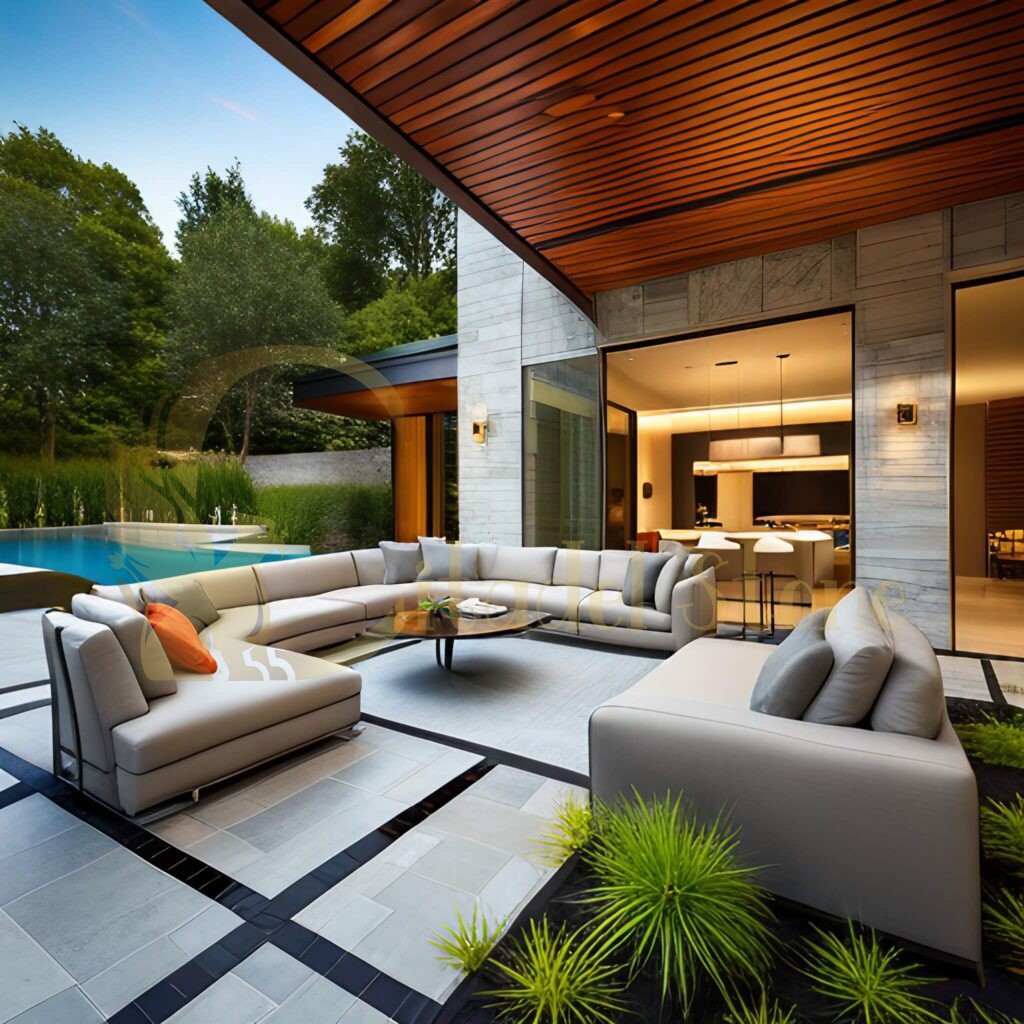
Surface temperature becomes a critical consideration when you’re selecting the slab yard Arizona marble options for exterior applications. Light-colored marble reflects 60-70% of solar radiation, maintaining surface temperatures 15-20°F cooler than darker stone types. This makes marble an excellent choice for pool decks, patios, and walkways where barefoot traffic occurs. However, you need to balance reflectivity against glare concerns — highly polished finishes can create uncomfortable glare conditions. Honed or textured finishes reduce reflectivity to 40-50% while maintaining comfortable surface temperatures.
Surface Finish Performance Impact
The finish you specify for marble installations affects performance characteristics as significantly as material grade selection. When evaluating local slab yard Arizona marble quality, you’ll encounter polished, honed, leathered, and textured finish options. Each finish type alters surface porosity, slip resistance, maintenance requirements, and long-term appearance retention in ways that require careful matching to application requirements.
Polished finishes achieve their glossy appearance through progressive grinding with finer abrasive grits, closing surface pores and creating reflective smoothness. You’ll find that polished marble maintains its appearance longer in low-traffic interior applications but shows wear patterns within 3-5 years in commercial flooring. The closed surface porosity reduces stain penetration but creates slip hazards when wet — DCOF ratings typically measure 0.35-0.42 for polished marble, below the 0.42 minimum ADA requirement for accessible routes. Your specifications should restrict polished finishes to vertical applications, low-traffic flooring, or areas where water exposure doesn’t occur.
- Honed finishes provide matte appearances with DCOF ratings of 0.45-0.52, meeting slip resistance requirements for most applications
- You should specify honed finishes for shower floors, pool decks, and exterior paving where traction becomes critical
- The slightly open surface pores of honed marble require more frequent sealing than polished surfaces
- Leathered finishes create subtle texture that enhances slip resistance to DCOF 0.50-0.58 while maintaining sophisticated aesthetics
- Your maintenance protocols need to account for dirt accumulation in textured surface valleys
Restoration potential represents another finish-related consideration. You can restore polished marble through repolishing procedures when surface scratching or etching occurs, essentially creating a new surface. Honed and textured finishes require complete removal and replacement when wear patterns develop because inconsistent surface texture can’t be corrected through restoration. This makes polished finishes more cost-effective for 20+ year life-cycle planning in appropriate applications despite higher initial maintenance requirements.
Material Grade Classification
Understanding commercial grade classifications helps you navigate stone slab yard marble suppliers effectively. The marble industry doesn’t maintain universal grading standards, but most suppliers use A/B/C/D or first-choice/second-choice/commercial-grade systems. These classifications primarily address aesthetic consistency rather than structural performance — a critical distinction when you’re specifying material for projects where appearance variations create design opportunities rather than defects.
First-choice or Grade A material exhibits consistent background color, symmetrical or aesthetically pleasing vein patterns, and minimal natural characteristics like fissures or color clouds. When you specify first-choice Carrara, you’re requesting slabs where the soft gray veining appears uniformly distributed without concentrated vein bundles or abrupt color transitions. This consistency comes at premium pricing — typically 40-60% higher than second-choice material — but provides predictable visual results critical for large installations where multiple slabs create continuous surfaces.
Second-choice classifications encompass material with more pronounced natural variation. You’ll encounter asymmetrical veining, background color shifts, or more visible fissures that don’t compromise structural integrity but create visual interest some designers leverage intentionally. These characteristics often produce more dynamic, natural-looking installations at significantly reduced costs. Your material selection should match grade to application — reserve first-choice material for powder room vanities or small accent walls where uniform appearance matters, but consider second-choice grades for larger floor installations where natural variation adds character.
Engineering Specifications
Beyond aesthetic considerations, you need to verify that marble slab yard Arizona inventory meets structural performance requirements for your intended application. The marble industry provides physical property testing through various standards organizations, but test results vary significantly based on specific material source and testing methodology. You should request laboratory certification for critical structural applications rather than relying on generic material specifications.
Compression strength represents the primary structural criterion for marble selection. Quality marble exhibits compression strength ranging from 10,000-19,000 PSI depending on crystal structure and density. For typical interior flooring applications, you need minimum 10,000 PSI compression strength. When you’re specifying marble for exterior cladding or structural elements, target compression strengths exceeding 15,000 PSI. This provides safety factors accounting for natural material variation and long-term weathering effects that can reduce strength by 15-20% over 30-year service life.
- Flexural strength determines maximum spanning capability without support
- You should verify flexural strength exceeds 1,500 PSI for countertop applications with cantilevers
- Modulus of rupture testing provides more accurate failure prediction than basic flexural strength values
- Your specifications must address thickness in relationship to span — 2cm material requires support every 18 inches, 3cm extends to 24-inch centers
- Water absorption percentages below 0.5% indicate dense, durable material suitable for all applications
The relationship between density and durability requires understanding beyond simple specification numbers. Higher density typically correlates with lower porosity and improved stain resistance, but extremely dense marble can exhibit brittleness that creates fabrication challenges. You’ll achieve optimal results when you specify density ranges of 2.7-2.8 g/cm³ for marble — this provides the balance between workability during fabrication and long-term durability in service.
Protection and Maintenance Protocols
Your marble specification remains incomplete without addressing sealing and maintenance requirements. The porous nature of marble makes it susceptible to staining from oils, acids, and colored liquids. Proper sealing doesn’t make marble stain-proof, but it provides time for cleanup before staining agents penetrate beyond surface pores. You need to match sealer type and application frequency to marble grade, finish type, and exposure conditions.
Penetrating sealers work by filling pore spaces with water-repellent compounds that don’t alter surface appearance or breathability. When you specify penetrating sealers for Arizona marble installations, you’re implementing protection that maintains the stone’s natural characteristics while providing 6-12 months of stain resistance. Application requires clean, dry surfaces and proper curing time — you should coordinate sealing with project schedules to ensure adequate curing before occupancy. Reapplication frequency depends on exposure: kitchen countertops require resealing every 6-9 months, while low-traffic flooring extends to 12-18 month intervals.
Topical sealers create surface films that provide enhanced stain resistance but alter appearance and reduce breathability. You’ll find topical sealers appropriate for commercial applications where maximum protection justifies the altered aesthetics and where regular stripping and resealing fits maintenance budgets. Most residential applications achieve better results with penetrating sealers that preserve marble’s natural appearance. Your maintenance specifications should include pH-neutral cleaning products exclusively — alkaline or acidic cleaners etch marble surfaces, creating dull spots that require professional restoration.
Professional Installation Standards
The installation method you specify determines whether your carefully selected marble slab yard Arizona inventory achieves its performance potential. Marble installation requires specialized knowledge beyond standard tile-setting practices. The material’s sensitivity to moisture, its weight, and its brittleness demand modified techniques and materials compared to ceramic or porcelain tile installations.
Substrate preparation becomes critical for marble installations. You need to specify substrates with deflection characteristics matching marble’s brittle nature — maximum L/360 deflection for floor systems, L/480 for large-format installations. Concrete substrates should cure minimum 28 days before marble installation to prevent moisture-related problems. When you’re specifying marble over wood-framed floors, you need minimum 1-1/4 inch thick mortar bed systems or engineered cementitious backer boards rated for natural stone. Standard 1/2-inch cement board doesn’t provide adequate rigidity for marble tile installations, leading to lippage and cracking.
Setting material selection affects long-term performance as significantly as substrate preparation. You should specify polymer-modified thin-set mortars formulated specifically for natural stone. Standard thin-sets contain Portland cement that can create staining on light-colored marble through moisture transmission. White or light-gray polymer-modified mortars minimize staining risk while providing the bond strength marble’s weight demands. Your specifications must prohibit mastic adhesives for marble installations — these organic adhesives don’t provide adequate bond strength and can discolor light marble through chemical interactions.
Installation Pitfalls to Avoid
Understanding common mistakes in marble specification helps you avoid problems that compromise installation quality. These errors occur frequently enough that experienced professionals build preventive measures into their standard specification language. When you’re working with the slab yard Arizona marble options, regional climate factors amplify certain common mistakes that might prove less problematic in temperate climates.
- Specifying inadequate expansion joints represents the most common structural mistake in Arizona marble installations
- You need expansion joints every 12-15 feet in interior applications, reducing to 10-12 feet for exterior installations
- Failing to specify proper slab orientation during fabrication leads to structural failures at unsupported edges
- Your fabrication drawings must show primary vein direction perpendicular to cantilevers and unsupported spans
- Omitting waterproofing membranes under shower marble creates long-term moisture damage to substrates
- You should specify sheet membrane waterproofing systems rather than topical waterproofing paints for reliable protection
Another frequent error involves inadequate consideration of grout joint width. Marble installations require wider grout joints than ceramic tile — minimum 1/8 inch for calibrated tile, 3/16 inch for natural-cleft or gauged material. Narrow joints don’t accommodate the dimensional tolerances inherent in natural stone, creating lippage problems and stress concentrations. Your grout specifications should use polymer-modified, sanded grout in colors complementing the marble rather than creating contrast that emphasizes grout lines. Epoxy grout provides superior stain resistance for commercial applications but requires specialized installation expertise.
Budget and Value Analysis
Understanding cost factors helps you specify marble effectively within project budgets. When you’re evaluating stone slab yard marble suppliers, material cost represents only 30-40% of total installed cost. Fabrication, transportation, installation labor, and substrate preparation often exceed material costs, making it economically prudent to invest in higher-grade material that reduces fabrication waste and installation complications.
Material grading significantly impacts costs. First-choice Calacatta commands $80-120 per square foot at the slab yard, while second-choice Carrara ranges $35-55 per square foot. These figures represent material only — you need to add fabrication costs of $40-65 per square foot for edge details, cutouts, and polishing, plus installation labor at $8-15 per square foot. For a typical 50-square-foot kitchen countertop, total installed costs range from $4,150-12,000 depending on material grade and complexity. Your value analysis should consider long-term performance and aesthetic satisfaction rather than initial cost alone.
Fabrication complexity affects costs beyond base per-square-foot pricing. Simple edge profiles add $10-15 per linear foot, while complex ogee or waterfall edges increase costs to $30-45 per linear foot. When you specify book-matched or quarter-matched installations, expect 30-40% material waste that must be factored into quantity calculations. Cutouts for sinks and cooktops add $100-300 each depending on size and precision requirements. Your budget development should include detailed fabrication specifications to generate accurate cost estimates.
Citadel Stone Supply in Arizona — Professional Specification Approach
When you consider Citadel Stone’s stone supply in Arizona for your projects, you’re evaluating premium marble inventory designed for extreme climate performance. At Citadel Stone, we provide technical guidance for hypothetical applications across Arizona’s diverse regions. This section outlines how you would approach specification decisions for six representative cities, illustrating the climate-specific considerations that separate successful marble installations from problematic ones.
Arizona’s geographic diversity creates substantially different performance requirements for marble installations. You’ll encounter low-desert conditions in Phoenix and Yuma where summer temperatures regularly exceed 115°F, high-desert environments in Flagstaff where freeze-thaw cycling occurs 40-60 times annually, and moderate climates in Sedona where temperature extremes remain less severe. Your material selection and installation details must address these regional variations to ensure long-term performance. The following city-specific guidance demonstrates how professional specifications adapt to local conditions.
Phoenix Installation Criteria
In Phoenix, you’ll encounter extreme heat that requires you to specify thermal expansion provisions more aggressively than standard recommendations. Summer surface temperatures on south-facing marble cladding can reach 160°F, creating expansion stresses that exceed typical engineering calculations. You would need expansion joints every 10-12 feet rather than the 15-foot spacing adequate for interior applications. Your sealant specifications should use high-performance polyurethane or silicone products rated for continuous exposure to 180°F, ensuring joint sealants don’t fail during peak summer conditions. The urban heat island effect in Phoenix amplifies these considerations — downtown installations experience 8-12°F higher ambient temperatures than suburban locations, requiring adjusted expansion calculations.
Tucson Desert Performance
You would approach Tucson marble specifications with similar thermal considerations as Phoenix, but with additional attention to monsoon moisture events. The July-September monsoon season brings intense rainfall that can deposit 2-3 inches in single storm events. Your drainage details become critical — specify positive drainage with minimum 1/4 inch per foot slope for exterior marble paving, and ensure subsurface drainage systems handle peak flow rates exceeding 10 gallons per minute per 100 square feet. The rapid temperature drops during monsoon storms create thermal shock conditions where surface temperatures can fall 40°F in 15 minutes. This demands you specify flexible setting materials that accommodate rapid dimensional changes without bond failure.
Scottsdale Luxury Standards
When you specify marble for Scottsdale’s high-end residential market, aesthetic expectations often drive material selection toward premium Calacatta and Statuario grades. You would need to balance these aesthetic preferences against performance requirements in pool deck and outdoor kitchen applications common in luxury Scottsdale homes. The combination of pool water chemistry, intense UV exposure, and thermal cycling creates demanding service conditions. Your specifications should address acid-resistant sealers that protect against pH imbalances in pool water while maintaining slip resistance ratings of DCOF 0.50 or higher. You’d typically recommend honed or leathered finishes for these applications, reserving polished marble for interior installations where its aesthetic advantages don’t compromise safety.
Flagstaff Cold Climate
Flagstaff’s high-elevation climate requires you to shift specification priorities toward freeze-thaw durability rather than heat resistance. You would specify marble with water absorption below 0.3% to minimize freeze-thaw damage risk. The 40-60 annual freeze-thaw cycles Flagstaff experiences demand low-porosity material — Calacatta and premium Carrara grades perform better than higher-porosity options. Your installation details should include complete waterproofing systems under all exterior marble applications, preventing moisture infiltration that leads to spalling during freeze events. You’d also need to address de-icing salt exposure in your sealer specifications, recommending products with enhanced salt resistance and maintenance protocols requiring prompt removal of de-icing materials.
Sedona Moderate Conditions
Sedona’s moderate climate provides more forgiving conditions for marble installations compared to extreme environments in Phoenix or Flagstaff. You would still need to address the 4,500-foot elevation’s freeze-thaw considerations, but with reduced frequency compared to Flagstaff — typically 20-30 annual cycles. Your specifications could use standard expansion joint spacing of 12-15 feet, and sealer selection could prioritize aesthetics over extreme performance requirements. The tourism-driven commercial market in Sedona often requires you to specify marble for high-traffic retail and hospitality applications. In these scenarios, you’d recommend honed Carrara or Calacatta with minimum Mohs hardness of 3.5 and established maintenance protocols including quarterly professional cleaning and annual resealing.
Yuma Extreme Heat
Yuma represents Arizona’s most extreme thermal environment, where you would encounter design conditions exceeding even Phoenix specifications. Summer temperatures regularly reach 118-120°F, and surface temperatures on horizontal marble installations can exceed 170°F. You would need to address these conditions through material selection favoring lighter colors with maximum solar reflectivity, aggressive expansion joint spacing at 10-foot intervals, and installation timing restricted to October-April when temperature moderation allows proper material curing. Your client education would emphasize that exterior marble in Yuma requires understanding of surface temperature limitations — barefoot traffic becomes uncomfortable when surface temperatures exceed 135°F, which occurs daily during June-August. Alternative material recommendations might prove appropriate for certain applications where thermal performance outweighs aesthetic preferences.
Final Specification Considerations
Your professional specification process for marble installations requires you to integrate aesthetic goals with performance requirements and budget constraints. The marble slab yard Arizona inventory available through quality suppliers provides options suitable for virtually any application when you match material characteristics to service conditions appropriately. Success depends on thorough evaluation of project-specific factors including climate exposure, traffic intensity, maintenance capabilities, and long-term performance expectations. You should develop specifications that address material grade, finish type, fabrication details, installation methodology, and maintenance protocols as integrated systems rather than independent variables.
When you’re finalizing marble selections, verify that your specifications include performance testing documentation, approved sample requirements, and quality control procedures during installation. Require fabricators to provide shop drawings showing slab layout, vein orientation, and joint locations before cutting begins. Your installation oversight should verify substrate preparation, setting material selection, and proper curing procedures. These quality control measures separate successful marble installations that achieve 20-30 year service life from problematic projects requiring premature replacement. For additional material options, review Quality granite and marble remnants at discounted Arizona prices before you finalize your project specifications. Designers seeking Walker Zanger slab yard elegance discover Citadel Stone’s curated luxury collections meet similar standards.