
When you’re sourcing wholesale paver stones Arizona direct import options for your commercial or residential projects, you face a critical decision that affects both your budget and material quality. You need to understand the real differences between direct import channels and local quarry sourcing — not just the surface-level pricing, but the complete supply chain implications that determine project success.
The wholesale paver market in Arizona operates through two primary channels: direct import from international quarries and domestic regional quarries. Your choice between these channels affects lead times, quality consistency, pricing structure, and long-term material availability. Most specifiers focus exclusively on unit pricing, but you’ll find that warehouse logistics, truck access requirements, and minimum order quantities create hidden cost variables that can shift project economics by 15-25%.
Direct Import Supply Chain Mechanics
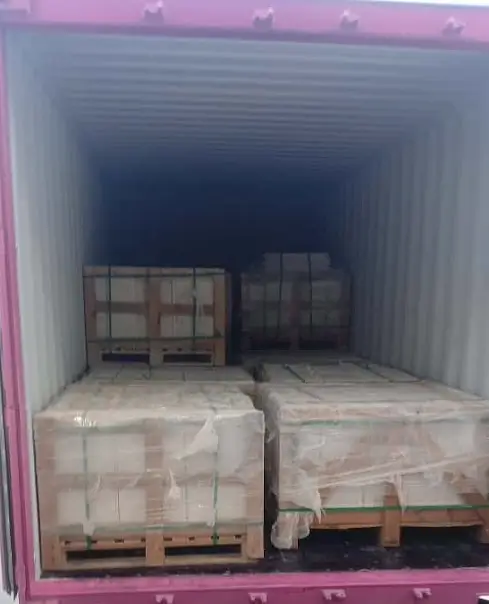
You should understand how international supply chains actually work before you commit to wholesale paver stones Arizona direct import programs. Direct import involves container shipping from quarries in India, Turkey, China, or Europe — typically 6-10 week lead times from order placement to warehouse delivery. Your project timeline needs to accommodate this lag, plus an additional 1-2 weeks for customs clearance and domestic truck transport.
The advantage you gain with direct import centers on material selection breadth. International quarries offer stone varieties unavailable from Arizona stone wholesalers quarry sourcing, including specific limestone densities, granite compositions, and sandstone colors that regional geology simply doesn’t produce. When you specify exotic materials or need precise aesthetic matches, direct import often provides your only viable option.

Container economics drive direct import pricing structures. You’ll encounter minimum order quantities of 20-40 tons per material type — full container loads that optimize shipping costs. This creates challenges when you need mixed pallets or smaller quantities for specialty applications. Your warehouse capacity and project scheduling must align with these volume requirements, or you’ll face partial container surcharges that eliminate cost advantages.
Regional Quarry Sourcing Advantages
Arizona stone wholesalers quarry sourcing from domestic operations provides distinct logistical benefits that often outweigh pricing differentials. You get 3-7 day lead times from order to delivery, with flexibility for partial loads and mixed material orders. When you’re managing fast-track projects or need just-in-time delivery coordination, regional quarries offer responsiveness that container shipping can’t match.
Local quarry relationships also provide quality verification advantages. You can visit the quarry, inspect material runs, and verify dimensional tolerances before you commit to large orders. This hands-on assessment reduces specification risk — you’ll avoid the unpleasant surprises that sometimes arrive in sealed containers after 8-week ocean transport.
- You gain immediate access to replacement materials if you encounter breakage or specification changes mid-project
- Your truck delivery scheduling flexibility improves dramatically with 200-mile radius sourcing versus international shipping
- You can request custom sizing and finishing for orders above 10 tons without the lead time penalties of international communication
- Regional quarries typically stock 4-6 month inventory, providing supply continuity that protects your project schedule
The limestone wholesale pricing transparency Arizona market demonstrates how regional sourcing simplifies cost analysis. You’ll receive straightforward per-ton pricing without the container freight variables, customs duty calculations, and currency exchange fluctuations that complicate direct import budgeting.
Cost Analysis Framework for Wholesale Paver Stones Arizona Direct Import
Your true cost comparison requires you to account for complete landed costs, not just quoted material pricing. Direct import wholesale paver stones Arizona direct import programs quote FOB (Free On Board) pricing at origin port. You need to add container freight, port handling, customs duties, inland truck transport, and warehouse handling to reach actual delivered cost per ton.
Here’s what this calculation looks like in practice: A Turkish limestone quote at $850/ton FOB may carry $180/ton container freight, $45/ton port and customs fees, and $65/ton inland truck delivery. Your actual landed cost reaches $1,140/ton — 34% above the initial quote. Arizona stone wholesalers quarry sourcing quotes typically include delivery to your warehouse within 200 miles, providing clearer budget certainty.
You also need to factor inventory carrying costs. Direct import minimum quantities often exceed immediate project needs, requiring you to warehouse excess material for 3-9 months. At 0.8-1.2% monthly carrying cost (warehouse rent, insurance, shrinkage), this adds 2.4-10.8% to material costs depending on turnover rates. Regional quarry orders sized to project requirements eliminate this inventory burden.
Quality Consistency Variables
When you evaluate stone wholesaler supply chain Arizona options, you’ll encounter significant quality variance patterns between import and regional sources. International quarries often process material for multiple global markets simultaneously, creating batch-to-batch variations in dimensional tolerances, surface finishing, and color consistency. Your specification compliance depends on clear quality agreements and third-party inspection protocols.
Container mixing represents a common quality challenge with wholesale paver stones Arizona direct import. To optimize container economics, some importers mix multiple quarry runs or even different quarry sources in single shipments. You might receive pavers from three different production runs with subtle color shifts that become obvious after installation. Your purchase agreements should specify single-run sourcing with detailed lot tracking.
Regional Arizona quarries typically provide more consistent material because they’re drawing from geologically uniform deposits processed through standardized equipment. You’ll see less variation between orders placed six months apart. For projects requiring material additions or future repairs, this consistency proves valuable — you can source matching pavers years after initial installation.
Lead Time and Project Scheduling Implications
Your project timeline often determines whether wholesale paver stones Arizona direct import makes practical sense. Fast-track commercial projects with 12-16 week construction schedules can’t accommodate 10-12 week material procurement cycles. You need regional sourcing with 7-10 day delivery windows to maintain schedule integrity.
Even on longer-timeline projects, you’ll encounter situations where lead time flexibility matters. Design changes, quantity adjustments, and unforeseen site conditions require adaptive material procurement. When you’re locked into container orders with 8-week replenishment cycles, these adaptations become costly and schedule-disruptive.
For large-scale developments where you’re sourcing materials across 18-24 month construction phases, direct import can work effectively. You establish regular container shipping schedules, maintain warehouse inventory, and amortize logistics costs across high volumes. This approach requires sophisticated inventory management and demand forecasting — capabilities that separate professional stone wholesaler supply chain Arizona operations from opportunistic importers.
Limestone Wholesale Pricing Transparency Arizona Standards
The Arizona market has evolved toward increased pricing clarity, but you’ll still find significant variation in how wholesalers structure costs. Limestone wholesale pricing transparency Arizona practices should provide you with clear breakdowns of material cost, processing charges, delivery fees, and any minimum order requirements.
Direct import pricing suffers from inherent opacity due to multiple cost layers. You’re dealing with foreign currency transactions, variable container freight rates (which fluctuate 30-40% based on global shipping demand), and customs duty calculations that depend on material classification codes. Even experienced importers struggle to provide firm pricing more than 45-60 days in advance.
Regional quarry pricing offers more stability. You’ll receive per-ton quotes that remain valid for 90-120 days, with clear delivery terms and straightforward quantity breaks. This predictability helps you manage project budgets and avoid the unpleasant conversations with owners when material costs exceed estimates by 18-22% due to freight surcharges or currency shifts.
Warehouse and Logistics Considerations
When you commit to wholesale paver stones Arizona direct import programs, you need to address warehouse and truck logistics before that first container arrives. Container deliveries require truck access for 53-foot chassis trailers, loading dock or forklift capacity for 20-26 ton loads, and warehouse space for 600-800 square feet of palletized material per container.
Many Arizona project sites lack the infrastructure for direct container delivery. You’ll need to coordinate with warehouse facilities that can receive, break down, and redistribute material in smaller truck loads sized to job site access constraints. This adds handling steps and costs — typically $45-75/ton for warehouse services that include unloading, inventory management, and job site delivery coordination.
Regional quarry sourcing provides more flexible truck delivery options. You can order partial loads sized to your truck access limitations and receive material in 10-15 ton shipments that standard flatbed trucks handle easily. This flexibility reduces site logistics complications and eliminates the warehouse intermediary costs that wholesale paver stones Arizona direct import often requires.
At Citadel Stone, we maintain warehouse facilities designed specifically for container receiving and job site distribution. Our approach addresses the logistics gap that complicates direct import for most contractors and landscape architects. You get the material selection advantages of international sourcing with the delivery flexibility of regional operations.
Minimum Order Quantity Impacts
You need to understand how minimum order quantities affect project economics and scheduling. Wholesale paver stones Arizona direct import typically requires full container commitments — 20-24 tons for 20-foot containers, 40-48 tons for 40-foot containers. These minimums work well for large commercial developments but create challenges for residential projects or phased installations.
Your options for addressing minimum quantities include consortium buying (pooling orders with other projects), warehouse inventory programs (where distributors maintain stock), or accepting mixed material containers. Each approach involves trade-offs. Consortium buying requires precise scheduling coordination. Warehouse programs add distributor margins of 15-25%. Mixed containers introduce the quality consistency issues discussed earlier.
Regional Arizona quarries typically accommodate orders as small as 5-10 tons without significant price penalties. You maintain procurement flexibility and can adjust quantities as projects progress. For design-build work where final quantities aren’t determined until construction begins, this flexibility often outweighs any per-ton cost advantages that wholesale paver stones Arizona direct import might offer.
Material Selection Breadth and Specifications
The strongest argument for wholesale paver stones Arizona direct import centers on material selection. International quarries provide access to stone varieties that regional geology doesn’t produce. When you’re specifying particular limestone densities, granite colors, or sandstone textures for aesthetic or performance requirements, direct import may offer your only sourcing option.
You’ll find that Indian limestone quarries produce materials with compressive strengths ranging from 6,500 to 14,000 PSI across different formations. Turkish travertine offers unique color palettes in cream, beige, and walnut tones. Chinese granite provides dense, low-porosity options for high-traffic applications. Arizona stone wholesalers quarry sourcing focuses primarily on regional sandstones and select limestone formations, which limits your specification palette.
- Direct import provides access to 40-60 distinct stone varieties versus 8-12 options from regional Arizona quarries
- You can source specific geological formations known for particular performance characteristics
- International quarries often offer more extensive custom fabrication capabilities for special sizing or edge details
- You gain specification flexibility for projects requiring material matches to existing installations using imported stone
This material breadth comes with specification challenges. You need detailed geological reports, ASTM testing documentation, and clear performance specifications when you’re sourcing from international quarries. Regional materials typically come with established track records and readily available performance data from similar Arizona installations.
Wholesale Pavers Cost Comparison Phoenix Projects
Your cost analysis needs to account for complete project economics, not just material unit pricing. Wholesale pavers cost comparison Phoenix calculations should include material costs, delivery fees, warehouse handling, inventory carrying costs, and risk factors like schedule delays or quality issues.
Here’s a realistic comparison framework: A Phoenix commercial plaza project requiring 85 tons of limestone pavers can source material through direct import at $920/ton FOB, or regional Arizona quarry at $1,185/ton delivered. The direct import option appears $265/ton cheaper — a $22,525 total savings that looks compelling until you add the complete cost stack.
Direct import additional costs for this project: container freight $12,750, customs and port fees $3,400, inland truck delivery $4,250, warehouse handling for partial deliveries $3,825, inventory carrying for 4-month project duration $2,720. Your total additional costs reach $26,945, turning the apparent $22,525 savings into a $4,420 premium. For detailed guidance on pricing structures, see our contractor pricing program which addresses these complete cost considerations.
Regional quarry pricing includes most of these costs in the delivered per-ton rate. You avoid container minimum quantities, warehouse intermediaries, and extended inventory carrying periods. Your actual project cost often favors regional sourcing despite higher quoted unit pricing — the transparency in limestone wholesale pricing transparency Arizona regional markets provides more accurate budget control.
Supply Chain Reliability and Risk Management
When you evaluate stone wholesaler supply chain Arizona options, you need to assess reliability factors that affect project schedule certainty. International supply chains introduce variables you can’t control: port congestion, customs delays, container availability, ocean freight scheduling, and international logistics disruptions.
Recent supply chain volatility has demonstrated these risks clearly. Container freight rates have fluctuated from $3,200 to $14,500 per 40-foot container over 24-month cycles. Port congestion has extended normal 6-8 week shipping schedules to 12-16 weeks. Currency exchange variations have shifted material costs by 8-15% during procurement cycles. Your project schedules and budgets absorb this uncertainty.
Regional quarry supply chains provide more controllable reliability. You’re dealing with truck transport over 200-400 mile distances, warehouse inventory you can physically verify, and domestic logistics subject to more predictable scheduling. When disruptions occur, you have direct communication and problem-solving access that international supply chains don’t provide.
You should build contingency factors into wholesale paver stones Arizona direct import schedules — add 3-4 weeks to quoted lead times and maintain 15-20% pricing reserves for freight and currency variables. These contingencies reduce the apparent cost advantages that make direct import attractive initially.
Stone Wholesaler in Arizona — Citadel Stone Guidance for Arizona Projects
When you consider Citadel Stone’s position as a stone wholesaler in Arizona, you’re evaluating a company that bridges the gap between direct import material selection and regional supply chain reliability. At Citadel Stone, we maintain warehouse inventory of international materials with the logistics flexibility of regional distribution. This section outlines how you would approach specification decisions for six representative Arizona cities with different climate and project characteristics.
You’ll find that Arizona’s climate diversity requires you to adapt material specifications and sourcing strategies based on regional conditions. Desert heat, elevation variations, and urban heat island effects create performance requirements that affect both material selection and supply chain decisions. Your sourcing strategy should account for these regional factors rather than applying uniform specifications statewide.
Phoenix Commercial Applications
In Phoenix, you’re specifying for extreme heat environments where surface temperatures exceed 165°F on summer afternoons. Your material selection needs to prioritize low thermal absorption and high compressive strength — typically limestone with minimum 8,500 PSI ratings and light color reflectivity. You would source wholesale paver stones Arizona direct import for large commercial projects where 60-100 ton quantities justify container economics. Your base preparation specifications need to account for thermal expansion coefficients of 5.8 × 10⁻⁶ per °F, requiring expansion joints every 12-15 feet in plaza applications. Phoenix truck delivery logistics favor warehouse distribution programs that can deliver 12-18 ton loads sized to urban site access constraints rather than full container deliveries to congested commercial locations.
Tucson Residential Specifications
Your Tucson projects encounter similar heat exposure to Phoenix but often involve smaller residential scales where wholesale paver stones Arizona direct import minimum quantities exceed project requirements. You would specify regional Arizona quarry materials for projects under 25 tons, focusing on sandstones and limestone from formations within 200 miles. Tucson’s slightly higher elevation (2,400 feet) moderates temperature extremes by 4-6°F, allowing you broader material options than Phoenix specifications. You should account for the city’s soil conditions, which include higher caliche content requiring more aggressive base preparation — typically 8-10 inch compacted aggregate bases versus 6-8 inches in other regions.
Scottsdale High-End Design Projects
When you specify materials for Scottsdale’s luxury residential and resort market, aesthetic considerations often drive you toward wholesale paver stones Arizona direct import to access premium international materials. You would source Turkish travertine, Italian limestone, or Indian sandstone for projects where unique color palettes and material exclusivity justify the container minimum quantities and extended lead times. Your specifications for Scottsdale need to address pool deck applications extensively — requiring slip resistance ratings minimum DCOF 0.52 and porosity below 5% to minimize water absorption and chemical interaction. You’ll coordinate warehouse delivery to high-end residential sites with limited truck access, often requiring multiple smaller deliveries rather than single container drops.
Flagstaff Freeze-Thaw Requirements
Your Flagstaff specifications face Arizona’s most demanding freeze-thaw environment at 7,000 feet elevation. You need to specify materials with proven freeze-thaw resistance — typically dense limestone or granite with porosity below 3% and minimum compressive strength 10,000 PSI. You would source wholesale paver stones Arizona direct import for materials meeting these stringent requirements, as regional Arizona quarries produce limited options with adequate freeze-thaw performance. Your installation specifications must address cold-weather construction limitations and extended curing periods for setting beds. Flagstaff’s mountain truck access during winter months affects delivery scheduling — you should coordinate warehouse inventory before November to ensure material availability through the construction season.
Sedona Aesthetic Integration Projects
When you specify materials for Sedona’s red rock landscape context, you face unique aesthetic integration requirements. You would typically source warm-toned sandstones and limestone that complement the regional geology rather than contrast with it. Arizona stone wholesalers quarry sourcing provides natural material matches to local formations, offering visual coherence that imported materials often lack. Your Sedona projects need to navigate strict architectural review standards emphasizing natural material appearance and contextual appropriateness. You should specify tumbled or antiqued surface finishes rather than polished treatments, maintaining texture and color variations that appear naturally weathered. Sedona’s tourism-driven economy creates seasonal construction windows — you’ll coordinate material deliveries for spring and fall installation periods when weather conditions and site access both favor construction activity.
Mesa Value Engineering Applications
Your Mesa projects often involve value engineering requirements where cost optimization drives material selection. You would evaluate both wholesale paver stones Arizona direct import and regional quarry options, performing complete landed cost analysis to identify actual savings opportunities. Mesa’s large-scale residential development market favors standardized material specifications that allow bulk purchasing and consistent installation practices across multiple project phases. You should specify materials with proven Arizona performance track records, minimizing specification risk and installation complications. Mesa’s flat terrain and good truck access make warehouse distribution economical — you can coordinate efficient delivery scheduling sized to construction progress without the site access complications that affect hillside or urban core locations.
Specification Best Practices
Your specification documents need to address sourcing flexibility while maintaining performance standards. Rather than specifying exact quarry sources or import origins, you should define performance criteria: compressive strength minimums, slip resistance requirements, dimensional tolerances, porosity limits, and freeze-thaw testing standards. This performance-based approach allows contractors to source through either wholesale paver stones Arizona direct import or regional quarries, providing cost competition while ensuring quality.
- You should require ASTM C1528 slip resistance testing with minimum DCOF 0.42 for residential applications, 0.50 for commercial
- Your specifications need compressive strength minimums appropriate to application — 6,000 PSI residential, 8,000 PSI commercial vehicular
- You must address porosity limits based on climate exposure — below 5% for freeze-thaw regions, below 8% for general Arizona applications
- Your dimensional tolerance specifications should recognize industry standards — ±3mm thickness, ±2mm length/width for calibrated materials
You’ll find that clear performance specifications reduce disputes and allow value engineering without compromising quality. Contractors gain sourcing flexibility while you maintain control over actual installed performance characteristics.
Procurement Strategy Development
Your procurement strategy should align with project scale, schedule, and budget constraints. Large commercial projects with 12-18 month timelines and quantities above 80 tons justify developing wholesale paver stones Arizona direct import programs with planned container shipments. You establish material specifications early, lock in pricing for container commitments, and coordinate warehouse inventory to support construction phasing.
Smaller projects and fast-track schedules favor regional Arizona stone wholesalers quarry sourcing. You gain procurement flexibility, eliminate warehouse intermediaries, and maintain schedule control. Your cost analysis may show slightly higher material unit pricing, but total project costs often favor regional sourcing when you account for complete supply chain expenses.
Mixed strategies work effectively for many Arizona projects. You might source primary field pavers from regional quarries for quick delivery and schedule certainty, while using wholesale paver stones Arizona direct import for specialty accents, borders, or unique color elements where aesthetic requirements justify extended lead times. This hybrid approach balances cost optimization with schedule and quality risk management.
Making the Sourcing Decision
When you evaluate wholesale paver stones Arizona direct import versus regional quarry options, you need to weigh multiple factors systematically. Your decision framework should assess project scale, timeline requirements, material specification needs, budget constraints, and risk tolerance across supply chain variables.
Projects favoring direct import typically involve large quantities (60+ tons), extended timelines (16+ weeks to installation), specific material requirements unavailable regionally, and organizations with warehouse and logistics management capabilities. You’ll need sophisticated inventory control, container coordination experience, and financial capacity to manage extended payment cycles and potential freight surcharges.
Projects favoring regional sourcing include fast-track schedules (under 14 weeks), smaller quantities (under 30 tons), standard material specifications available locally, and organizations preferring turnkey delivery coordination. You gain schedule certainty, simplified logistics, and cost transparency that facilitate project management and budget control.
Your final sourcing decision should consider the complete project economics and risk profile rather than focusing exclusively on material unit pricing. The lowest quoted per-ton cost rarely translates to lowest total project cost once you account for stone wholesaler supply chain Arizona realities. For comprehensive analysis of pricing structures and sourcing options, review Wholesale pricing structures for natural stone and pavers before you finalize your procurement approach. Arizona landscapers rely on Citadel Stone for hardscape materials including flagstone, pavers, and decorative boulders.