
When you’re sourcing white limestone pavers for your Arizona project, you’re making a decision that affects everything from thermal performance to long-term maintenance costs. The intense desert climate creates unique challenges that transform material selection from a simple aesthetic choice into a critical engineering decision. You need to understand how porosity, thermal mass, and surface finish interact with Arizona’s extreme conditions before you commit to specifications.
Your success depends on more than just picking a light-colored stone. You’ll encounter trade-offs between heat reflectivity and slip resistance, between cost per square foot and lifecycle performance, between local availability and premium imported options. The white limestone pavers Arizona buying guide begins with understanding these relationships in practical terms that affect your project timeline, budget, and client satisfaction.
Thermal Performance Fundamentals
White limestone’s thermal behavior in Arizona climates stems from its crystalline structure and light color, but the real story is more complex than simple albedo measurements. You need to understand that surface temperature depends on three factors working together: solar reflectance (typically 65-75% for white limestone), thermal mass properties, and the material’s ability to shed heat through convection and radiation once the sun drops below peak intensity.
Here’s what catches most specifiers off-guard about thermal performance. The initial surface temperature at 2:00 PM might reach 125-135°F in direct Phoenix sun, but white limestone exhibits a 3-4 hour thermal lag that creates usable evening conditions faster than darker materials. You’ll see surface temperatures drop to 95-105°F by 6:00 PM, while gray granite or dark concrete remains at 115-125°F. This difference matters for pool decks, patios, and any hardscape where barefoot traffic occurs during evening hours.
Your specification should account for thermal expansion coefficients of 5.1-5.8 × 10⁻⁶ per °F for white limestone. In practice, this means you need expansion joints every 15 feet for standard installations, reducing to 12 feet for areas receiving direct solar exposure exceeding 7 hours daily. When you examine how to choose white limestone Arizona installations properly, joint spacing becomes the difference between crack-free performance and service calls within 18 months.
- You should verify that your selected material has documented solar reflectance index (SRI) values above 75 for optimal heat mitigation
- Thermal conductivity ranges from 1.3 to 1.7 W/m·K, providing moderate thermal mass benefits without excessive heat retention
- Your installation timeline must avoid midday placement during summer months when substrate temperatures exceed 140°F
- Surface finish affects thermal performance by 8-12% — honed finishes absorb slightly more heat than polished surfaces

Material Specification Criteria
The white limestone paver selection Phoenix professionals use starts with understanding ASTM C1528 performance requirements, but field conditions demand additional criteria. You’re not just specifying dimensional tolerances and compressive strength — you need to address how porosity, density, and mineralogical composition interact with Arizona’s unique environmental stressors.
Compressive strength should meet or exceed 8,000 PSI for residential applications and 10,000 PSI for commercial installations with vehicular traffic. But here’s the critical detail most specs miss: the relationship between compressive strength and flexural strength determines real-world durability. You want a flexural strength ratio of at least 12-15% of compressive strength. Lower ratios indicate material that may meet load requirements but fails prematurely at edges and corners where stress concentrations occur.
Porosity becomes your primary concern for freeze-thaw performance in Flagstaff and high-elevation applications. You need open porosity between 2-6% for proper moisture management. Below 2%, water absorption becomes insufficient for capillary drainage, leading to subsurface saturation. Above 6%, you risk structural degradation during the 40-60 annual freeze-thaw cycles common in northern Arizona elevations above 5,000 feet.
- Your specification must require water absorption testing per ASTM C97, with results between 1.5-4.5% by weight
- Density should range from 160-175 lbs/cubic foot for structural stability without excessive weight
- You should verify that warehouse inventory includes material from consistent geological formations to avoid color and performance variation
- Slip resistance testing (DCOF) should demonstrate values of 0.50-0.58 for honed finishes and 0.42-0.48 for polished surfaces when wet
Color Consistency and Sourcing
When you specify white limestone for large-area installations, color consistency becomes a procurement challenge that affects both aesthetics and project scheduling. White limestone’s coloration derives from calcium carbonate purity, with variations caused by trace iron oxide, clay minerals, and organic matter present during formation. You’ll encounter natural variation of 10-15% within the same quarry block, and significantly more variation between different blocks or quarry locations.
The buying white pavers Arizona market offers three primary sourcing categories, each with distinct consistency implications. Domestic Indiana limestone provides the most predictable color matching, with variations typically limited to subtle warm-to-cool shifts within the white spectrum. European sources (primarily Portugal and Greece) offer brighter whites but require longer lead times and create inventory management challenges. Turkish limestone provides cost advantages but exhibits wider color variation that you need to account for in your layout strategy.
Here’s the practical reality of color matching across multiple shipments. You should order 15-20% overage for projects requiring color-matched appearance, and you need to specify that all material comes from the same quarry run. Warehouse storage practices affect color consistency as well — material stored outdoors for extended periods can develop surface patina that requires cleaning before installation. When you coordinate deliveries, verify that your supplier can provide material from held inventory rather than mixing old and new stock.
For projects requiring absolute color consistency, you’ll want to inspect full-size samples from the specific blocks designated for your project. Don’t rely on 4×4 inch samples — color variation becomes apparent only when you view 24×24 inch or larger pieces under natural light conditions. Your specification should include provisions for rejection of material that varies more than 15% from approved samples in L*a*b* color space measurements.
Dimensional Tolerances and Fabrication
Professional specifications for white limestone pavers must address dimensional tolerances that accommodate both material characteristics and installation requirements. You’re working with a sedimentary stone that exhibits natural bedding planes and minor geological variations — these create fabrication constraints that differ significantly from manufactured pavers or engineered stone products.
Industry-standard tolerances for gauged white limestone pavers allow ±1/8 inch thickness variation and ±1/16 inch length/width variation. But here’s what you need to understand about how these tolerances stack in real installations. When you’re laying a 400 square foot patio, tolerance stacking can create 3/8 to 1/2 inch height differences across the field if you don’t implement proper setting bed techniques. Your installation specifications should require a minimum 1-inch thick setting bed to accommodate thickness variation without creating trip hazards or drainage problems.
Edge detail specifications affect both aesthetics and long-term performance. You have four primary options, each with specific applications. Saw-cut edges provide the cleanest lines for modern installations but expose the stone’s internal structure, requiring edge sealing in high-moisture environments. Light rock-faced edges create dimensional consistency while maintaining natural texture. Chiseled edges offer traditional appearance but create wider joint requirements (3/8 to 1/2 inch minimum). Pillowed edges provide enhanced slip resistance at perimeters but increase fabrication costs by 30-40%.
- You should specify calibrated thickness for large-format pavers (24×24 inch and larger) to minimize setting bed requirements
- Your drawings must indicate whether material is supplied in random ashlar, modular patterns, or single-size formats
- Fabrication lead times from the warehouse typically range from 2-4 weeks for standard sizes and 4-6 weeks for custom dimensions
- You need to verify that your supplier can provide consistent edge details across the full order quantity
Installation Base Requirements
Your white limestone paver installation success depends entirely on base preparation that accounts for Arizona’s expansive clay soils, minimal organic content, and extreme moisture variation between monsoon season and dry periods. The base system you specify must provide structural support, drainage capacity, and dimensional stability across 100°F daily temperature swings and seasonal moisture fluctuations of 40-60%.
For Arizona installations, you need a minimum 6-inch compacted aggregate base for pedestrian applications and 8-10 inches for vehicular traffic. But the base material selection matters as much as depth. You want crushed limestone or granite with angular particles ranging from 3/4 inch down to fines, compacted to 95% modified Proctor density. Round river gravel doesn’t provide adequate interlock, and decomposed granite lacks structural stability in high-traffic areas.
Here’s the detail that separates successful installations from callbacks: the relationship between base permeability and surface porosity. Your base layer must drain faster than the paver surface to prevent subsurface water accumulation. Since white limestone exhibits 3-6% porosity, your base should provide permeability of at least 20-30 inches per hour. This requires a 2-inch coarse sand setting bed (ASTM C33 concrete sand) over the compacted aggregate base, creating a capillary break that prevents moisture wicking and efflorescence.
Clay-heavy soils common in Phoenix, Tucson, and Yuma require additional considerations. You’ll encounter expansive clay with swell potentials of 3-6% in these areas. Your base specification should include geotextile fabric separation between native soil and aggregate base, plus increased base depth to 10-12 inches to bridge over the active clay zone. When you’re working in areas with documented clay soils, consider consulting geotechnical data to determine seasonal moisture variation depth.
Joint Spacing and Sand Retention
Joint design for white limestone pavers involves balancing thermal expansion accommodation, structural load transfer, and long-term sand retention. You need to understand that joint spacing isn’t arbitrary — it’s determined by material properties, climate conditions, and expected service loads. The standard 3/16 inch joint spacing you’ll see in generic specifications doesn’t account for Arizona’s thermal extremes or the specific expansion characteristics of white limestone.
Your installation requires joint spacing of 3/16 to 1/4 inch for standard conditions, increasing to 1/4 to 3/8 inch for areas with high solar exposure or dark-colored adjacent materials that create differential expansion. When you specify joint width, you’re making a trade-off between sand retention (narrower joints hold sand better) and expansion accommodation (wider joints prevent compression failure). Professional installations achieve optimal performance with 1/4 inch joints using polymeric sand with 15-20% polymer content.
Sand retention becomes critical for long-term performance and safety. You’ll lose 20-30% of joint sand in the first 12 months due to settling, irrigation washout, and foot traffic displacement. Your maintenance specifications should include annual joint sand replenishment to maintain 85-95% fill capacity. When joints drop below 80% capacity, lateral movement between pavers increases, accelerating edge chipping and creating trip hazards at paver edges.
- You should specify polymeric sand with documented performance in desert climates and UV resistance ratings
- Joint sand color affects overall appearance — light gray or tan creates subtle contrast, while white sand minimizes joint visibility
- Your installation crew needs to verify that joint depth equals 90-100% of paver thickness for proper interlock
- Irrigation system design must direct water away from paved areas to minimize sand washout during monsoon season
Sealing Considerations and Maintenance
The decision to seal white limestone pavers in Arizona installations depends on application, traffic patterns, and client maintenance expectations. You need to understand that sealing creates trade-offs: enhanced stain resistance and color depth versus altered slip resistance and ongoing maintenance requirements. This isn’t a simple yes-or-no decision — it requires analysis of specific project conditions.
White limestone’s 3-6% porosity makes it moderately susceptible to staining from organic matter, oils, and minerals in irrigation water. For pool decks and outdoor kitchens, you’ll want penetrating sealers that provide stain resistance without creating surface film. Look for fluoropolymer or siloxane-based sealers that penetrate 2-4mm deep and don’t alter surface appearance or slip resistance significantly. Your specification should require sealers with documented breathability (moisture vapor transmission) to prevent subsurface moisture accumulation.
Here’s what professional specifiers understand about sealer performance in Arizona conditions. UV degradation reduces sealer effectiveness by 40-60% within 24-36 months for topical sealers, and 15-25% for penetrating sealers. You need to establish realistic maintenance expectations with clients: resealing every 2-3 years for high-traffic areas and 3-4 years for moderate-use spaces. The cost of ongoing sealer maintenance over a 20-year service life can equal 30-40% of initial material costs.
For unsealed installations, you’re relying on the stone’s natural density and proper installation practices for stain resistance. Unsealed white limestone develops a subtle patina over 3-5 years that many clients prefer for its natural appearance. You’ll need to address staining incidents promptly using pH-neutral cleaners and poultice treatments for organic stains. Your maintenance specifications should include quarterly cleaning with non-acidic detergents and immediate treatment of spills.
Common Specification Mistakes
After reviewing hundreds of white limestone paver specifications across Arizona projects, certain errors appear repeatedly — mistakes that create installation problems, performance issues, and client dissatisfaction. You can avoid these pitfalls by understanding where specifications commonly fail to address real-world conditions.
The most frequent error involves inadequate thermal expansion accommodation. You’ll see specifications calling for 20-foot joint spacing or fixed perimeter restraints that prevent natural expansion. In Phoenix summer conditions, a 20×20 foot paver field experiences 1/4 to 3/8 inch total expansion. When you restrain this movement with tight perimeter conditions or insufficient joint spacing, you create compression failure — pavers crack, edges spall, or the entire field tents upward. Your details must show expansion joints at 12-15 foot maximum spacing and soft perimeter joints at all fixed elements.
Drainage specifications frequently overlook surface gradient requirements for Arizona’s intense monsoon rainfall. You need minimum 2% slope for paver surfaces (1/4 inch per foot), increasing to 3% for large areas exceeding 400 square feet. But here’s the detail that gets missed: the slope direction must account for base layer permeability and subgrade drainage. When you slope pavers toward impermeable surfaces or areas with poor subgrade drainage, you create standing water conditions that accelerate efflorescence and freeze-thaw damage in elevation zones.
- You should never specify white limestone pavers directly over concrete substrates without proper drainage provisions and expansion joint alignment
- Base preparation specifications that omit compaction verification create settling issues within 12-24 months
- Your details must show proper flashing and drainage at transitions between pavers and building foundations
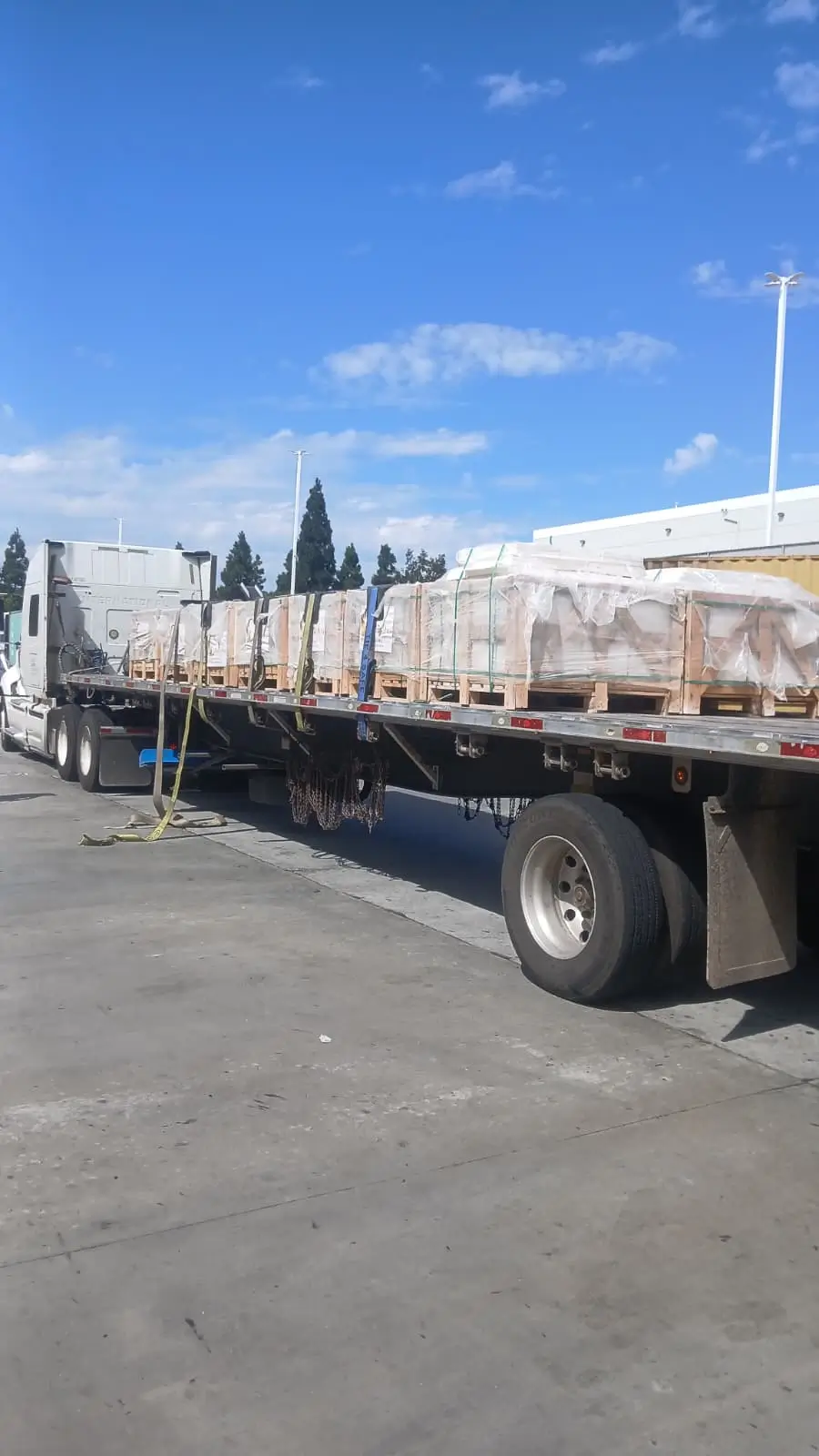
- Truck access for material delivery needs consideration during planning — large-format pavers require boom truck or forklift placement in many installations
Material quantity calculations that don’t account for waste factors create project delays and cost overruns. You should order 8-10% overage for standard rectangular patterns and 12-15% for diagonal or complex geometric layouts. Custom fabrication waste adds another 5-8% to these figures. When you’re specifying white limestone paver selection Phoenix suppliers provide, verify that quoted quantities include appropriate waste factors or specify them explicitly in your procurement documents.
Budget and Procurement Strategy
Understanding the complete cost structure for white limestone paver installations helps you make informed decisions about material selection, sourcing strategy, and specification details. You’re not just buying pavers — you’re investing in material, fabrication, logistics, installation labor, and long-term maintenance. The lowest material cost per square foot rarely produces the lowest total project cost.
Material costs for white limestone pavers range from $12-18 per square foot for standard domestic options to $25-35 per square foot for premium imported varieties in gauged formats. But material represents only 30-40% of total installed cost. You need to factor base preparation ($4-8 per square foot), installation labor ($8-12 per square foot for pedestrian areas), edge details and transitions ($15-25 per linear foot), and sealing if specified ($2-4 per square foot). Your complete installed cost typically ranges from $35-65 per square foot depending on complexity and finish level.
Procurement timing significantly affects both cost and material consistency. When you order during peak construction season (October through April in Arizona), lead times extend from 3-4 weeks to 6-8 weeks, and warehouse availability for specific finishes or formats may be limited. Your project timeline should account for these seasonal variations. For large projects requiring multiple shipments, you’ll want to contract for material hold at the warehouse to ensure consistency across delivery dates.
Here’s a cost-saving strategy that professional specifiers use for appropriate applications: specify larger format pavers (24×24 or 16×24 inch) rather than smaller sizes. Larger formats reduce installation labor by 25-35% due to fewer individual units, fewer joints to sand, and faster coverage rates. You’ll pay 15-20% more per square foot for material, but total installed cost decreases by 10-15%. This strategy works best for contemporary designs with clean lines — traditional patterns require smaller formats for visual scale.
For additional planning insights that align with regional requirements, see Citadel Stone’s Arizona client collaboration to understand coordination protocols. You should evaluate total lifecycle cost, not just initial installation expense, when you compare material options and specification approaches.
Quality Verification and Inspection
Your quality control process for white limestone paver procurement should include specific verification points that occur before material leaves the warehouse, upon delivery to the job site, and during installation. You can’t rely on supplier quality assurance alone — professional practice requires independent verification of critical performance characteristics and dimensional compliance.
Pre-delivery inspection should verify material from approved sources, consistent color within acceptable variation limits, and dimensional tolerances meeting specification requirements. You’ll want to inspect at least 5% of total quantity, selecting samples randomly from different pallets. Check thickness with calipers at five points per paver — corners and center. Verify length and width dimensions, and inspect edges for chips, cracks, or delamination along bedding planes. Your inspection should reject any pallet where more than 5% of units show defects.
Upon delivery, verify that material matches approved samples for color, finish, and edge detail. You should conduct slip resistance spot-checks using a digital tribometer if the project involves pool decks or wet-area applications. Temperature and moisture conditions at delivery matter as well. Material delivered in summer heat (truck bed temperatures can reach 160°F) needs 24-48 hours to stabilize before installation. Moisture content should be below 3% by weight — material with higher moisture content will exhibit efflorescence as it dries in place.
During installation, your inspection protocol should verify base preparation compliance, joint spacing consistency, and proper setting bed technique. You need to check surface gradient with a 10-foot straightedge and level at multiple locations — variations exceeding 1/8 inch in 10 feet create drainage problems. Joint width should maintain consistency within ±1/32 inch across the field. Lippage (height differential between adjacent pavers) must not exceed 1/16 inch for interior-quality work or 1/8 inch for exterior pedestrian areas.
Performance Expectations and Limitations
Setting realistic performance expectations for white limestone pavers requires honest discussion of material limitations alongside performance advantages. You need to help clients understand that natural stone exhibits characteristics that differ from manufactured products — variation, weathering, and maintenance requirements are inherent to the material, not defects.
You should expect 25-35 year service life for properly installed white limestone pavers in Arizona pedestrian applications with biennial maintenance. Vehicular applications reduce expected service life to 15-20 years due to higher abrasion and edge stress. High-traffic commercial installations show visible wear patterns after 10-12 years, particularly around main entry points where foot traffic concentrates. These aren’t failures — they’re normal aging characteristics of sedimentary stone under sustained use.
White limestone has documented limitations you must address in specifications and client communications. The material is susceptible to acid etching from citrus, wine, and some cleaning products. You’ll see surface dulling and texture change when acidic substances remain on the surface for more than 15-20 minutes. Pool deck applications require careful chemical management — saltwater chlorine generators and low-pH water conditions accelerate surface etching. Your specifications should establish water chemistry parameters: pH 7.2-7.6 and calcium hardness 200-400 ppm for pool-adjacent installations.
Efflorescence appears in 30-40% of installations during the first 12-18 months as residual moisture migrates through the stone and evaporates at the surface. This white crystalline deposit consists of water-soluble salts from the stone, setting bed, or base materials. You should inform clients that efflorescence is temporary and cosmetic — it typically resolves naturally through weathering and can be removed with pH-neutral efflorescence cleaners. Persistent efflorescence after 24 months indicates subsurface moisture problems requiring drainage correction.
- You need to establish maintenance expectations that include annual cleaning, joint sand replenishment, and sealer renewal every 2-3 years if applicable
- Surface scratching from furniture, planters, and foot traffic creates patina over time — this is characteristic of natural stone, not a defect
- Your clients should understand that color will subtly shift over 5-7 years due to UV exposure and mineral oxidation
- Freeze-thaw performance in Flagstaff and high-elevation areas depends on proper sealing and drainage — you can expect 15-25 year service life with appropriate maintenance
Best White Limestone Pavers Arizona: Citadel Stone Approach
When you consider how to choose white limestone Arizona installations that perform reliably across diverse climate zones, you’re evaluating materials designed for extreme thermal conditions and low maintenance requirements. At Citadel Stone, we provide technical guidance for hypothetical applications across Arizona’s unique environmental regions. This section outlines how you would approach specification decisions for six representative cities, each presenting distinct climate challenges and installation considerations.
Arizona’s climate zones span from low-desert heat to high-elevation freeze-thaw conditions. You would need to address thermal cycling from 20°F winter lows to 118°F summer highs in some locations, UV exposure intensity that degrades sealers 40% faster than moderate climates, and monsoon rainfall that can deliver 2-3 inches in a single afternoon. Your material selection should account for these extreme variations while maintaining consistent aesthetic appearance and structural performance.
Phoenix Heat Resilience
In Phoenix applications, you would encounter 110-118°F ambient temperatures for 30-40 days annually, with direct solar radiation creating surface temperatures approaching 135-140°F on darker materials. Your white limestone paver selection Phoenix approach should prioritize solar reflectance index values above 78 to achieve barefoot-comfortable evening temperatures. You’d specify honed finishes with DCOF slip resistance values of 0.52-0.58 for pool decks, where afternoon heat creates the greatest thermal challenge. Base preparation would require 8-inch compacted aggregate depth to bridge over expansive clay soils common in the Phoenix basin. You should account for thermal expansion with 1/4-inch joints and expansion joints every 12-15 feet in full-sun exposures.
Tucson UV Protection
Tucson’s 350 days of annual sunshine create intense UV exposure that accelerates sealer degradation and affects long-term color stability. You would specify UV-resistant penetrating sealers with documented Arizona performance for applications requiring stain protection. Your installation approach should address caliche layers common 12-24 inches below grade in Tucson soils — this hardpan layer requires mechanical excavation and creates drainage challenges. You’d design base systems with enhanced permeability to route water around caliche barriers. The buying white pavers Arizona professionals select for Tucson applications should demonstrate documented UV stability with minimal color shift over 7-10 year exposure periods.
Scottsdale Resort Standards
For Scottsdale’s high-end residential and resort applications, you would specify premium color-matched material with tight dimensional tolerances and consistent finish quality. Your approach should include full-size sample approval from designated quarry blocks, ±1/16 inch thickness calibration, and enhanced edge details. You’d coordinate warehouse delivery schedules to ensure material from consistent production runs, avoiding color variation between shipments. Installation specifications would address resort-grade aesthetics: maximum 1/16-inch lippage, consistent 3/16-inch joint spacing, and hand-selected pavers for prominent locations. At Citadel Stone, we recommend polymeric sand with color-matching additives to minimize joint visibility in luxury applications where seamless appearance is priority.
Flagstaff Freeze Performance
Your Flagstaff specifications would address 40-60 annual freeze-thaw cycles and winter temperatures reaching 0-10°F. You’d require material with porosity between 2-4% and documented freeze-thaw durability per ASTM C666. Base preparation would include 10-12 inch aggregate depth extending below the 24-inch frost line, with consideration for volcanic soil conditions unique to the region. You should specify mandatory sealing with breathable penetrating sealers to prevent moisture accumulation while allowing vapor transmission. Joint spacing would increase to 3/8 inch to accommodate frost heave movement, and you’d design positive drainage to prevent ice formation on walking surfaces. Your white limestone pavers Arizona buying guide for elevation zones above 6,000 feet must prioritize freeze-thaw durability over other performance factors.
Sedona Red Rock Integration
When you specify for Sedona’s unique red rock landscape context, your material selection should complement rather than compete with the dominant red sandstone geology. You would select white limestone with warm undertones — slight cream or beige coloration that harmonizes with red rock surroundings. Your installation approach needs to address expansive clay soils and dramatic elevation changes common in Sedona terrain. You’d incorporate terracing details, retaining wall integration, and positive drainage systems that manage runoff from sudden monsoon storms. The material should provide neutral backdrop for native landscaping while maintaining the heat-reflective properties essential for 105-110°F summer temperatures at 4,500-foot elevation.
Yuma Extreme Conditions
Yuma represents Arizona’s most extreme heat environment, with summer temperatures exceeding 110°F for 80-90 days annually and winter lows rarely dropping below 40°F. Your specifications would prioritize maximum solar reflectance — you’d select the brightest white limestone options available with SRI values of 80-85. Thermal expansion accommodation becomes critical: you should specify 1/4 to 3/8 inch joints and expansion joints every 10-12 feet for large paved areas. The low-desert environment creates minimal freeze-thaw concerns but intense UV exposure and extreme thermal cycling. You’d recommend unsealed installations to avoid sealer degradation under these harsh conditions, relying on the material’s natural density for stain resistance. Your warehouse coordination should ensure summer deliveries occur during early morning hours when material and truck bed temperatures are manageable.
Supplier Evaluation Criteria
Selecting the right supplier for your white limestone paver project affects material quality, delivery reliability, and long-term support. You need to evaluate suppliers based on criteria that extend beyond price per square foot — expertise, inventory depth, fabrication capabilities, and technical support determine project success.
Your supplier evaluation should verify warehouse inventory levels for your specified material before you commit to project timelines. Suppliers maintaining 20,000-30,000 square feet of inventory in standard formats can typically fulfill orders within 2-3 weeks. Smaller operations require 4-6 weeks for material procurement from quarries or importers. You should ask specific questions about inventory: How much material from your specified source is currently in stock? Can they reserve material for your project? What lead times apply to replenishment orders if you need additional material?
Fabrication capabilities matter when your project requires custom dimensions, edge details, or special finishes. You need suppliers with in-house fabrication equipment — bridge saws, CNC routers, edge profiling machines — and experienced fabricators who understand natural stone characteristics. Custom fabrication adds 2-3 weeks to standard lead times, so your project schedule must account for this. When you’re specifying complex patterns or precise dimensional requirements, visit the fabrication facility to verify capabilities before you commit.
Technical support distinguishes professional stone suppliers from commodity distributors. You want suppliers who can provide specification assistance, installation guidance, and problem-solving support when field conditions don’t match plans. Look for suppliers who employ staff with installation experience, not just sales personnel reading from product literature. Your ideal supplier should offer sample project review, installation best practices documentation, and responsive technical consultation throughout the project.
- You should verify that suppliers can provide material test data: compressive strength, water absorption, density, and slip resistance for your specified material
- Delivery logistics need evaluation — truck access to your site, offloading equipment requirements, and material protection during transport
- Your supplier should maintain relationships with qualified installation contractors they can recommend if you need referrals
- Warranty terms vary significantly — professional suppliers offer 1-year material defect warranties while understanding that installation quality affects long-term performance
Final Planning Steps
Your comprehensive planning process for white limestone paver projects should integrate material selection, specification development, procurement strategy, and installation coordination into a cohesive timeline. You’ll achieve better outcomes when you address these elements systematically rather than treating material selection as an isolated decision.
Start your planning process 8-12 weeks before desired installation dates to accommodate material lead times, sample approval processes, and contractor scheduling. You should develop specifications that address climate-specific requirements for your Arizona location, verify warehouse inventory availability for your selected material, and establish realistic budget expectations that include installation and long-term maintenance costs. Your timeline needs buffer for potential delays — material procurement can extend beyond quoted lead times during peak construction season, and weather constraints affect installation scheduling.
Coordinate your design details with installation realities early in the planning process. You need to verify that your site has adequate truck access for material delivery, appropriate base conditions for the paver system you’ve specified, and proper drainage infrastructure to support long-term performance. When you’re working on remodel projects, factor additional time for demolition, base repair, and coordination with existing hardscape elements. Your installation contractor should review plans before material procurement to identify potential field issues that might affect material quantities or specification requirements.
For additional technical comparisons that inform your material selection process, review Heat resistance comparison of white pavers for Arizona pools before finalizing your project specifications. You should document your specification decisions, approved samples, and supplier agreements in detail to ensure project continuity if personnel changes occur during construction. Citadel Stone custom-cuts white limestone pavers in Arizona to match complex patio designs and patterns.