
When you’re specifying large paving slabs Arizona suppliers can deliver for commercial or high-end residential projects, you’ll quickly discover that size matters—and not just for aesthetics. Oversized slabs reduce joint count, minimize maintenance, and create the seamless visual impact your clients expect. You need suppliers who stock genuine large format inventory, not vendors who claim they can “order anything” but leave you waiting eight weeks for material that arrives in the wrong dimensions.
Large format slabs—typically 24×24 inches and larger—perform differently than standard pavers. You’re dealing with increased weight per unit, which affects handling, transportation, and installation logistics. Your specifications need to account for substrate requirements that can support concentrated loads without differential settlement. When you evaluate large paving slabs Arizona suppliers offer, you should verify they understand these performance distinctions and can provide technical support beyond basic product datasheets.
Material Specifications for Oversized Formats
You’ll find that large paving slabs Arizona suppliers stock typically range from 24×24 inches to 48×48 inches, with thickness options from 20mm to 40mm depending on application requirements. The dimensional precision becomes critical at these sizes—tolerance stacking that’s acceptable in 12×12 pavers creates noticeable lippage issues in oversized formats. You should specify dimensional tolerance of ±2mm for large format installations to maintain acceptable surface flatness.
Compressive strength requirements don’t change with size, but you need to recognize that larger slabs concentrate loads over smaller bearing areas. Your specifications should require minimum 8,000 PSI compressive strength for vehicular applications, increasing to 10,000+ PSI for areas with commercial truck access. When you source oversized paving slabs Phoenix distributors provide, verify third-party testing documentation rather than relying on manufacturer claims.
- You should verify slip resistance ratings meet DCOF 0.42 minimum for dry conditions
- Your specification must address wet slip resistance, which typically measures 0.15-0.20 lower than dry ratings
- You need to account for thermal expansion coefficients of 5.3 × 10⁻⁶ per °F in Arizona installations
- Porosity specifications should range between 3-8% for proper drainage performance
- You’ll want to specify edge rectification tolerance under 0.5mm for tight joint installations
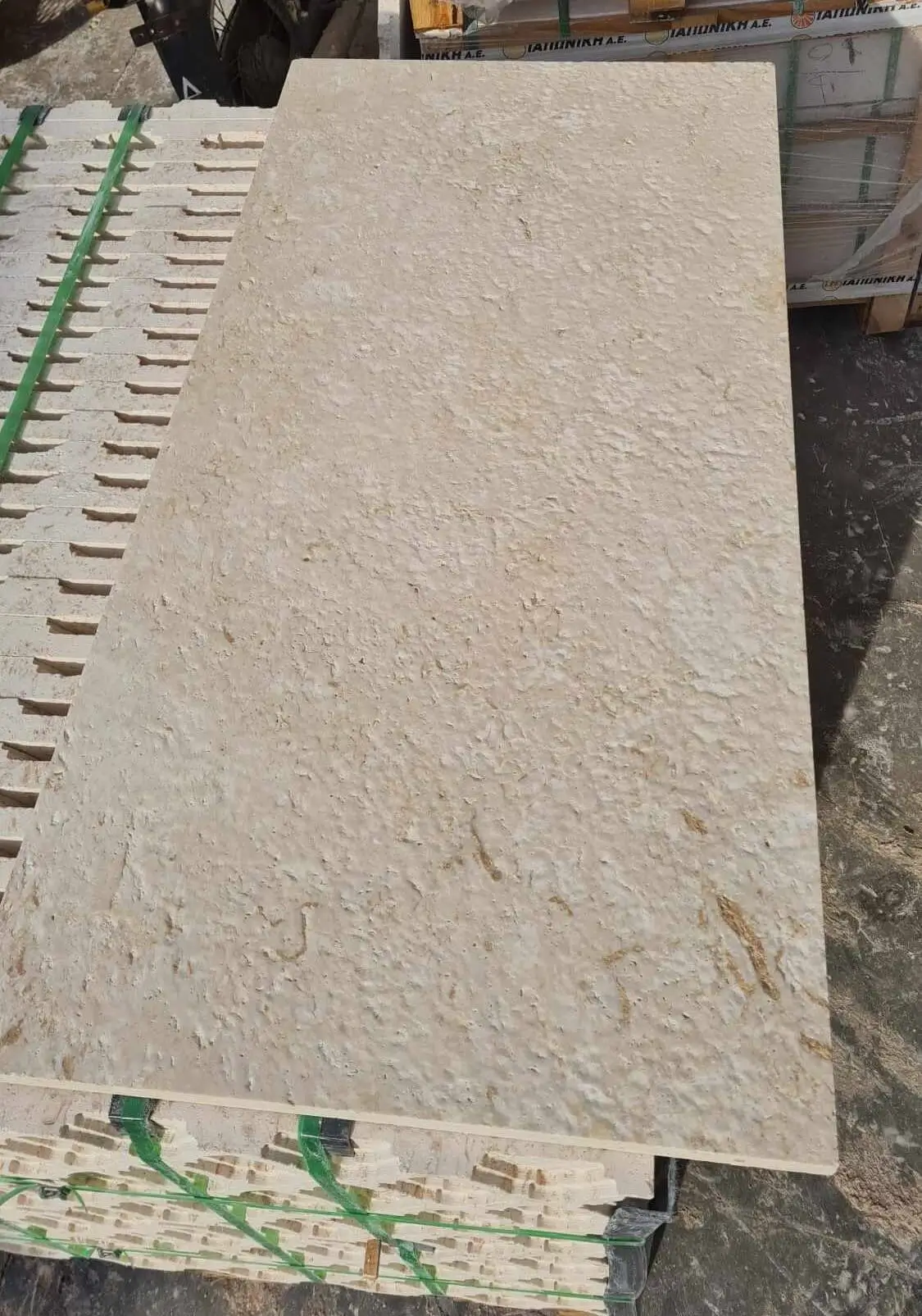
Thermal Performance in Desert Climate Conditions
Here’s what catches most specifiers off-guard when working with 24×24 slab dealers Arizona represents—thermal mass behavior in large format slabs differs substantially from standard pavers. The increased thickness and surface area create longer thermal lag times, typically 4-6 hours between peak air temperature and peak surface temperature. You need to understand this lag affects installation windows and material handling protocols during summer months.
Surface temperatures on large format slabs can reach 160-180°F during peak Arizona summer conditions. Your material selection should prioritize lighter colors and textured finishes that reflect rather than absorb solar radiation. When you specify big format pavers near me suppliers stock, color selection impacts thermal performance by 20-30°F at peak conditions. Light limestone and travertine reflect 60-70% of solar radiation, while darker granite absorbs 70-80%.
The thermal expansion you’ll encounter with large format slabs requires expansion joints every 12-15 feet in direct sun exposure areas. This spacing decreases from standard recommendations because larger individual slabs concentrate expansion forces rather than distributing them across multiple smaller units. You should detail expansion joint locations in your drawings rather than leaving placement to field decisions—improper joint spacing leads to corner cracking that appears 18-24 months post-installation.
Substrate Requirements for Large Format Installations
Your base preparation for large format slabs demands more precision than standard paver applications. You’re working with units that can weigh 80-120 pounds each, and any substrate inconsistency telegraphs directly to the surface as lippage or rocking units. You need minimum 8-inch compacted aggregate base in residential applications, increasing to 12+ inches for vehicular areas. When you evaluate large paving slabs Arizona suppliers recommend, verify they provide installation specifications matched to local soil conditions.
Compaction requirements become critical with oversized formats. You should specify 95% modified Proctor density for the aggregate base, verified with nuclear densometer testing at 50-foot intervals. This isn’t arbitrary—lower compaction creates differential settlement that manifests as surface irregularities within the first year. Your specifications should require proof rolling with a loaded truck before setting slabs to identify soft spots that need remediation.
- You need to verify subgrade bearing capacity exceeds 1,500 PSF for residential applications
- Your base aggregate should be well-graded crushed stone with minimal fines content
- You’ll want to specify geotextile separation fabric between subgrade and aggregate base
- Your bedding layer should be coarse sand or fine crusher fines, not masonry sand
- You should require screed rails for bedding layer to maintain consistent 1-inch thickness
Sourcing and Logistics in the Arizona Market
When you’re tracking down oversized paving slabs Phoenix warehouses actually stock versus materials they’ll need to order, you should verify inventory before committing to project timelines. Most distributors carry limited large format inventory due to storage space requirements and capital investment. You’ll find that 24×24 formats typically ship within 1-2 weeks, but 36×36 and larger often require 4-8 week lead times from quarry or manufacturing facilities.
Truck access becomes a specification issue with large format materials. A typical pallet of 24×24 slabs at 30mm thickness weighs 2,800-3,200 pounds and requires forklift or crane offloading. You need to coordinate delivery logistics during the planning phase—residential sites without side yard access may require manual carrying, which adds 30-40% to installation labor costs. When you source from large paving slabs Arizona suppliers, ask about delivery equipment and job site access requirements before finalizing material selection.
Transportation damage rates increase with slab size due to cantilever forces during handling. You should specify that materials arrive on edge-protected pallets with corner guards and require inspection before the delivery truck leaves the site. Documentation of any damage needs to happen immediately—attempting to file claims days later rarely succeeds. For detailed guidance on material handling protocols for large format natural stone, see Arizona gauged slab stones for comprehensive specifications and performance data.
Installation Methodology for Oversized Units
You’ll need to adjust standard installation practices when working with large format slabs. Two-person lifting teams become mandatory for anything larger than 24×24—attempting solo installation leads to corner chipping and back injuries. Your installation specifications should require mechanical handling equipment for formats larger than 36×36. When you work with 24×24 slab dealers Arizona contractors rely on, verify they have crews experienced with large format techniques.
Joint spacing recommendations change with slab size. You should specify 3/16-inch joints for large format installations, not the 1/8-inch joints acceptable for standard pavers. This increased spacing accommodates the greater dimensional tolerance inherent in larger units and provides adequate space for polymeric sand or mortar joint fill. Your details should show joint spacing maintained within ±1/32 inch—variation beyond this creates visual irregularities that become obvious as joint sand settles.
- You need to specify string lines every 10 feet in both directions to maintain alignment
- Your installation sequence should progress from a straight reference edge, not from center
- You’ll want to require rubber mallets for seating, never metal hammers that chip edges
- Your crew should check lippage with a straightedge every 3-4 slabs during installation
- You should specify immediate cleanup of bedding material from slab surfaces during installation
Porcelain Versus Natural Stone in Large Formats
The choice between porcelain and natural stone for large format applications involves trade-offs you need to understand beyond basic aesthetics. Porcelain slabs manufactured in 24×48 and larger formats offer superior dimensional consistency—typical tolerance of ±0.5mm versus ±2mm for natural stone. You’ll achieve tighter joints and more uniform surface planes with porcelain, which matters when you’re creating contemporary designs that emphasize clean lines.
Natural stone provides thermal performance advantages in Arizona heat. Limestone and travertine stay 15-25°F cooler than porcelain at peak conditions due to higher reflectivity and lower thermal conductivity. When you’re specifying materials for pool decks or barefoot traffic areas, this temperature difference affects usability during summer months. You should consider surface temperature alongside other performance factors rather than selecting solely on appearance or cost.
Durability expectations differ between materials. Porcelain maintains consistent appearance for 20+ years with minimal maintenance, while natural stone develops patina and may show wear patterns in high-traffic areas after 12-15 years. You need to establish with your client whether they value long-term consistency or natural aging characteristics. When you evaluate big format pavers near me distributors stock, ask to see samples with 5-10 years of field exposure rather than pristine showroom pieces.
Cost Factors in Large Format Specification
You’ll find that material costs for large format slabs run 40-60% higher per square foot than standard pavers, but this comparison misses the complete cost picture. Reduced joint count means lower long-term maintenance—you’re cleaning and re-sanding fewer joints over the installation’s service life. When you calculate lifecycle costs rather than just initial material expense, large format installations often prove more economical for commercial applications.
Installation labor costs decrease with large format slabs despite the need for mechanical handling equipment. Your crew sets 100 square feet of 24×24 slabs in the same time required for 60-70 square feet of standard pavers. This productivity advantage offsets higher material costs in labor-intensive markets. You should request installed cost quotations rather than material-only pricing when comparing options—the per-square-foot differential often drops to 15-25% when labor is included.
- You need to account for waste factors of 8-12% for large format installations versus 5-7% for standard pavers
- Your budget should include specialized handling equipment rental if the contractor doesn’t own appropriate tools
- You’ll want to verify that warranty coverage extends to large format applications, as some manufacturers exclude oversized units
- Your specification should address who bears cost responsibility for delivery damage, which occurs more frequently with large slabs
Common Specification Mistakes with Large Format Slabs
Here’s what causes the most problems in large format installations—specifiers treat oversized slabs like scaled-up standard pavers without accounting for the performance differences. You can’t simply multiply standard details by two and expect successful results. The most frequent mistake involves inadequate substrate preparation, where specifiers apply standard base thickness requirements to applications that need enhanced support.
Joint detailing failures create long-term maintenance issues. You’ll see specifiers call out standard 1/8-inch joints that can’t accommodate the dimensional tolerance of large format units. This forces installers to either exceed specified joint width or create irregular spacing that looks unprofessional. Your details should show realistic joint dimensions matched to the tolerance of the material you’ve specified.
Expansion joint omission ranks among the most expensive errors. Standard paver installations can sometimes tolerate missing expansion joints due to the distributed flexibility of multiple small units. Large format slabs concentrate expansion forces and will crack at corners or edges when proper joints aren’t provided. You should detail expansion joints every 12-15 feet in Arizona installations, with joint locations coordinated with architectural features and drainage patterns.
Quality Verification at Delivery
You need to establish inspection protocols before materials arrive on site. Large format slabs should be inspected while still on the delivery truck, with the driver present to document any issues. You’re looking for corner chips, surface cracks, and dimensional inconsistencies that make units unusable. When you source from oversized paving slabs Phoenix suppliers provide, clarify their damage claim procedures before ordering—policies vary significantly between distributors.
Dimensional verification should happen on a sample basis at delivery. You can’t measure every unit, but checking 10-15 slabs from different pallets reveals whether the shipment meets specification tolerance. You should verify thickness consistency, edge straightness, and corner squareness using calibrated measuring tools. Documentation with photos becomes critical if you need to file warranty claims or request material replacement.
- You should reject any units with corner chips larger than 1/4 inch or edge chips exceeding 3/8 inch
- Your inspection needs to identify surface cracks, which may not be visible until slabs are removed from pallets
- You’ll want to verify color consistency across the shipment, as large format units often come from different production runs
- Your team should document pallet numbers and correlate them to inspection findings for traceability
Maintenance Considerations for Large Format Installations
Long-term maintenance requirements for large format slabs differ from standard paver applications primarily in joint management. You’re working with fewer joints per square foot, but each joint is more critical to overall system performance. Joint sand loss in large format installations affects appearance more noticeably because the visual contrast between filled and partially filled joints is more apparent with fewer joint lines.
You should specify polymeric sand for large format joints in most applications. The polymer binders reduce sand loss and resist weed growth more effectively than standard joint sand. Application technique matters—polymeric sand requires complete joint filling to 1/8 inch below the surface and thorough misting to activate polymers. When you detail maintenance requirements for large paving slabs Arizona suppliers deliver, include resealing schedules of 2-3 years for natural stone and 4-5 years for porcelain.
Efflorescence management becomes more visible on large format slabs. The expanded surface area of individual units makes salt deposits more obvious than they appear on smaller pavers. You need to specify efflorescence removal procedures that don’t damage the slab surface—acidic cleaners appropriate for some natural stones will etch others. Your maintenance specifications should identify approved cleaning products matched to the specific material you’ve selected.
Arizona Large Format Paving Slabs: Citadel Stone Specification Guide
When you consider Citadel Stone’s paving slabs for your Arizona project, you’re evaluating premium materials engineered for extreme climate performance and large format applications. At Citadel Stone, we provide technical guidance for hypothetical applications across Arizona’s diverse regions, from low-desert heat zones to high-elevation temperature extremes. This section outlines how you would approach specification decisions for six representative cities, addressing the climate factors and performance requirements you’d encounter in each location.

Phoenix Heat Specifications
In Phoenix, you’d encounter the most extreme thermal conditions in Arizona, with summer surface temperatures regularly exceeding 175°F on dark-colored materials. Your specification would prioritize light-colored limestone or travertine in large format to minimize heat absorption while maximizing the seamless aesthetic large slabs provide. You’d need to account for the urban heat island effect, which adds 5-10°F to surface temperatures compared to outlying areas. Your expansion joint detailing would specify 12-foot spacing in direct sun exposure areas, with joints located to coordinate with architectural features. You should verify that your selected material from large paving slabs Arizona suppliers demonstrates proven performance in similar high-heat installations.
Tucson Commercial Applications
You’d find that Tucson’s commercial district applications require large format slabs that balance aesthetic impact with heavy pedestrian traffic durability. Your specification would address slip resistance requirements more stringently than Phoenix due to monsoon season rainfall patterns that create wet surface conditions. You’d detail oversized paving slabs Phoenix-area suppliers stock but ensure they meet DCOF ratings of 0.50+ for wet conditions. The local soil conditions include expansive clays in many areas, which would require you to specify enhanced base preparation with minimum 10-inch aggregate depth and geotextile reinforcement. You should account for thermal cycling between daytime highs and nighttime lows that exceed 40°F during shoulder seasons.
Scottsdale Luxury Residential
Your Scottsdale specifications would emphasize the premium aesthetics large format slabs deliver for high-end residential projects. You’d select materials where color consistency and minimal joint count create the refined appearance luxury clients expect. You should specify 24×24 slab dealers Arizona distributors source from premium quarries with documented color range tolerances under 10% variation. Your installation details would require enhanced substrate preparation to prevent any lippage or differential settlement that would diminish the installation’s visual quality. You’d detail proper drainage to protect pool deck and entertainment area applications where barefoot traffic makes surface temperature and texture critical selection factors. Your specifications would include UV-stable joint materials that won’t degrade under intense sun exposure.
Flagstaff Freeze-Thaw
You’d need to address completely different performance requirements in Flagstaff, where freeze-thaw cycling dominates material selection criteria. Your specification would require large format slabs with porosity between 3-5% to allow drainage while maintaining structural integrity during freeze events. You should verify compressive strength exceeds 10,000 PSI and that the material demonstrates absorption rates under 3% per ASTM C140 testing. You’d detail installation over concrete substrates in most applications due to soil frost heave concerns that would compromise traditional aggregate base installations. Your joint specifications would use flexible sealants rather than polymeric sand to accommodate expansion-contraction cycles. You need to source from big format pavers near me suppliers who can provide freeze-thaw test documentation from independent laboratories.
Sedona Aesthetic Integration
Your Sedona specifications would emphasize how large format slabs integrate with the natural red rock landscape while meeting commercial hospitality performance standards. You’d select warm-toned natural stone in oversized formats that create visual harmony with the surrounding environment. You should specify materials where color variation is controlled but not eliminated—you want natural character that complements rather than competes with the dramatic landscape. Your detailing would address truck access limitations common in Sedona’s hillside locations, potentially requiring smaller delivery vehicles or manual material handling that affects installation costs. You’d need to coordinate with local design review boards whose aesthetic standards influence material and color selection. Your specifications would detail proper sealing to resist red dust staining that occurs from wind-blown soil particles.
Yuma Agricultural Commercial
You’d encounter unique requirements in Yuma’s agricultural commercial applications where large format slabs need to withstand frequent washdown and chemical exposure from farming operations. Your specification would prioritize dense, low-porosity materials that resist agricultural chemical penetration. You should detail oversized formats that minimize joint count, reducing maintenance requirements in high-soil-exposure environments. Your installation specifications would require enhanced drainage systems to handle frequent water use during equipment cleaning operations. You’d need to address thermal performance in an environment that rivals Phoenix for peak temperatures but includes higher humidity during irrigation seasons. Your material selection would emphasize durability over aesthetics, focusing on performance characteristics rather than premium appearance factors. You should specify slip resistance ratings of 0.55+ to account for wet conditions from washdown operations.
Supplier Evaluation Criteria Beyond Price
When you’re vetting large paving slabs Arizona suppliers for your project, you need to look beyond quoted prices to evaluate the complete service package. Technical support capabilities separate professional distributors from commodity resellers. You should ask potential suppliers about their experience with large format installations and whether they provide field support when installation challenges arise. Suppliers who stock material versus those who simply broker orders offer different service levels and lead times.
Warehouse inventory verification prevents project delays. You should request confirmation of physical stock, not just “available” status in a computer system. Large format materials tie up significant warehouse space and capital, so many distributors show items as available when they’re actually special-order with 6-8 week lead times. Ask for photos of the material in the warehouse with your order reference to confirm it’s allocated to your project before you commit to installation schedules.
- You need to verify the supplier maintains technical literature and test data for specified materials
- Your evaluation should confirm they understand installation requirements specific to large format applications
- You’ll want to establish their damage claim procedures and typical response times before issues arise
- Your supplier assessment should include their ability to provide color-lot consistency if your project requires multiple deliveries
Final Selection Factors
Your professional specification process requires you to balance performance requirements with budget constraints while ensuring long-term durability that protects your client’s investment. Large format slabs deliver visual impact and reduced maintenance that justify premium costs in many applications, but you need to verify that substrate conditions and installation expertise support successful outcomes. When you evaluate large paving slabs Arizona suppliers provide, prioritize those who demonstrate technical knowledge and maintain actual inventory rather than simply offering the lowest quoted price. For additional installation insights on alternative paving materials, review Porcelain paving solutions for Arizona outdoor landscaping projects before you finalize your project documents. Citadel Stone supplies stamped and natural finishes, sells paving slabs by style, and distributes across Arizona.