
When you specify limestone pavers for Arizona projects, you’re making decisions that affect performance for decades. The state’s extreme thermal cycling — from freezing winter nights in Flagstaff to 120°F summer days in Yuma — creates material stress conditions that demand specific technical considerations. Your material selection process should address thermal expansion coefficients, UV degradation resistance, and porosity characteristics that respond predictably to Arizona’s climate extremes.
The limestone paver supplier Arizona you select determines not just material quality, but warehouse availability, delivery logistics, and technical support during critical installation phases. You need to evaluate suppliers on their understanding of regional soil conditions, truck access capabilities for desert job sites, and inventory depth that prevents project delays. Most specifiers underestimate how Arizona’s alkaline soils (pH 7.8-8.4 across most metro regions) interact with limestone porosity to create efflorescence patterns within 12-18 months if you don’t specify proper sealing protocols.
Material Performance in Desert Climates
You’ll encounter thermal expansion challenges in Arizona that differ significantly from temperate climates. Limestone exhibits thermal expansion coefficients around 5.1 × 10⁻⁶ per °F, which translates to measurable movement across large paver installations. When you design plaza or courtyard applications exceeding 20 feet in any direction, you need expansion joints every 15 feet — reducing to 12 feet in areas with continuous solar exposure exceeding 7 hours daily. The common mistake is using manufacturer guidelines developed for moderate climates, which specify 20-foot joint spacing that proves inadequate in Arizona conditions.
Surface temperature differentials create stress patterns most literature doesn’t address. Your limestone pavers will reach surface temperatures 35-45°F above ambient air temperature during peak solar exposure. This creates a thermal gradient through the material thickness that generates internal stress. For 2-inch thick pavers, you’ll see a temperature differential of 18-22°F between surface and base during afternoon hours, which drives moisture movement through the material’s pore structure. When you specify pavers for commercial applications with high foot traffic during peak heat, you should account for thermal discomfort — surface temperatures regularly exceed 145°F, making barefoot traffic impossible and affecting pet safety in residential applications.
Modular and Interlocking System Considerations
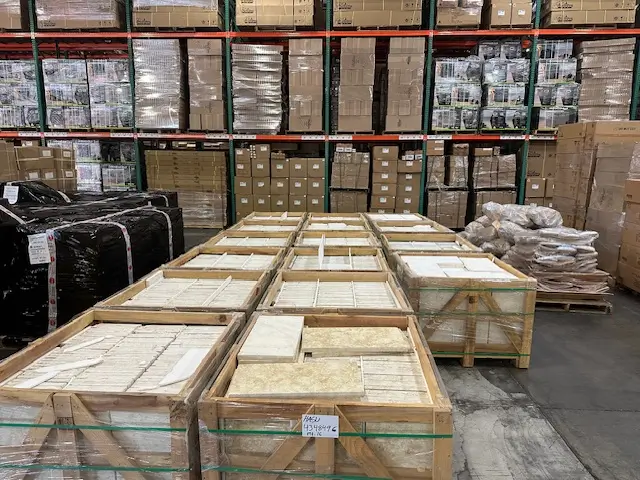
When you evaluate interlocking limestone dealer options, you need to understand the distinction between true mechanical interlock and simple modular patterns. True interlocking systems use shaped edges that create load transfer between adjacent units, distributing point loads across multiple pavers. Your paver limestone dealer near me Phoenix should provide units with dimensional tolerances within ±1/16 inch — looser tolerances compromise the interlock mechanism and create joint width variations that become visually obvious after joint sand settlement.
Modular limestone supplier Arizona sources should offer multiple unit sizes that create visual interest while maintaining installation efficiency. The most successful installations use 3-4 coordinating sizes in ratios that minimize cutting waste. You’ll achieve best results with systems where the smallest unit is at least 40% the area of the largest unit — smaller ratios create installation complications and increase labor costs by 15-20%. Pattern complexity affects installation time significantly. Simple running bond patterns allow crews to place 80-100 square feet per hour, while complex geometric patterns reduce productivity to 45-60 square feet per hour.
- You should verify that modular systems include corner and edge units that eliminate field cutting for 90% of typical installations
- Your specification must address how pattern orientation affects perceived space dimensions in confined courtyards
- You need to confirm that your paver stone supplier Arizona maintains adequate inventory depth across all sizes in the modular system
- When you design patterns for commercial installations, consider how joint lines affect wheeled traffic and ADA compliance
Porosity and Moisture Management
The porosity characteristics of your specified limestone directly determine long-term performance in Arizona’s climate. Most limestone pavers exhibit porosity between 3-8%, with the specific value determining water absorption rates and freeze-thaw durability. You might assume freeze-thaw isn’t relevant in Arizona, but Flagstaff, Sedona, and higher elevations in the Mogollon Rim region experience 40-60 freeze-thaw cycles annually. When you specify for these regions, you need material with porosity below 5% and verified ASTM C1526 freeze-thaw test results showing less than 0.5% weight loss after 100 cycles.
What catches most specifiers off-guard is how porosity affects surface temperature. Lower porosity materials (3-4%) exhibit 8-12°F higher surface temperatures compared to higher porosity limestone (6-8%) under identical solar exposure. This occurs because reduced pore structure limits evaporative cooling and increases thermal mass density. For pool deck applications where surface temperature matters significantly, you’ll want to specify higher porosity limestone despite its increased sealing requirements. The trade-off requires you to balance thermal comfort against maintenance intensity — higher porosity materials need resealing every 18-24 months compared to 36-48 months for denser limestone.
Your moisture management strategy must account for how Arizona’s monsoon season creates conditions dramatically different from the arid conditions present 9 months annually. During July-September monsoon periods, you’ll see localized rainfall intensities exceeding 2 inches per hour, creating surface water loading conditions that stress drainage systems designed for typical arid performance. When you detail base preparations, ensure crushed aggregate base layers provide permeability exceeding 50 inches per hour — at least 4x the surface permeability of your specified limestone pavers.
Thermal Expansion Joint Specifications
You need to understand that thermal expansion isn’t just about preventing cracking — it affects joint sand retention, edge restraint loads, and long-term pattern integrity. When limestone pavers expand during afternoon heating cycles, they compress joint sand and load perimeter restraints. If you haven’t specified expansion joints, this daily cycling gradually degrades joint sand (increasing particle breakdown by mechanical grinding) and creates outward thrust forces on edge restraints that can reach 1,200-1,500 pounds per linear foot in large installations.
The expansion joint details you specify determine whether joints remain functional or become maintenance liabilities. Your joints need minimum 3/8-inch width to accommodate expansion while providing sufficient volume for backer rod and sealant. Specify closed-cell polyethylene backer rod sized to 125% of joint width, compressed to create proper sealant profile. The sealant you select must accommodate ±50% joint movement and maintain adhesion at surface temperatures reaching 160°F. Most polyurethane sealants fail in Arizona applications because their upper temperature limit (140°F) gets exceeded 40-60 days annually in Phoenix, Tucson, and Yuma regions.
- Your expansion joints should align with logical pattern breaks and architectural features rather than cutting across paver fields arbitrarily
- You must detail how expansion joints terminate at building interfaces where differential movement between structure and paving occurs
- When you specify sealant colors, account for how UV exposure affects color stability over the 7-10 year expected sealant service life
- You should require that your installation crew place expansion joints before final compaction to prevent paver damage during joint cutting
Base Preparation for Regional Soils
Arizona’s soil conditions vary dramatically across regions, requiring you to adjust base specifications beyond generic best practices. In the Phoenix and Tucson basins, you’ll encounter caliche layers — calcium carbonate cemented soils that create impermeable barriers affecting drainage. When you excavate for paver installations and encounter caliche at depths less than 18 inches below finished grade, you need to either remove it completely or create positive drainage paths that direct moisture laterally away from the paver system. Leaving caliche in place creates a perched water table condition that saturates your aggregate base, reducing load-bearing capacity by 30-40%.
The clay-heavy soils prevalent in Mesa, Gilbert, and Chandler areas present different challenges. These soils exhibit swell-shrink behavior with moisture content changes, creating vertical movement potential of 2-3 inches across seasonal moisture cycles. Your base preparation for these conditions requires over-excavation to 24 inches below finished grade, complete clay removal, and replacement with non-expansive engineered fill. The additional cost — typically $8-12 per square foot for excavation and fill — prevents structural movement that would compromise your paver installation within 3-5 years.
When you specify aggregate base materials, you should require crushed angular aggregate meeting ASTM D2940 gradation requirements. The common specification error is allowing rounded river-run aggregate, which achieves only 85-90% of the compaction density possible with crushed angular material. You’ll see this deficiency manifest as gradual settlement — typically 1/4 to 3/8 inch over 2-3 years — that creates trip hazards and drainage problems. Proper compaction requires you to specify 95% modified Proctor density (ASTM D1557) in lifts not exceeding 4 inches, verified by field density testing at minimum frequency of one test per 2,500 square feet.
Slip Resistance Across Different Finishes
The finish you specify for limestone pavers directly determines slip resistance values, which range from DCOF 0.38 for polished finishes to 0.62 for thermal or flamed finishes. You need to understand that ASTM standards measure slip resistance under controlled conditions that don’t represent real-world scenarios. The DCOF 0.42 minimum required by ADA applies to level interior surfaces in dry conditions. When you specify for pool decks, outdoor dining areas, or entryways where wet conditions occur regularly, you should target minimum DCOF 0.50 under wet conditions — values you’ll only achieve with textured finishes.
Here’s what often surprises specifiers: slip resistance degrades over time through wear and biological growth. Your textured limestone pavers will lose approximately 0.04-0.06 DCOF over 5-7 years in high-traffic areas as surface texture wears smooth. In shaded areas with regular moisture exposure, algae and biofilm growth reduces slip resistance by 0.08-0.12 DCOF within 18-24 months if you don’t implement regular cleaning protocols. When you specify for commercial applications where slip-fall liability matters, you need to account for this degradation and either specify finishes with initial DCOF values 0.10 higher than minimum requirements or implement documented maintenance programs addressing biological growth.
The balance between aesthetic preferences and functional requirements creates real design challenges. Architects often prefer honed or polished finishes for their refined appearance and color depth, but these finishes provide inadequate slip resistance for most exterior applications. You’ll need to educate your design team about the trade-offs and potentially specify different finishes for different zones within a project — using polished finishes in covered, dry areas while transitioning to textured finishes in exposure zones. This approach adds complexity to your limestone paver supplier Arizona coordination, as you’ll need warehouse inventory across multiple finish types and careful field verification to prevent installation errors.
Sourcing and Supply Chain Considerations
When you evaluate a paver limestone dealer near me Phoenix, you’re not just assessing product quality — you’re evaluating supply chain reliability that affects project schedules. The logistics of limestone paver distribution involve container shipments from quarries, domestic warehouse storage, and local delivery coordination. Lead times from overseas quarries typically range 12-16 weeks from order to port arrival, with additional 2-3 weeks for customs clearance and transport to Arizona warehouse locations. Your project timeline needs to account for these intervals, particularly for custom sizes or finishes not maintained in regular warehouse stock.
The modular limestone supplier Arizona you select should maintain inventory depth across the size range your pattern requires. A common supply chain failure occurs when suppliers stock primary sizes adequately but maintain insufficient inventory of border, corner, and specialty units. This creates field delays when you’ve completed 85% of installation but lack edge pieces to finish perimeters. You should verify actual warehouse quantities for all units in your specified system before issuing purchase orders — don’t rely on supplier assurances of availability without confirmation of physical stock.
- You need to understand how seasonal demand affects inventory availability, particularly during Arizona’s peak construction season from October through April
- Your procurement schedule should account for quality verification periods where you inspect sample units before authorizing full quantity shipment
- When you coordinate truck deliveries to job sites, verify that access routes accommodate tractor-trailer combinations or arrange for transloading to smaller vehicles
- You should specify delivery timing that aligns with installation crew availability to prevent double-handling and storage exposure
The interlocking limestone dealer you work with should provide technical support beyond simple material supply. For detailed scheduling guidance that coordinates material procurement with project milestones, review Citadel Stone’s limestone scheduling to understand lead time variables. You’ll find that suppliers with installation experience provide value through constructability reviews and field problem-solving that prevents costly delays.
Color Stability and UV Exposure
The color characteristics of limestone pavers change over time through UV exposure and surface weathering. You should understand that the color you see in showroom samples — typically fresh-cut material stored indoors — will shift within 6-12 months of exterior installation. The degree of color change depends on the limestone’s mineral composition and porosity. Iron-rich limestone develops warmer, amber tones through oxidation, while calcium-carbonate dominant varieties tend toward lighter, bleached appearance. This natural evolution isn’t a defect, but you need to set proper owner expectations during material selection.
UV degradation affects surface integrity beyond color changes. Ultraviolet radiation breaks down the calcium carbonate bonds at the material surface, creating a gradual erosion that proceeds at 0.003-0.005 inches per year in Arizona’s intense solar exposure. Over 20-30 years, you’ll see measurable surface recession that becomes visible in areas where pavers abut fixed elements like building foundations or planter walls. This weathering pattern creates a rustic appearance some owners value, while others perceive it as deterioration. Your specification should address whether owners expect pristine appearance requiring periodic surface renewal or accept natural weathering character.
Sealing strategies affect both color stability and UV resistance. Penetrating sealers provide minimal color enhancement but don’t alter surface texture or slip resistance significantly. Film-forming sealers deepen color dramatically and provide superior UV protection, but they require renewal every 24-36 months and can create slip hazards when degraded sealer remains on the surface as a fragmented film. You need to match sealer type to owner expectations and maintenance capabilities. For commercial properties with professional maintenance programs, film-forming sealers work well. For residential applications where maintenance tends toward neglect, penetrating sealers create fewer long-term complications.
Edge Restraint System Specifications
Your paver installation will only perform as well as the edge restraint system you specify. Without adequate perimeter restraint, thermal expansion and traffic loads gradually push pavers outward, opening joints and creating trip hazards at edges. The edge restraint must resist outward thrust forces while remaining stable in Arizona’s soil conditions. Plastic edge restraints — common in residential applications — provide adequate holding force (1,200-1,500 pounds per linear foot) but degrade under UV exposure within 5-7 years, becoming brittle and losing holding capacity.
Concrete edge restraints offer superior long-term performance but require proper design to prevent becoming weak points. You should specify minimum 6-inch width and 10-inch depth for edge concrete, with continuous #3 rebar placement centered in the cross-section. The concrete needs to extend below your aggregate base into undisturbed subgrade to prevent settlement independent from the paver field. When you detail corners and curves, ensure edge concrete maintains minimum cross-sectional area through transitions — the common detailing error is tapering edge concrete at curves, creating weak points where cracks develop.
For commercial installations with vehicular traffic at edges, you need to transition from standard edge restraints to structural solutions. Pavers adjacent to parking stalls or drive lanes require concrete curbs sized for wheel impact loading, typically 8-inch width minimum with continuous reinforcement. Your structural edge should extend minimum 12 inches beyond the last row of pavers to provide adequate load transfer. This prevents the common failure mode where vehicles encroaching on paver edges create progressive deterioration that moves inward across the installation over time.
Common Specification Mistakes to Avoid
You’ll prevent costly field problems by avoiding specification errors that plague Arizona paver installations. The most frequent mistake involves failing to specify proper bedding sand gradation. Many specifiers simply note “ASTM C144 concrete sand” without understanding this material creates too fine a bedding layer. Proper bedding sand should meet ASTM C33 fine aggregate gradation with maximum 12% passing #100 sieve — finer gradations don’t provide adequate drainage and contribute to efflorescence by retaining water at the paver base interface.
Another common error is specifying joint sand without performance requirements. Standard masonry sand used for joints lacks the characteristics needed for long-term performance. You should specify joint sand meeting ASTM C144 with added requirements: maximum 3% silt/clay content, sub-angular to angular particle shape, and enhanced particle hardness (minimum Mohs 6.5). These characteristics ensure the sand resists degradation from traffic abrasion and doesn’t wash out during monsoon season rainfall. For enhanced performance, polymer-modified joint sands provide superior stability but require specialized installation techniques including complete joint filling and controlled water activation.
- You must avoid the mistake of failing to specify cleaning procedures for new installations, allowing grout haze and construction debris to mar appearance permanently
- Your specifications should explicitly prohibit plate compactor use directly on limestone pavers without protective padding, as compactor feet create surface damage
- You need to specify quality control procedures including lippage measurement (maximum 1/8 inch difference between adjacent units) and joint width verification
- When you write warranty provisions, ensure they address material defects separately from installation defects to clarify responsibility
Installation Timing and Climate Windows
The timing of your installation significantly affects execution quality and material performance. Arizona’s climate creates distinct installation windows with different advantages and challenges. Summer installations (June-September) provide longest daylight hours and allow extended daily work windows, but extreme heat creates crew productivity challenges and affects material handling. You’ll see setting bed and joint sand dry out rapidly, requiring more frequent water application for proper compaction. Adhesive-set applications become nearly impossible during peak afternoon heat when surface temperatures exceed substrate adhesive temperature limits.
Winter installations (December-February) offer moderate temperatures ideal for crew productivity, but shortened daylight limits daily production. In northern Arizona elevations, you’ll encounter morning frost conditions that prevent work starts until late morning, reducing effective work hours to 5-6 hours daily. The optimal installation windows occur during spring (March-May) and fall (October-November) when moderate temperatures, low precipitation probability, and adequate daylight hours align. You should schedule major installations during these periods when possible, accepting 10-15% higher labor costs due to increased demand during peak construction season.
When you coordinate installation timing with your paver stone supplier Arizona, account for how seasonal demand affects material availability. Warehouse stock levels decline through peak season as multiple projects draw inventory simultaneously. You’ll need earlier procurement commitment — often 8-10 weeks before installation — to ensure material availability during preferred installation windows. This extended lead time requires confident project scheduling and creates risk if project delays occur, potentially leaving you with purchased materials in warehouse storage accruing costs.
Maintenance Requirements for Long-Term Performance
Your limestone paver installation requires ongoing maintenance to achieve expected 25-35 year service life. The maintenance program you implement determines whether appearance remains acceptable or deteriorates to require premature replacement. Initial maintenance focuses on efflorescence removal — white crystalline deposits that appear within 6-18 months as soluble salts migrate through the material and evaporate at the surface. You should treat efflorescence through dry brushing initially, progressing to mild acidic cleaners (pH 4.5-5.5) only when dry methods prove ineffective. Aggressive acid cleaning damages the limestone surface, increasing porosity and creating accelerated deterioration.
Joint sand replenishment represents the most frequent maintenance requirement. Traffic abrasion, wind erosion, and monsoon season washout gradually deplete joint sand levels. When joints drop below 85% full depth, you’ll see accelerated edge chipping as pavers lack lateral support. Your maintenance program should include bi-annual joint sand inspection and replenishment, typically requiring 0.5-0.8 pounds of sand per square foot of paver area annually. This seemingly minor maintenance prevents major problems — installations where joint sand depletes to 60-70% capacity develop progressive edge damage affecting 15-20% of pavers within 3-5 years, requiring extensive repair.
Sealer renewal timing depends on the product type initially applied and exposure conditions. You can assess sealer condition through water droplet testing — when water absorbs into the surface within 5-10 seconds rather than beading, resealing is needed. For most Arizona installations in full sun exposure, this occurs every 24-36 months. Shaded areas may extend to 48-60 months between applications. The critical maintenance error is allowing sealer to fail completely before renewal. Once the surface becomes fully absorbent, deeper staining occurs that requires aggressive cleaning before successful resealing. Maintaining sealer continuity prevents this staining and costs substantially less than remedial cleaning.
Cost Considerations and Value Analysis
When you evaluate limestone pavers against alternative materials, initial cost represents only one factor in lifecycle value analysis. Limestone pavers typically cost $12-28 per square foot material-only, varying with finish type, thickness, and size format. Installation costs add $8-15 per square foot for standard applications, increasing to $15-22 per square foot for complex patterns or challenging site conditions. These initial costs exceed concrete pavers ($6-10 installed) and stamped concrete ($8-12 installed), but the comparison shifts when you account for longevity and maintenance requirements.
Your lifecycle cost analysis should extend minimum 25 years to capture realistic service life. Limestone pavers properly installed and maintained achieve 30-40 year service life before requiring replacement. Concrete alternatives typically need replacement at 15-20 years due to color fading, surface scaling, and crack propagation. When you calculate present value of replacement costs, the limestone premium narrows significantly. Additionally, limestone maintains resale value and aesthetic appeal throughout its service life, while concrete alternatives show obvious aging patterns after 8-12 years affecting property value.
The cost variables you can control involve size format selection and pattern complexity. Large format pavers (18×24 inches and larger) reduce installation labor by 20-25% compared to small formats (12×12 inches), though material cost per square foot increases slightly due to thickness requirements for larger units. Simple patterns like running bond or stacked bond reduce labor costs 15-20% compared to complex herringbone or basket-weave patterns. When budget constraints require value engineering, you’ll achieve better results modifying pattern and format rather than switching to lower-grade materials that compromise longevity.
Premium Limestone suppliers for Arizona Projects: Regional Specification Guidance
When you consider Citadel Stone’s Limestone suppliers for your Arizona project, you’re evaluating premium materials engineered for extreme climate performance. At Citadel Stone, we provide technical guidance for hypothetical applications across Arizona’s diverse climate zones. This section outlines how you would approach specification decisions for representative cities throughout the state, demonstrating the climate-specific considerations that affect material selection and installation detailing. You’ll need to account for elevation differences exceeding 7,000 feet, temperature variations spanning 80°F, and precipitation patterns ranging from 3 inches annually in southwestern regions to 23 inches in northern mountain areas.
Phoenix Heat Considerations
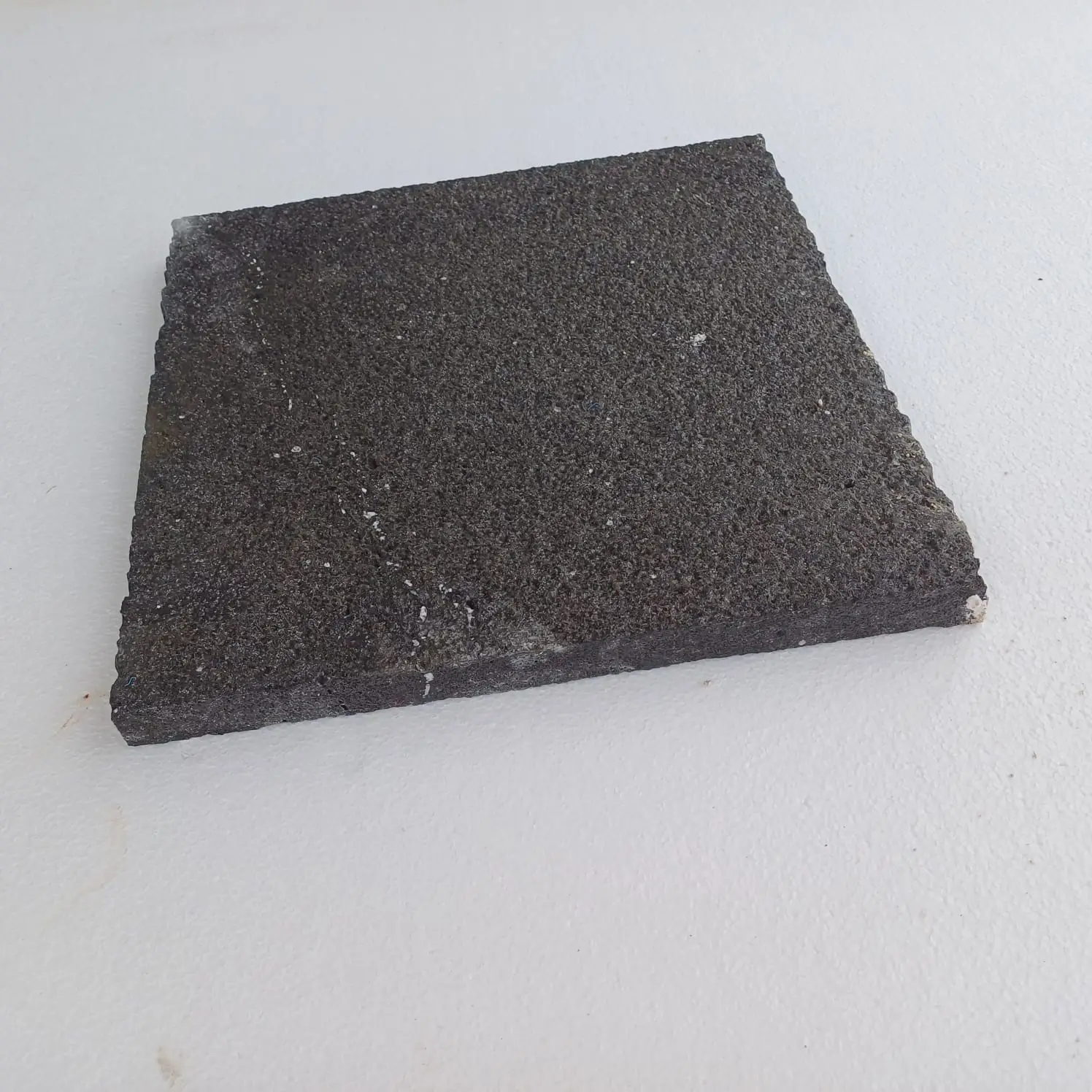
In Phoenix, you would encounter the state’s most extreme thermal conditions with summer temperatures regularly exceeding 115°F and surface temperatures on pavers reaching 160°F during peak afternoon exposure. Your material selection should prioritize lighter limestone colors that reflect 60-65% of solar radiation rather than darker varieties that absorb heat. You’d need to specify expansion joints at 12-foot intervals rather than standard 15-foot spacing due to enhanced thermal expansion in sustained extreme heat. For residential applications, you should recommend traffic patterns that avoid barefoot contact during peak heat hours, or specify shade structures over high-use paver areas. The warehouse inventory in the Phoenix metro area typically maintains stock levels adequate for projects up to 8,000 square feet without special ordering.
Tucson Alkaline Soils
Your Tucson installations would require special attention to the region’s highly alkaline soils with pH values typically ranging 7.9-8.3. You’d specify enhanced sealing protocols using two-coat penetrating sealer systems to minimize efflorescence occurrence, which appears 80% more frequently in Tucson compared to northern Arizona locations. The base preparation you’d recommend should include geotextile separation fabric between native soil and aggregate base to prevent alkaline salt migration. You would account for monsoon season rainfall intensity by specifying minimum 4% slope in paver surfaces to prevent water ponding that accelerates salt leaching. Your modular limestone supplier Arizona coordination would ensure consistent thickness tolerance within ±3/32 inch to maintain drainage effectiveness.
Scottsdale Design Standards
When you specify for Scottsdale residential and commercial projects, you’d encounter stringent community design standards that affect material selection. You should recommend premium finish consistency and color uniformity exceeding standard commercial tolerances, as homeowner associations frequently require sample panel approval before installation proceeds. Your specifications would include enhanced joint sand stabilization using polymer-modified products to maintain pristine appearance demanded by high-end developments. You’d coordinate with your interlocking limestone dealer to ensure availability of specialty edge details and custom sizes that accommodate architectural features common in luxury Scottsdale properties. The attention to aesthetic detail would extend to truck delivery scheduling during off-peak hours to minimize construction impact on neighboring properties.
Flagstaff Freeze Protection
Your Flagstaff specifications would address freeze-thaw cycling that occurs 50-65 times annually at the 7,000-foot elevation. You’d require limestone with maximum 4.5% porosity and verified ASTM C1526 testing showing weight loss below 0.4% after 100 freeze-thaw cycles. The base preparation you’d specify needs to extend 24 inches deep to reach below the frost line, incorporating crushed aggregate with enhanced drainage characteristics. You should recommend installation timing during May-September window when subgrade remains unfrozen and adequate cure time exists before winter onset. Your edge restraint details would account for frost heaving potential by extending concrete restraints 30 inches deep rather than standard 10-inch depth used in lower elevations.
Sedona Color Coordination
In Sedona, you would specify limestone colors and finishes that complement the iconic red rock landscape while meeting technical performance requirements. Your material selection should account for how the region’s iron-rich soil creates reddish dust accumulation that affects appearance. You’d recommend textured finishes that hide dust accumulation better than smooth honed surfaces, and specify warm earth tones that harmonize with natural surroundings. The elevation at 4,500 feet creates moderate freeze-thaw risk requiring you to specify material with porosity below 5.5%. Your paver limestone dealer near me Phoenix coordination would ensure color lot consistency across the full project quantity, as Sedona’s high visibility applications make color variation particularly noticeable against the dramatic natural backdrop.
Yuma Extreme Environment
You would approach Yuma installations knowing the region experiences the highest UV radiation and lowest annual precipitation in Arizona. Your specifications should address UV degradation through enhanced sealer systems that include UV inhibitors, applied at increased frequency (every 18-24 months) compared to other regions. The extreme heat combined with minimal rainfall creates dust accumulation requiring you to recommend pressure washing maintenance 3-4 times annually. You’d specify larger aggregate base thickness (8 inches minimum versus standard 6 inches) to accommodate ground movement in Colorado River basin soils. Your paver stone supplier Arizona logistics would account for Yuma’s position 180 miles from Phoenix warehouse locations, requiring 4-5 day lead times for truck delivery scheduling and potentially affecting project timeline planning.
Professional Specification Development
When you develop comprehensive specifications for Arizona limestone paver installations, you’re creating documents that translate design intent into field-executable requirements. Your specifications need to address material properties, installation methods, quality control procedures, and warranty provisions with sufficient detail to prevent interpretation conflicts. The most effective specifications organize requirements by CSI MasterFormat division, placing material properties in Division 32 14 40 (Landscape Paving) and execution requirements in corresponding execution sections. You should reference applicable ASTM standards by number and year, ensuring contractors understand testing protocols for verification.
Your quality control provisions determine whether installations meet professional standards. You need to specify sample panel requirements that establish acceptable ranges for color variation, lippage, joint width, and surface finish. The panel should measure minimum 4×4 feet, installed using proposed methods and materials, and remain on site as the quality standard throughout installation. You should require contractor submittal of product data sheets, material test reports, and installer qualifications before work proceeds. These submittals allow you to verify that proposed materials match specified requirements and that installation crews possess appropriate experience.
The warranty structure you specify should separate material defects from installation workmanship defects, clarifying responsibility between suppliers and contractors. Material warranties typically cover manufacturing defects, color fastness beyond expected natural variation, and structural integrity for periods ranging 5-10 years. Installation warranties cover workmanship issues including settlement, lippage, pattern alignment, and joint stability, typically for 2-3 years. When you develop warranty provisions, ensure they require annual maintenance documentation proving proper care, as neglected installations void most warranty coverage. For additional installation insights for residential and commercial applications, review Limestone tile options for residential and commercial Arizona installations before you finalize your project documents. Citadel Stone is one of the preferred limestone suppliers near you in Arizona for polished hearths and mantels.