
When you plan a paving project in Arizona, you quickly discover that success depends on more than selecting attractive slabs. Your installation requires a complete system of coordinated materials—from base aggregates and bedding sand to edge restraints and jointing compounds. Finding all paving materials Arizona dealers can provide in one location saves you time and prevents compatibility issues that plague projects sourced from multiple suppliers.
Arizona’s extreme climate creates specific demands for paving supplies in Arizona. You’ll encounter temperature swings exceeding 50°F between day and night in desert regions, UV exposure that degrades inferior materials within 36 months, and soil conditions ranging from expansive clay to caliche hardpan. Your material selection must address these factors comprehensively, not just the surface pavers themselves.
Complete Supply Requirements for Professional Installations
Your paving system functions as an integrated assembly where each component affects overall performance. When you source everything for paving projects from fragmented suppliers, you risk specification mismatches that compromise structural integrity. The base aggregate density must complement the bedding layer permeability, which in turn must support the pavers’ dimensional tolerances and joint width requirements.
Professional installations require you to coordinate seven distinct material categories. Base course aggregates provide structural foundation and drainage pathways. Bedding sand creates the leveling layer that accommodates minor grade variations. Edge restraints prevent lateral creep that leads to pattern disruption. Joint sand locks pavers together through mechanical interlock. Sealers protect against UV degradation and efflorescence. Geotextiles separate soil layers and prevent aggregate mixing. Adhesives secure coping and specialty edge details.
You should verify that each material category meets ASTM specifications appropriate for Arizona conditions. Base aggregates need angular particles for superior compaction—rounded gravel allows 12-15% more movement under load. Bedding sand requires specific gradation between #8 and #200 sieves, with less than 3% passing the #200 to prevent cement-like hardening. When you evaluate paving supplies one stop Phoenix locations, confirm they stock specification-grade materials, not generic landscape products relabeled for hardscape use.
Base Preparation Materials That Determine Long-Term Performance
Your installation’s foundation literally determines whether pavers remain level for 20 years or require reset within 8 years. Arizona’s soil conditions create specific challenges that generic base specifications don’t address. Expansive clay soils in Phoenix and Tucson valleys can generate 2,800 PSF uplift pressure during monsoon saturation. Caliche layers in Yuma and Casa Grande regions create impermeable barriers that trap water and cause frost heave in atypical freeze events.
- You need crushed aggregate base with 95% fractured faces for maximum interlock
- Your specification should require compaction to 95% Modified Proctor density minimum
- You must establish 2% minimum slope in the base layer itself, not just surface pavers
- Your base thickness should reach 6 inches for pedestrian areas, 8 inches for vehicular traffic
- You should incorporate geogrid reinforcement when working over expansive soils
The relationship between base depth and soil bearing capacity determines whether your project performs as specified. When you encounter bearing capacity below 1,500 PSF, you’ll need to increase base depth by 50% or excavate unsuitable soil and replace with engineered fill. Testing shows that base preparation represents only 18-22% of total project cost but prevents 75% of common failure modes.
Complete paving kit suppliers provide base calculators that account for traffic loading, soil type, and climate factors specific to Arizona regions. You should calculate base volume requirements with 8-10% overage to accommodate compaction loss and perimeter edge details. Truck access to your site during base delivery affects scheduling—40,000-pound loads require stable access paths that won’t exist until after base installation.
Bedding Sand Specifications for Desert Climates
Your bedding layer creates the interface between rigid base and pavers, accommodating dimensional variations while maintaining uniform support. Arizona conditions demand specific bedding sand characteristics that differ from temperate climate standards. You’ll need material that remains stable during 115°F surface temperatures while resisting wind scour during dust storm events that generate 40+ mph winds.
Concrete sand works adequately in moderate climates but fails in Arizona’s extreme conditions. You should specify washed concrete sand with less than 1% silt content—higher silt levels create crusting that prevents drainage and traps salts that cause efflorescence. The sand gradation must fall within defined limits: 100% passing 3/8-inch sieve, 95-100% passing #4, 80-100% passing #8, 50-85% passing #16, 25-60% passing #30, 10-30% passing #50, 2-10% passing #100, and 0-3% passing #200.
When you evaluate all paving materials Arizona dealers stock, test bedding sand by squeezing a damp handful. Proper material will hold shape temporarily then crumble with light finger pressure. Material that stays firmly bonded contains too much clay. Material that won’t hold any shape lacks sufficient fines. You’ll need 0.8-1.0 cubic feet of bedding sand per square yard of pavers at standard 1-inch depth.
Edge Restraint Systems That Prevent Pattern Creep
Your paver installation will migrate laterally without proper edge restraint—it’s not a question of if, but when and how much. Traffic loading and thermal expansion create horizontal forces that push pavers outward from the pattern center. Without restraint, you’ll observe 1/4-inch to 3/8-inch annual creep that compounds over time, creating visible gaps and height differentials within 5-7 years.
Professional specifications require continuous perimeter restraint using one of four systems. Plastic edge restraint with 10-inch spikes installed every 12 inches provides adequate holding power for residential pedestrian applications. Aluminum edge restraint offers superior strength for commercial applications and curved patterns requiring flexible forming. Concrete edge restraint, poured as soldier course or haunched edge, delivers maximum restraint for vehicular areas but adds 15-20% to perimeter costs. Existing structures like building foundations or concrete curbs can serve as restraint when pavers install tight to these elements.
- You should install edge restraint before placing bedding sand to establish precise boundaries
- Your restraint system must extend below paver depth into compacted base material
- You need to spike restraint every 12 inches maximum, decreasing to 8 inches on curves
- Your corners require additional spikes within 3 inches of direction changes
- You must maintain 1/8-inch clearance between pavers and restraint for joint sand
The edge restraint specification affects material takeoff calculations. You’ll need approximately 3.3 linear feet of restraint per square yard of pavers for simple rectangular patterns. Complex designs with multiple borders or radius elements increase requirements to 4.5-5.0 linear feet per square yard. When you source paving supplies in Arizona, verify warehouse stock of restraint materials—special orders can delay projects by 10-14 days.
Joint Sand Performance in High-Temperature Environments
Your pavers achieve structural capacity through joint sand that creates mechanical interlock between units. Without proper joint sand, pavers function as individual units that rock under load and allow weed growth within weeks. Arizona’s temperature extremes affect joint sand performance in ways that standard specifications don’t address. Surface temperatures reaching 165°F on dark pavers cause some polymeric sands to soften and flow, while monsoon rains can wash out improperly installed conventional sand.
You’ll choose between three joint sand categories based on application requirements. Conventional kiln-dried sand provides basic joint fill for budget-conscious projects but requires annual replenishment as material washes and blows out. Polymeric sand contains binding agents that activate with water, creating firm joints that resist washout and inhibit weed growth—you should use polymeric sand for most Arizona applications where monsoon rains create washout conditions. Alliance or EnviroSand products use organic binding technology that remains flexible across temperature extremes without the hardening issues associated with early-generation polymeric products.
Joint sand installation requires specific moisture and temperature conditions. You must ensure pavers and joints are completely dry before applying polymeric sand—any moisture triggers premature activation that creates hazing on paver surfaces. Ambient temperatures should remain between 40°F and 95°F during installation and for 24 hours after. When you work in Arizona summer heat, you’ll need to install polymeric sand during early morning hours before surface temperatures exceed 95°F.
Complete paving kit suppliers provide joint sand calculators based on paver dimensions and joint width. Standard calculations estimate 5-8 pounds of sand per square yard for 3/8-inch joints between 4-inch thick pavers. You should purchase 15-20% additional material to account for depth variation and initial settlement. Your project timeline must include 48-72 hours of cure time before allowing foot traffic and 7 days before vehicular use.
Sealer Selection Criteria for UV Protection
Arizona’s intense UV exposure degrades unsealed pavers faster than any other environmental factor. You’ll observe color fading, surface chalking, and accelerated weathering on unprotected materials exposed to Arizona’s 4,000+ annual sunshine hours. The decision to seal isn’t universal—some materials benefit significantly while others show minimal improvement—but when you do seal, product selection dramatically affects outcomes.
Water-based acrylic sealers provide economical protection with modest enhancement of surface color. You’ll achieve 2-4 years of protection before reapplication becomes necessary. These sealers work adequately for basic concrete pavers in residential settings but lack the durability required for commercial applications. Solvent-based acrylic sealers deliver richer color enhancement and longer service life of 4-6 years, though VOC restrictions in some Arizona jurisdictions limit availability.
- Your sealer choice should match paver porosity and surface texture characteristics
- You need penetrating sealers for high-porosity materials prone to efflorescence
- Your specification must address slip resistance reduction from film-forming sealers
- You should test sealer on sample area before committing to full application
- Your maintenance program must include cleaning and resealing at manufacturer intervals
Penetrating sealers soak into paver porosity rather than forming surface films. You won’t see significant color enhancement, but you’ll gain protection against water intrusion, salt damage, and efflorescence formation. These products work especially well on travertine, sandstone, and other naturally porous materials common in Arizona installations. Application requires completely dry surfaces and temperatures between 50°F and 90°F—you’ll need to avoid monsoon season and extreme summer heat.
Specialty Materials and Accessories Often Overlooked
Your installation requires numerous specialty items that don’t fit into major categories but prove essential for professional results. When you source everything for paving projects from complete paving kit suppliers, these accessories come bundled in appropriate quantities rather than requiring separate ordering. Missing any single component can halt installation progress and delay project completion.
Geotextile fabric prevents soil migration into base aggregate while allowing water passage. You’ll install fabric directly over prepared subgrade before placing base material. The fabric must provide 90% water flow rate while blocking soil particles larger than #200 sieve size. Standard landscape fabric fails in this application—you need non-woven geotextile rated for soil separation. Calculate requirements at 1.1 square yards of fabric per square yard of pavers to allow for overlap seams.
Paver saw blades designed for specific materials prevent edge chipping and reduce cutting time. Diamond blades rated for concrete fail prematurely when cutting natural stone, while stone blades load up with debris when cutting concrete. You should maintain separate blades for concrete, natural stone, and porcelain pavers. Your equipment inventory must include both dry-cutting and wet-cutting capabilities—Arizona dust regulations often require wet cutting for large projects.
Line levels, string, and marking paint establish layout accuracy that determines pattern appearance. You can’t correct poor layout with skilled installation—errors compound across pattern development. Professional installations use 200-foot string lines with line levels accurate to 1/16 inch over 10 feet. You’ll need marking paint that remains visible on compacted base but won’t stain pavers during installation. For projects near Scottsdale, consider reviewing Scottsdale luxury paving slabs for additional material specification guidance on premium installations.
Delivery Logistics and Staging Requirements
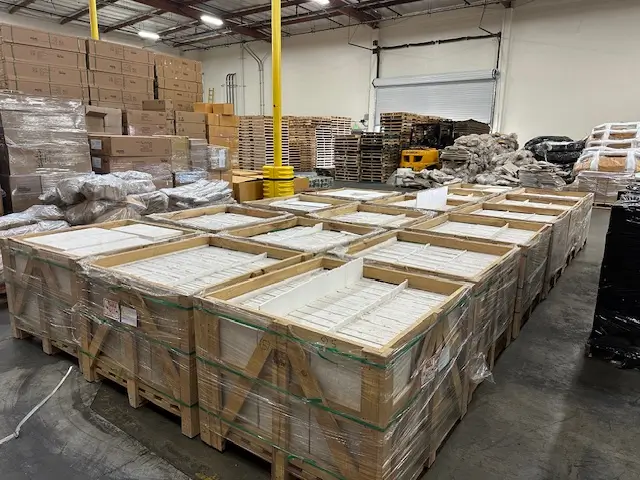
Your project timeline depends heavily on material delivery coordination and site staging capabilities. When you order from all paving materials Arizona dealers offering single-source supply, you’ll streamline logistics but must still manage the physical reality of moving tons of material to installation location. A typical 500-square-foot paver installation requires approximately 8,000 pounds of base aggregate, 1,200 pounds of bedding sand, 4,500 pounds of pavers, and 300 pounds of joint sand.
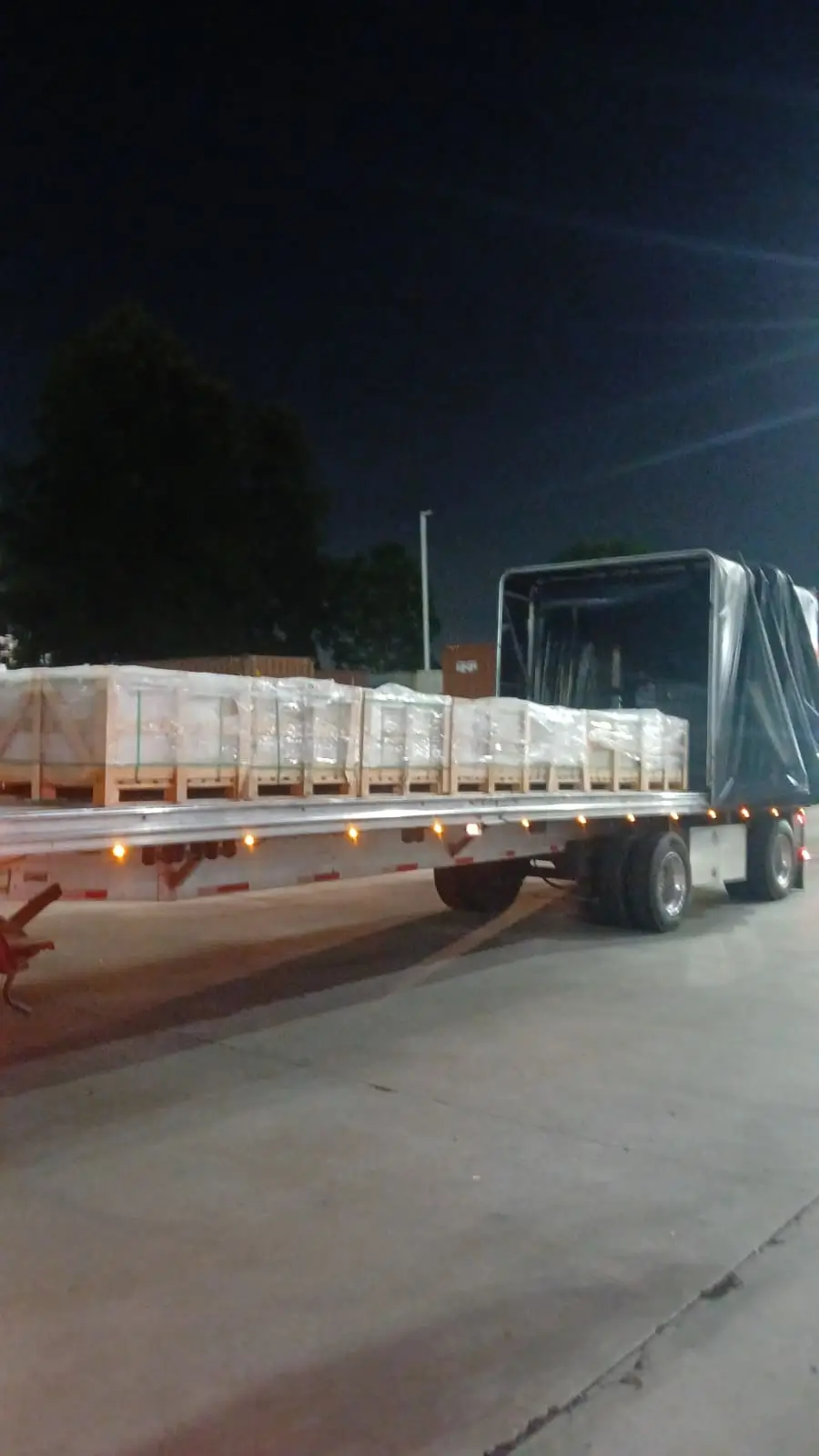
Delivery vehicle access determines whether materials arrive on large trucks requiring minimal handling or smaller vehicles necessitating multiple trips. Standard tractor-trailer deliveries need 14-foot width clearance, 75-foot straight approach, and firm surfaces supporting 40-ton gross vehicle weight. When your site can’t accommodate full-size trucks, you’ll pay premium freight charges for smaller vehicles or transfer points. Urban locations in Phoenix and Scottsdale often require boom truck deliveries that place pallets over walls or obstacles—this service adds $150-300 per pallet to freight costs.
Staging areas must provide stable, level surfaces protecting materials from moisture and contamination. You’ll need approximately 150-200 square feet of staging space per 500 square feet of paver installation. Base aggregate can be dumped directly onto prepared subgrade in many cases, reducing double-handling labor. Bagged sand and pavers must stay on pallets elevated at least 2 inches above grade using spacer boards. You should cover all materials with tarps or plastic sheeting—monsoon rains can saturate bedding sand or joint sand, rendering it unusable.
Warehouse Inventory and Lead Times
When you plan installation schedules, you must account for realistic lead times from order placement to material delivery. Paving supplies one stop Phoenix operations maintain inventory on common items but special-order materials that extend timelines by 2-6 weeks. Your project planning should distinguish between stock items available for immediate delivery and special-order products requiring manufacturer lead time.
Base aggregate, bedding sand, and standard concrete pavers typically ship within 3-5 business days of order placement. These commodity materials move through distribution warehouses quickly, and suppliers maintain buffer inventory to handle normal demand fluctuations. Natural stone pavers, porcelain pavers, and specialty edge restraint systems often require 15-30 days for delivery from manufacturer to warehouse then to job site. International products from Europe or Asia extend lead times to 60-90 days when accounting for ocean freight and customs clearance.
- You should verify warehouse stock levels before committing to project timelines with clients
- Your order should include 5-8% overage on pavers to cover cuts, breakage, and future repairs
- You need to coordinate delivery dates in sequence with installation progression
- Your staging area must accommodate early deliveries if scheduling requires buffer time
- You must inspect materials immediately upon delivery and note damage on delivery receipts
Seasonal demand affects availability on popular items. Spring installation season from March through May creates warehouse inventory pressure as contractors compete for the same materials. You’ll find better availability and often negotiate better pricing during slower summer months when extreme heat reduces installation activity. Winter months from December through February offer maximum material availability as most contractors pause hardscape installations.
Cost Factors and Budget Planning
Your material costs represent 40-55% of total installed price for typical paver projects, making accurate estimation critical for profitable outcomes. When you source paving supplies in Arizona from multiple vendors, you’ll spend significant time coordinating quotes and managing purchase orders. Single-source suppliers streamline procurement but you should verify competitive pricing through periodic market comparison.
Base aggregate costs range from $28-42 per ton delivered, with pricing varying based on material type, delivery distance, and order volume. Crushed granite base commands premium pricing over recycled concrete base, though both meet structural specifications. You’ll need 0.11-0.13 tons of base per square yard at 6-inch depth after compaction. Bedding sand runs $35-50 per ton delivered, with washed concrete sand at the lower end and specialty paver sand at the upper range.
Paver costs vary dramatically by material type and finish complexity. Standard concrete pavers range from $2.80-6.50 per square foot, natural stone pavers run $8-18 per square foot, and premium porcelain pavers command $12-25 per square foot. These prices reflect material only—you’ll add 15-20% for waste, cuts, and breakage. Edge restraint adds $1.50-3.00 per linear foot depending on system type. Joint sand contributes $0.40-0.85 per square foot for polymeric products versus $0.15-0.25 per square foot for conventional sand.
Freight charges significantly impact total material costs, especially for projects in remote Arizona locations. Deliveries to Flagstaff, Sedona, or rural areas can add 25-40% to base material pricing compared to Phoenix metro deliveries. You should request delivered pricing rather than FOB warehouse pricing to accurately compare supplier quotes. Minimum order requirements from some suppliers force small projects to pay premium freight rates or accept split deliveries that delay installation.
Citadel Stone – Premium Paving Slabs Supply Guide for Arizona Installations
When you evaluate Citadel Stone’s paving slabs for your Arizona projects, you’re considering premium materials engineered specifically for extreme desert environments and high-altitude climate zones. At Citadel Stone, we provide technical guidance for hypothetical applications across Arizona’s diverse regions, from low-desert valleys to high-country pine forests. This section outlines how you would approach material specification and accessory selection for six representative Arizona cities, demonstrating the complete supply chain considerations necessary for successful installations.
Arizona’s geographic diversity creates distinct specification requirements that affect every component of your paving system. You’ll encounter low-desert zones where summer surface temperatures exceed 165°F, high-desert regions with 80°F diurnal temperature swings, and mountain areas with legitimate freeze-thaw cycling. Your material selection must address thermal expansion coefficients ranging from 5.1 × 10⁻⁶ to 6.4 × 10⁻⁶ per degree Fahrenheit depending on paver composition. Complete paving kit suppliers understand these regional variations and stock accessories appropriate for each climate zone.
Phoenix Desert Specifications
In Phoenix applications, you would specify light-colored paving slabs to minimize heat absorption in residential and commercial hardscapes. Surface temperatures on dark pavers can reach 180°F during July and August, creating unusable outdoor spaces and thermal stress that accelerates weathering. Your base preparation would need to account for expansive clay soils common throughout the Phoenix basin, requiring 8-inch minimum base depth with geogrid reinforcement. You should recommend polymeric joint sand rated for high-temperature stability, as conventional products can soften when surface temperatures exceed 150°F. Edge restraint specifications would address 1/4-inch thermal expansion in 20-foot runs during peak summer conditions. Your sealer selection would prioritize UV resistance rated for 4,000+ annual sunshine hours, with reapplication intervals of 3-4 years rather than standard 5-year cycles.
Tucson Material Considerations
Your Tucson specifications would address similar heat factors as Phoenix while accounting for slightly higher elevation and increased winter temperature variation. You would recommend paving slabs with proven thermal cycling performance across 110°F daily swings during spring and fall transition seasons. Base aggregate specifications would include caliche penetration considerations, as hardpan layers at 18-24 inches below grade can trap water and compromise drainage. Your accessory package would include penetrating sealers to protect against efflorescence, which appears more frequently in Tucson’s slightly higher-moisture environment. You should specify geotextile fabric with 85% water flow rate to maintain drainage while preventing soil migration into base layers. Edge restraint installation would require anchoring into compacted base rather than native soil to ensure holding power in granular desert soils.
Scottsdale Luxury Applications
When you specify for Scottsdale luxury installations, you would recommend premium paving slabs with tumbled or antiqued edges that complement high-end architectural finishes. Your accessory selections would include aluminum edge restraint for clean sight lines and curved pattern capabilities common in resort-style designs. You should specify natural joint sand rather than polymeric products for applications where authentic weathered appearance is desired, though this requires annual replenishment service. Base specifications would maintain Phoenix-area standards while adding premium compaction requirements to prevent settlement in high-value installations. Your sealer recommendations would include penetrating products that protect without creating glossy appearances that conflict with natural stone aesthetics. You would coordinate truck deliveries through gated community access procedures and plan material staging to minimize visible construction impact in exclusive neighborhoods.
Flagstaff Freeze-Thaw Performance
Your Flagstaff specifications would shift dramatically from desert applications, addressing 100+ annual freeze-thaw cycles and seasonal snow loads. You would recommend dense paving slabs with less than 3% absorption rate to prevent water intrusion that causes spalling during freeze events. Base depth specifications would increase to 10-12 inches to extend below frost penetration depth of 18 inches typical at 7,000-foot elevation. Your joint sand specifications would require polymer-modified products that remain flexible at temperatures down to 0°F while resisting washout during spring snowmelt. You should recommend concrete edge restraint haunched below frost line rather than plastic systems that can heave during freeze-thaw cycles. Your complete material package would include calcium chloride alternatives for ice melt, as conventional rock salt damages pavers and joint sand. Delivery logistics would account for seasonal road closures and winter access limitations that affect project scheduling.
Sedona Aesthetic Integration
In Sedona applications, you would specify paving slabs in earth-tone colors that integrate with red rock landscape aesthetics and design review requirements. Your material selections would balance heat performance for 4,500-foot elevation with moderate freeze-thaw exposure during winter months. Base specifications would address unstable slopes common in hillside construction, requiring geogrid reinforcement and specialized drainage considerations. You should recommend natural stone edge restraint or concealed systems that don’t create visible modern elements conflicting with regional design preferences. Your sealer specifications would include matte-finish penetrating products that enhance color without creating artificial gloss. Material deliveries would navigate narrow canyon roads with switchback access, requiring smaller trucks and extended delivery timelines. You would coordinate staging areas to comply with strict site disturbance limitations in environmentally sensitive zones.
Yuma Extreme Heat Durability
Your Yuma specifications would address the most extreme heat conditions in Arizona, where summer temperatures exceed 110°F for 100+ days annually. You would recommend highly reflective paving slabs to minimize heat absorption in what’s documented as North America’s sunniest location. Base preparation would account for wind-blown sand infiltration common in low-desert environments, requiring sealed edge conditions and regular maintenance access. Your joint sand specifications would demand high-temperature stability and wind resistance, likely requiring polymer-modified products with enhanced binding strength. You should recommend UV-stabilized edge restraint materials, as standard plastics degrade within 5-7 years under Yuma’s intense solar exposure. Your sealer recommendations would include products rated for 4,500+ annual sunshine hours with 2-3 year reapplication intervals. Delivery coordination would avoid summer months when warehouse storage and truck transport can heat materials above recommended installation temperatures.
Quality Verification and Testing Protocols
Your professional reputation depends on installing materials that meet published specifications and perform as expected. When you receive paving supplies in Arizona, you should implement verification protocols that catch defects before installation rather than discovering problems after project completion. Visual inspection catches obvious damage but misses internal defects that cause premature failure.
You should inspect pavers for dimensional consistency using random sampling across multiple pallets. Select 10-12 units from different pallets and measure length, width, and thickness at multiple points. Variation exceeding ±1/8 inch in plan dimensions or ±1/16 inch in thickness indicates manufacturing inconsistencies that create installation difficulties and visual irregularities. Check edges for chips, cracks, and spalls that occurred during manufacturing or shipping—reject pallets showing damage on more than 5% of surface-visible units.
- You need to verify color consistency by laying out samples from different pallets in full sunlight
- Your inspection should confirm that joint spacers or chamfers are intact and consistent
- You must check that banding or strapping hasn’t created edge damage during transport
- You should document any defects with photos before accepting delivery
- You need to obtain manufacturer certifications for ASTM compliance on commercial projects
Base aggregate verification requires simple field testing that confirms material meets specifications. You should perform gradation assessment by spreading a shovelful on flat surface and examining particle size distribution. Properly graded material will show even distribution of particle sizes from 1.5 inches down to fines. Material with excessive fines appears dusty and won’t drain properly. Material lacking fines won’t compact to specified density. You can perform quick compaction testing by driving over test area with loaded truck—properly compacted base won’t show tire rutting or deformation.
Bedding sand should pass the squeeze test described earlier. When you grab a handful of slightly damp sand and squeeze firmly, it should hold shape temporarily then crumble with light finger pressure. Material that stays firmly bonded contains too much clay. Material that won’t hold any shape lacks sufficient fines for proper paver bedding. You should reject bedding sand showing visible clay balls, organic debris, or salt crystallization.
Common Specification Mistakes That Compromise Projects
Your installation success depends on avoiding specification errors that create performance problems or installation difficulties. These mistakes appear frequently in Arizona projects because specifiers apply standards from other regions without adjusting for desert climate conditions. You’ll benefit from understanding these common errors and implementing corrective specifications.
Undersized base thickness represents the most frequent structural error. You’ll see specifications calling for 4-inch base under pedestrian pavers, which might work in stable clay soils but fails in Arizona’s granular desert soils and areas with expansive clay. Your minimum base thickness should reach 6 inches for pedestrian areas, 8 inches for vehicular traffic, and 10-12 inches in poor soil conditions. This adds only $0.50-0.75 per square foot to material cost while preventing thousands in future repair expenses.
Inadequate drainage specifications cause more long-term problems than any other design element. You’ll encounter plans showing pavers installed dead-level or with insufficient slope. Your minimum slope should reach 2% (1/4 inch per foot) in all directions, increasing to 3% for areas with poor base drainage or clay soils. The slope must exist in the base layer itself—you can’t create proper drainage by sloping only the paver surface over level base.
- You need to avoid specifying rounded gravel for base applications where angular crushed stone is required
- Your specification must differentiate between concrete sand and paver bedding sand
- You should reject plans that omit edge restraint or use inadequate restraint systems
- You must correct specifications allowing polymeric sand installation in cold weather or on wet pavers
- You need to revise sealer specifications that ignore Arizona’s extreme UV exposure
Joint width specifications frequently conflict with thermal expansion requirements. Standard 1/8-inch joints work adequately in moderate climates but Arizona’s temperature extremes require 3/16-inch minimum joint width. You’ll observe buckling and edge spalling in installations with insufficient joint spacing when pavers expand during summer heat. Your specifications should explicitly state 3/16-inch joints for Arizona applications, increasing to 1/4-inch for dark pavers exceeding 150°F surface temperature.
Final Considerations
When you approach comprehensive paving supply planning for Arizona projects, you’re managing complex interactions between climate factors, material properties, installation techniques, and long-term maintenance requirements. Success requires you to think beyond individual components and consider the integrated system performance. Your specification decisions for base aggregate affect drainage patterns that influence joint sand retention. Your edge restraint selection determines whether thermal expansion causes buckling or dissipates harmlessly through joints. Your sealer choice impacts slip resistance, color retention, and required maintenance intervals.
Professional installations distinguish themselves through attention to these interconnected details. You should develop relationships with all paving materials Arizona dealers who understand regional requirements and maintain consistent inventory of specification-grade materials. Your project planning must account for realistic lead times, delivery logistics, and staging requirements that affect installation schedules. You need to implement quality verification protocols that catch defects before installation rather than discovering problems after completion. For additional insights on local sourcing and contractor coordination, review Local suppliers offering paving tools and materials in Arizona before you finalize your project documents. Citadel Stone supplies heavy-traffic paving slabs and sells to municipal projects distributed across Arizona.