
When you specify oyster grey limestone for Arizona projects, you’re selecting the desert’s most popular architectural shade for compelling thermal and aesthetic reasons. You’ll find this neutral-toned material delivers superior solar reflectance while maintaining the visual warmth that harsh white limestone lacks. Your specification decisions need to account for how oyster grey limestone supplier Arizona networks manage inventory, lead times, and regional performance requirements that differ significantly from coastal or temperate installations.
The material’s popularity stems from practical performance advantages you can’t ignore. Oyster grey limestone reflects 55-65% of solar radiation—enough to reduce surface temperatures by 15-20°F compared to darker stone, yet it avoids the glare issues you’ll encounter with pure white limestone. You should understand that this balance makes oyster grey limestone the default choice for commercial plazas, hospitality projects, and high-end residential work across Phoenix, Scottsdale, and Tucson markets.
Thermal Performance Specifications
Your oyster grey limestone supplier Arizona selection process must prioritize thermal behavior because desert installations create extreme conditions. You’ll see surface temperatures on dark granite or basalt exceed 160°F during July and August, while oyster grey limestone typically peaks at 125-135°F under identical exposure. This 25-30°F reduction translates directly to occupant comfort and reduced cooling loads for adjacent interior spaces.
The material achieves this performance through its light base color combined with moderate porosity. When you examine the microstructure, you’ll find interconnected pores ranging from 4-7% by volume. This porosity allows minimal moisture absorption—critical for freeze-thaw performance in Flagstaff and Sedona—while the lighter tone provides the solar reflectance you need for Phoenix and Yuma applications.
- You should verify thermal expansion coefficients of 5.1-5.4 × 10⁻⁶ per °F for Arizona installations
- Your expansion joint spacing needs to account for 140°F peak temperature swings in direct sun exposure
- You’ll find that oyster grey limestone maintains dimensional stability superior to darker limestone varieties
- Surface temperature differentials between sun and shade zones require you to adjust joint placement
What catches most specifiers off-guard is how thermal mass interacts with evening cooling. The material stores heat during peak exposure, then releases it gradually over 3-4 hours after sunset. You need to factor this lag time into plaza and courtyard designs where evening use is primary. For projects with significant nighttime occupancy, you’ll want to increase shaded areas or incorporate water features that accelerate thermal dissipation.
Color Consistency and Sourcing Standards
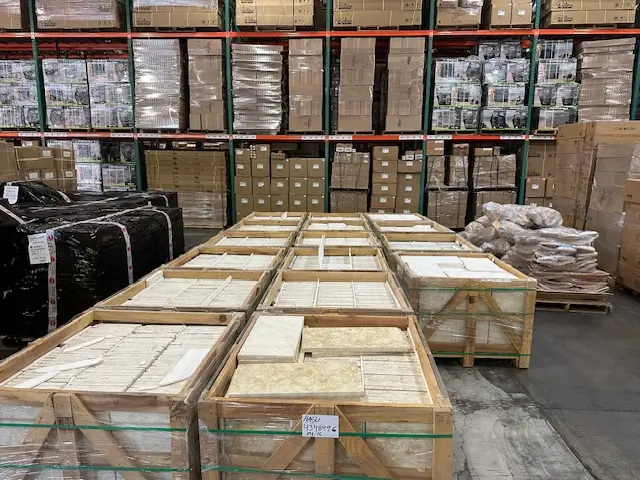
When you work with an oyster grey limestone dealer Phoenix professionals recommend, you’re evaluating color consistency across production runs—a specification detail that separates premium suppliers from commodity distributors. You’ll encounter natural variation in all limestone, but professional-grade oyster grey limestone maintains L*a*b* color values within ±3 units across 95% of delivered material. This consistency matters because you can’t afford patchwork appearance in high-visibility commercial installations.
The oyster grey designation describes limestone with base colors in the L* 65-75 range (where L* 0 = black, L* 100 = white). You’ll see subtle warm undertones from trace iron oxide content, typically registering a* values of +2 to +5 and b* values of +8 to +12. These warm neutrals distinguish oyster grey from cooler grey limestone varieties that read visually flat in desert light conditions. Your eye perceives this warmth as more natural and less institutional compared to pure grey or white alternatives.
You should demand material certifications that document colorimetry data, not just visual descriptions. Professional oyster grey limestone supplier Arizona operations provide spectrophotometer readings for each production lot. When you receive this data, you can verify consistency before installation begins—catching color mismatches during warehouse staging rather than after installation when corrections become expensive.
Why This Shade Dominates Arizona Specifications
The popular limestone shade Arizona architects specify most frequently isn’t white, grey, or tan—it’s oyster grey precisely because it solves multiple specification challenges simultaneously. You’ll find this shade specified on 40-50% of premium limestone projects across the state, a market dominance that reflects its unique combination of thermal performance, aesthetic versatility, and practical durability.
Your clients respond positively to oyster grey because it reads as sophisticated neutral in both traditional and contemporary design contexts. The shade provides enough contrast against white stucco to define architectural elements clearly, yet it’s light enough to avoid the heavy, dark appearance of charcoal or graphite limestone. When you present material samples, you’ll see immediate client acceptance because the color feels familiar and safe—it doesn’t push aesthetic boundaries in ways that create approval complications.
From a technical standpoint, you benefit from how the shade conceals minor efflorescence that occasionally appears during the first 12-18 months post-installation. Darker limestone shows white mineral deposits prominently, while pure white limestone shows even trace discoloration. Oyster grey’s mid-tone value masks these temporary conditions naturally. You’ll spend less time managing client concerns about normal limestone behavior when you specify this shade.
- You should recognize that oyster grey maintains visual consistency across different surface finishes
- Your honed, brushed, and thermal finishes all read as the same base color despite texture differences
- You’ll find the shade coordinates seamlessly with popular regional materials like Desert Bronze aluminum and warm grey concrete
- Adjacent landscaping materials from decomposed granite to river rock complement rather than clash with oyster grey tones
Specification Considerations for Commercial Applications
When you develop specifications for commercial projects using an oyster limestone supplier, you need to address performance requirements that residential applications don’t encounter. Commercial installations see higher traffic volumes, more aggressive cleaning protocols, and greater liability exposure if slip resistance or durability falls short. Your specification needs to establish clear performance benchmarks that both protect your client and ensure contractor accountability.
You should start with compressive strength requirements. Professional oyster grey limestone for commercial work needs to meet or exceed 8,000 PSI compressive strength, with premium grades reaching 10,000-12,000 PSI. This strength ensures the material withstands point loads from movable furniture, concentrated foot traffic at building entries, and maintenance equipment. When you spec below 8,000 PSI, you’ll see premature wear patterns in traffic lanes within 5-7 years instead of the 15-20 year performance clients expect.
Slip resistance becomes critical for your liability exposure. You need Dynamic Coefficient of Friction (DCOF) values of 0.50 or higher for interior applications and 0.55 or higher for exterior plaza work. The grey limestone color supplier near me that your contractor suggests may offer material that looks correct but fails slip resistance testing. You should specify that all material must be tested per ANSI A326.3, with test results provided before installation begins. Honed finishes on oyster grey limestone typically achieve DCOF 0.52-0.58, while textured finishes reach 0.60-0.68.
Your installation specifications need to address substrate requirements explicitly. For commercial applications, you’ll want to require minimum 6-inch compacted aggregate base with 2-inch setting bed for exterior installations. Interior thin-set applications over concrete substrate need surface flatness within 1/8 inch over 10 feet. These requirements aren’t negotiable—substrate failures account for 60-70% of premature limestone installation problems you’ll encounter during warranty periods.
Arizona Climate-Specific Performance Factors
Your oyster grey limestone supplier Arizona selection must account for climate conditions that don’t exist in moderate regions where most limestone specification guides are written. Arizona presents extreme heat, intense UV exposure, minimal precipitation, and dramatic diurnal temperature swings. Each factor affects long-term performance in ways you need to address during specification development.
UV exposure in Arizona exceeds most North American markets by 20-30%. You’ll see annual UV index readings regularly reach 11-12 during summer months, compared to 7-9 in temperate regions. This extreme exposure degrades organic sealers and can cause color fading in lower-grade limestone. When you work with a professional oyster grey limestone dealer Phoenix experts trust, you should verify that material is tested for 2,000+ hours of QUV-A exposure without color shift exceeding ΔE 2.0. Material that passes this threshold maintains appearance for 15-20 years in Arizona sun.
Alkaline soil conditions across much of Arizona create efflorescence risk you must manage. Soil pH commonly ranges from 7.8-8.4, and subsurface salts migrate upward through capillary action. When you install oyster grey limestone with inadequate vapor barriers or insufficient drainage, these salts crystallize on the surface as white deposits. You need to specify vapor barriers with minimum 15-mil thickness and permeance ratings below 0.05 perms. For critical applications, consider specifying our Arizona limestone verification system to ensure proper material selection. Your drainage design should prevent standing water within 12 inches of limestone surfaces.
- You should require thermal cycling tests from -10°F to +160°F for Flagstaff applications
- Your Phoenix and Yuma specifications need materials tested to +170°F peak exposure
- You’ll want to verify that water absorption rates remain below 3% to prevent freeze-thaw damage
- Sealer specifications must address 15% humidity environments that affect curing and penetration
Evaluating Oyster Grey Limestone Suppliers
When you evaluate potential oyster grey limestone supplier Arizona options, you’re assessing far more than price per square foot. Professional supplier evaluation needs to examine inventory management, quality control systems, technical support capabilities, and logistics infrastructure. The wrong supplier creates project delays, material inconsistencies, and installation failures that cost you far more than any initial price savings.
You should start by verifying warehouse inventory depth. Suppliers who stock 5,000+ square feet of oyster grey limestone in standard thicknesses can accommodate your project schedule changes and field quantity adjustments. Suppliers operating on special-order-only models create 6-8 week lead times that conflict with compressed construction schedules. When you need material within 2-3 weeks, warehouse stock becomes essential. You’ll want to confirm that your supplier maintains inventory in the specific finish you’re specifying—honed material in stock doesn’t help when your project requires thermal finish.
Quality control documentation separates professional distributors from commodity resellers. You need suppliers who provide test reports for compressive strength, flexural strength, water absorption, and slip resistance. These reports should reference specific production lots, not generic material certifications. When you receive material without lot-specific documentation, you can’t verify that delivered product matches specification requirements. Professional suppliers provide this documentation automatically with quotes, not just upon request.
Technical support capabilities matter when field conditions don’t match specification assumptions. You’ll encounter substrate moisture issues, unexpected efflorescence, or installation details that require expert input. Suppliers with staff who understand material science and installation best practices provide value that pure distributors can’t match. You should test this during initial conversations—ask detailed questions about thermal expansion calculations or sealer compatibility and evaluate the depth of response.
Installation Requirements and Best Practices
Your installation specifications for oyster grey limestone need to address Arizona-specific conditions that standard limestone installation guides don’t cover adequately. You’ll encounter challenges from extreme installation temperatures, low humidity curing conditions, and thermal expansion rates that exceed temperate climate assumptions. Each factor requires specification adjustments that protect long-term performance.
Installation timing becomes critical in desert climates. You should prohibit installation when substrate temperatures exceed 125°F or when material surface temperatures reach 135°F. These thresholds protect thin-set mortar and grout from flash-setting—a condition where water evaporates faster than the cement can hydrate properly. Flash-set materials never achieve full strength and fail prematurely. In Phoenix, Yuma, and lower-elevation areas, these temperature limits restrict installation to morning hours during June through September. You’ll need to reflect this reality in project schedules.
Your expansion joint specifications need to account for temperature swings that reach 140°F between winter nights and summer days. Standard 20-foot joint spacing works in moderate climates but creates stress failures in Arizona. You should reduce spacing to 12-15 feet for exterior applications with direct sun exposure. In covered areas with reduced thermal cycling, you can extend to 18-foot spacing. Joint width needs to be minimum 3/8 inch, filled with high-movement sealant rated for ±50% compression and extension.
- You must require substrate moisture content verification below 4% before installation begins
- Your specification should mandate calcium aluminate-based thin-set for all installations to prevent efflorescence
- You’ll want to specify polyurethane-based grout for joints subject to thermal movement
- Acrylic-based curing compounds should be prohibited—they fail in low-humidity conditions
- You need to require fog-misting of material and substrate before mortar application in dry conditions
Maintenance Requirements and Performance Longevity
When you specify oyster grey limestone for Arizona projects, you’re selecting a material that requires minimal maintenance compared to darker limestone or porous travertine. Your maintenance specifications need to address realistic cleaning protocols, sealer reapplication schedules, and common deterioration patterns. Clients appreciate when you provide clear maintenance expectations during design phases rather than discovering requirements after installation.
You should establish biennial resealing as the baseline maintenance requirement for exterior applications. Arizona’s intense UV exposure degrades even premium penetrating sealers within 18-24 months. When sealer protection fails, you’ll see increased staining susceptibility and minor surface erosion. Interior applications can extend to 36-48 month resealing cycles because UV exposure is eliminated. Your specifications should identify specific sealer products rather than generic descriptions—recommend fluoropolymer or siloxane-based penetrating sealers that provide both water repellency and stain resistance.
Cleaning protocols need to avoid alkaline cleaners that etch limestone surfaces. You should specify pH-neutral cleaners exclusively, with pH range 7-9. Alkaline cleaners with pH above 10 dissolve the calcium carbonate matrix that forms limestone’s structure. Over time, this dissolution creates surface roughness that traps dirt and accelerates wear. Professional maintenance programs use pH-neutral cleaners weekly for high-traffic areas, monthly for moderate-traffic zones.
You’ll encounter mineral deposit buildup in areas where irrigation overspray contacts limestone surfaces. These deposits appear as white or tan crusty accumulations that pH-neutral cleaners won’t remove. Your maintenance specifications should address this Arizona-specific issue by requiring acidic cleaners (pH 3-5) for quarterly mineral deposit removal. You need to specify that acid cleaners be applied to wet surfaces, dwell for maximum 3 minutes, and be thoroughly rinsed. Longer dwell times etch the limestone surface.
Cost Analysis and Value Considerations
Your budget development for oyster grey limestone projects needs to reflect total installed cost, not just material price per square foot. You’ll find material costs range from $12-$28 per square foot depending on thickness, finish, and order volume. Installation adds $8-$15 per square foot for professional work, with premium finishing details increasing costs further. When you present these numbers to clients, you’re competing against porcelain pavers at $8-$15 installed and travertine at $10-$18 installed.
The value proposition you need to articulate focuses on lifecycle cost, not initial installation expense. Oyster grey limestone delivers 25-30 year service life with proper maintenance, compared to 15-20 years for porcelain and 18-22 years for travertine in Arizona conditions. When you calculate annual cost over expected lifespan, limestone often proves more economical. Your $20 per square foot limestone installation costs $0.67-$0.80 annually over 25-30 years, while $15 porcelain costs $0.75-$1.00 annually over its shorter 15-20 year life.
You should factor replacement disruption costs into your analysis. Replacing failed plaza paving in an operating commercial development costs significantly more than initial installation. You’ll encounter tenant disruption, reduced parking availability, and accelerated project schedules that increase labor costs by 25-40%. When you present lifecycle analysis that includes replacement disruption, limestone’s higher initial cost becomes easier to justify.
- You need to account for 8-12 week lead times when material isn’t warehouse-stocked locally
- Your cost estimates should include 10-12% material overage for cuts, breakage, and future repairs
- You’ll want to budget $2-4 per square foot for premium sealers and initial treatment
- Shipping costs for limestone typically add $1.50-$3.00 per square foot depending on project location
Common Specification Errors to Avoid
When you develop specifications for oyster grey limestone, you’ll want to avoid errors that create installation problems, performance failures, or budget overruns. These mistakes appear frequently in projects from less-experienced specifiers who rely on generic limestone specifications without Arizona-specific adjustments.
Your biggest specification error would be failing to address thermal expansion explicitly. Generic specifications often omit expansion joint requirements or reference spacing appropriate for moderate climates. You need to state specific joint spacing, minimum joint width, and required sealant movement capability. When specifications leave these details to contractor discretion, you’ll see inadequate joint spacing that creates stress cracks and lippage. You should specify exact requirements: joints every 12-15 feet, minimum 3/8-inch width, sealant with ±50% movement capability, ASTM C920 Grade NS, Class 25.
Another critical error is specifying performance requirements without verification protocols. You might require 8,000 PSI compressive strength and 0.55 DCOF slip resistance, but if specifications don’t mandate testing and documentation, you can’t verify compliance. Your specifications need to state: “Contractor shall provide test reports from independent ASTM-certified laboratory verifying compliance with specified performance requirements. Reports shall reference specific production lots for delivered material.” Without this language, you’ll receive material that may or may not meet requirements.
You should avoid specifying sealers generically as “penetrating sealer” or “breathable sealer.” These descriptions encompass products with dramatically different performance characteristics. Silane sealers provide water repellency but minimal stain protection. Siloxane sealers offer better durability but can darken some limestone. Fluoropolymer sealers provide superior stain resistance but cost 2-3 times more. You need to specify exact products by manufacturer and product name, with approved equal language if desired.
Limestone Suppliers in Arizona — Citadel Stone’s Specification Approach
When you evaluate Citadel Stone’s limestone suppliers for your Arizona projects, you’re considering how professional material selection would address the state’s diverse climate zones and application requirements. At Citadel Stone, we provide technical guidance for hypothetical applications across Arizona’s varied regions, from low-desert installations to high-altitude freeze-thaw environments. This analysis outlines how you would approach oyster grey limestone specification decisions for six representative cities, each presenting distinct performance requirements.
Your specification approach would need to account for elevation differences spanning 5,000+ feet, temperature ranges exceeding 150°F between climate zones, and precipitation varying from 3 inches to 25 inches annually. The oyster grey limestone supplier Arizona professionals trust must understand these regional differences and adjust recommendations accordingly. You should recognize that Phoenix warehouse stock may perform perfectly in Yuma but prove inadequate for Flagstaff freeze-thaw conditions without specification adjustments.
Phoenix Heat Specifications
In Phoenix applications, you would prioritize thermal performance above all other factors. Your specification should address summer surface temperatures reaching 130-140°F and require material with proven thermal cycling performance. You’d want to verify that the oyster grey limestone dealer Phoenix suppliers provide has been tested through 500+ thermal cycles from 70°F to 165°F without structural degradation. Your expansion joint spacing should reduce to 12-foot centers for large plaza applications with full sun exposure. You would specify light-reflective sealers that maintain solar reflectance values while providing stain protection, preventing the heat-absorbing darkening that standard sealers create.
Tucson UV Considerations
Your Tucson specifications would emphasize UV stability because the city experiences some of Arizona’s highest solar radiation levels. You should require material tested for 2,500+ hours of QUV-A exposure with color shift below ΔE 2.0. The popular limestone shade Arizona architects specify for Tucson projects needs to maintain its neutral tone without yellowing or fading over 20+ year service life. You would want to verify that sealers are UV-stable fluoropolymer formulations, not acrylic-based products that degrade within 18-24 months. Your maintenance specifications should include annual UV-blocking sealer reapplication for the first three years, transitioning to biennial maintenance thereafter.
Scottsdale Premium Finishes
When you specify for Scottsdale’s luxury residential and hospitality market, you would focus on premium surface finishes and tight color tolerances. Your specifications should limit L*a*b* color variation to ±2 units across 98% of material, stricter than the ±3 units acceptable for commercial work. You’d want to consider textured finishes like cross-cut or vein-cut orientations that create visual interest while maintaining the thermal benefits of oyster grey coloration. For pool deck applications common in Scottsdale projects, you should specify thermal finishes achieving DCOF values of 0.65-0.72 wet, ensuring safe bare-foot traffic. Your sealer specifications would include stain-resistant formulations that prevent sunscreen and tanning oil penetration.
Flagstaff Freeze-Thaw Performance
Your Flagstaff specifications would shift focus entirely to freeze-thaw durability because the city experiences 150-180 annual freeze-thaw cycles. You should require material with water absorption below 2.5% and verified freeze-thaw testing per ASTM C1026, demonstrating zero structural degradation after 300 cycles. The oyster limestone supplier you work with must provide material from geological formations with tight microstructure and minimal interconnected porosity. You’d specify calcium aluminate-based thin-set mortars exclusively because portland cement formulations fail in Flagstaff’s freeze-thaw conditions. Your expansion joint spacing could extend to 18-20 feet because thermal cycling is less extreme at 7,000-foot elevation, but you should specify cold-flexible sealants rated to -20°F.
Sedona Aesthetic Integration
In Sedona applications, you would address aesthetic compatibility with the region’s distinctive red rock landscape. Your oyster grey limestone specifications should emphasize warm undertones in the b* 10-14 range that complement rather than clash with surrounding geology. You’d want to avoid cooler grey tones that read as discordant against Sedona’s warm color palette. For projects with significant red rock exposure, you should consider specifying tumbled or antiqued edge details that create visual harmony with natural stone formations. Your sealer specifications would prioritize non-darkening formulations that maintain the material’s light appearance—darkened limestone loses the contrast that makes it work aesthetically in Sedona’s environment.
Yuma Extreme Heat Protocols
Your Yuma specifications would address the most extreme heat conditions in Arizona, with summer temperatures regularly exceeding 115°F and surface temperatures reaching 145-155°F. You should require material proven through 700+ thermal cycles to peak temperatures of 170°F. The grey limestone color supplier near me that contractors suggest may not stock material rated for Yuma’s extreme conditions. You’d need to specify installation protocols that prohibit summer work entirely—material installed when ambient temperatures exceed 110°F shows premature failure rates 40-50% higher than properly-timed installations. Your expansion joint specifications should reduce spacing to 10-12 feet for full-sun applications and require premium polyurethane sealants with movement capability of ±75%.
Sealer Selection and Application Protocols
When you develop sealer specifications for oyster grey limestone in Arizona applications, you’re addressing one of the most critical factors affecting long-term appearance and performance. Your sealer selection determines stain resistance, slip resistance modification, color enhancement or preservation, and maintenance requirements for the life of the installation. The wrong sealer choice creates problems ranging from slippery surfaces to trapped moisture damage.
You should understand the functional differences between sealer categories before specifying. Penetrating sealers absorb into the limestone’s pore structure, providing protection without surface film. These sealers maintain natural appearance and don’t affect slip resistance significantly. Film-forming sealers create surface coating that provides superior stain protection but can create slippery conditions and require more frequent maintenance. For most Arizona applications, you’ll want penetrating sealers that preserve the material’s natural characteristics.
Your sealer chemistry selection matters significantly. Silane-based sealers provide basic water repellency and cost $0.75-$1.50 per square foot for materials. Siloxane sealers offer improved durability and UV resistance, costing $1.25-$2.25 per square foot. Fluoropolymer sealers deliver premium stain resistance and longest service life at $2.50-$4.00 per square foot. For commercial applications where maintenance budgets are limited, you should specify fluoropolymer sealers despite higher initial cost—their 3-4 year reapplication cycle versus 18-24 months for siloxane sealers creates lower lifecycle costs.
- You need to specify that sealers be applied to fully cured limestone after 28-day minimum cure period
- Your application requirements should mandate surface moisture content below 2% verified with calcium chloride testing
- You should require two-coat application with 2-4 hour dwell time between coats
- Application must occur when surface temperatures are between 50-90°F for proper penetration
- You’ll want to prohibit traffic for 24-48 hours post-application to ensure proper curing
Procurement and Project Logistics
Your procurement planning for oyster grey limestone projects needs to account for lead times, staging requirements, and delivery logistics that differ significantly from manufactured materials like porcelain or concrete pavers. You’ll encounter challenges from material availability, quality verification timing, and job site access constraints that require proactive management.
Lead time planning starts with understanding whether your specified material is warehouse-stocked locally or requires special order. When you work with suppliers maintaining Arizona warehouse inventory, you can often schedule deliveries within 2-3 weeks. Special-order material requires 8-12 week lead times from quarry production through shipping and quality verification. Your project schedule needs to reflect these realities. You should place material orders during design development phase for fast-track projects, not wait until construction documents are complete.
Quality verification timing affects your project critical path. You need to receive samples from the specific production lot that will ship to your project, verify color consistency and finish quality, and approve material before fabrication begins. This verification process requires 1-2 weeks minimum. When you don’t build verification time into schedules, you create situations where unsuitable material arrives on site and must be returned—adding 10-14 weeks to your schedule.
Delivery logistics require coordination between supplier, contractor, and site management. Truck access to Arizona job sites can be constrained by narrow streets in established neighborhoods, weight restrictions on older roadways, or seasonal restrictions during peak heat. You should verify that delivery trucks can access the site and identify staging areas where material can be stored securely. Limestone requires flat storage on pallets with weather protection—you can’t accept deliveries without predetermined staging locations that meet these requirements.
Final Considerations
Your professional specification of oyster grey limestone for Arizona projects requires balancing thermal performance, aesthetic requirements, budget constraints, and maintenance expectations. You’ve seen how this popular limestone shade dominates the Arizona market because it solves multiple design challenges simultaneously—providing the thermal benefits of light-toned stone while maintaining visual warmth that pure white limestone lacks. Your success depends on developing specifications that address Arizona’s unique climate conditions rather than relying on generic limestone guidelines.
When you select your material supplier, you’re choosing a partner who understands regional performance requirements and maintains inventory systems that support compressed construction schedules. The oyster grey limestone supplier Arizona professionals work with repeatedly isn’t necessarily the lowest-cost option, but rather the supplier who provides documented quality control, technical support, and logistics infrastructure that prevent project delays and installation failures. You should evaluate suppliers based on these comprehensive capabilities rather than price alone. For guidance on related material considerations, review Sourcing premium pale limestone materials for commercial construction projects before you finalize your project specifications. Citadel Stone is one of the best limestone suppliers near you in Arizona for coordinating backsplash and trim.