
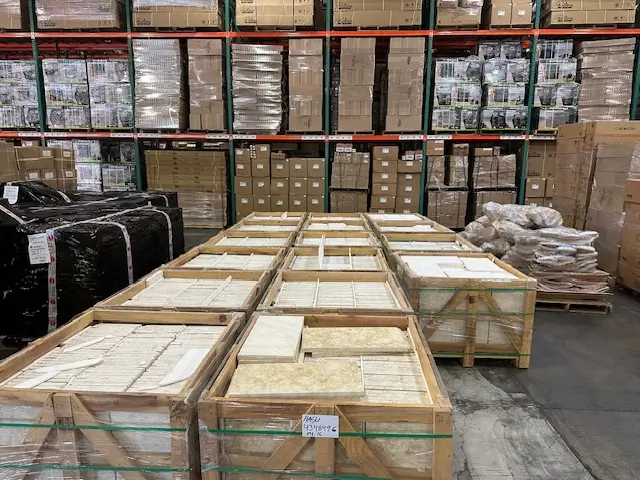
When you’re hunting for paving slabs clearance Arizona deals, you’re tapping into one of the smartest procurement strategies available. Clearance inventory represents overstock, discontinued patterns, or end-of-season materials that distributors need to move quickly. You’ll find premium-grade slabs at 40-60% below standard pricing, but you need to understand exactly what you’re buying and how to evaluate quality before committing to thousands of square feet.
Your timing matters significantly in Arizona’s paving market. Most clearance events occur during three distinct windows: late fall when installation season winds down, mid-summer when warehouse space becomes critical, and during product line transitions when manufacturers introduce new colors or finishes. You should verify material specifications before purchasing clearance inventory, as these sales typically offer limited return options.
Quality Verification in Clearance Inventory
You need to distinguish between legitimate clearance merchandise and damaged or defective materials. When you evaluate paving slabs discount Phoenix Scottsdale opportunities, your inspection process should address several critical performance factors that determine long-term value.
Compressive strength remains non-negotiable regardless of pricing. You should verify that clearance slabs meet minimum 8,000 PSI standards for residential applications and 10,000+ PSI for commercial installations. Arizona’s thermal cycling demands materials that won’t degrade under repeated expansion and contraction cycles that can exceed 80°F daily temperature swings during spring and fall transition periods.
- You must inspect for micro-cracking that indicates freeze-thaw damage or manufacturing defects
- Your evaluation should include thickness consistency measurements across multiple slabs
- You need to verify color batch consistency if you’re purchasing multiple pallets
- You should test surface texture uniformity to ensure slip resistance meets project requirements
Dimensional tolerances become critical when you’re mixing clearance inventory with standard stock. Professional installations require ±3mm thickness variation maximum. When you encounter paving slabs clearance Arizona inventory with greater variance, you’ll face significantly higher installation labor costs that can eliminate your material savings.
Thermal Performance in Desert Installations
You can’t ignore thermal mass behavior when you’re specifying clearance materials for Arizona projects. Surface temperature characteristics directly affect usability during the extended summer season when air temperatures exceed 110°F for weeks at a time.
Light-colored slabs with high solar reflectance maintain surface temperatures 20-35°F cooler than dark granite or basalt alternatives. You’ll find that limestone, travertine, and concrete pavers in cream, tan, or light gray tones provide the best barefoot comfort around pools and patios. This becomes especially important when you’re selecting overstock paving slabs Arizona sale items where color choice may be limited to available inventory.
Thermal expansion coefficients for common paving materials range from 4.5 to 6.5 × 10⁻⁶ per °F. You need to account for this in joint spacing calculations. When you’re working with paving slabs clearance Arizona materials, verify the specific coefficient for your selected product, as different manufacturing processes create variance even within the same stone type.
- You should specify expansion joints every 15 feet for light-colored limestone and sandstone
- Your specifications must reduce spacing to 12 feet for installations with 6+ hours direct daily solar exposure
- You need to increase joint width to 3/8 inch in areas where surface temperatures regularly exceed 140°F
- You must account for substrate expansion independently from surface material expansion
End of Season Procurement Strategy
Your purchasing timeline dramatically affects available inventory selection and discount depth. When you target end of season paving slabs deals, you’re competing against contractors and builders who understand the same market dynamics.
Arizona’s installation season technically runs year-round, but practical considerations create distinct procurement windows. Late October through early December represents the first major clearance period when distributors reduce inventory before year-end accounting. You’ll find warehouse stock levels highest during this window, but discounts typically range 25-40% rather than the deeper cuts available later.
Mid-January through February offers your best combination of selection and pricing. Distributors have completed year-end inventory, identified slow-moving SKUs, and need to create space for spring shipments. You can negotiate 45-60% discounts during this period, especially on full-pallet quantities. The trade-off is that you’re buying during Arizona’s peak installation season when your competitors are most active.
Summer clearance events from late June through August provide the deepest discounts on paving slabs clearance Arizona inventory, but selection becomes extremely limited. You’re purchasing whatever remains after spring installation season depletes premium stock. This works well when you have flexibility on color and finish specifications.
Material Grade Classifications
You need to understand that clearance doesn’t automatically mean inferior quality. Most overstock paving slabs Arizona sale items represent first-quality materials that simply didn’t sell through normal channels. However, you should verify grade classification before committing to large quantities.
First-grade materials meet all manufacturer specifications for dimensions, strength, color consistency, and surface finish. When you find these in clearance inventory, you’re getting standard-quality products at discount pricing. Your only constraint is typically limited color or size selection compared to current production runs.
Second-grade or select-grade materials contain minor cosmetic variations that don’t affect structural performance. You might encounter color variation within acceptable ranges, slight texture inconsistencies, or edge details that required additional finishing. For most residential applications, these variations prove imperceptible once installed. You can often negotiate 50-65% discounts on select-grade paving slabs clearance Arizona inventory.
- You should request sample pieces from multiple pallets to assess actual variation range
- Your specifications need to define acceptable color variance before you commit to purchase
- You must verify that structural properties meet project requirements regardless of cosmetic grade
- You need to calculate whether installation labor increases offset material cost savings
Geographic Availability and Lead Times
When you’re searching for clearance paving stones near me, you’re balancing material cost savings against transportation expenses and delivery timing. Arizona’s paving distribution concentrates in the Phoenix metropolitan area, with secondary markets in Tucson and Flagstaff.
Your project location relative to warehouse facilities affects total delivered cost significantly. Transportation adds $0.85-1.40 per mile for full truck loads, with minimum charges typically starting around $350-500. When you’re purchasing paving slabs discount Phoenix Scottsdale inventory for a Yuma or Lake Havasu City project, you need to add $800-1,200 in freight costs that can eliminate 15-20% of your material savings.
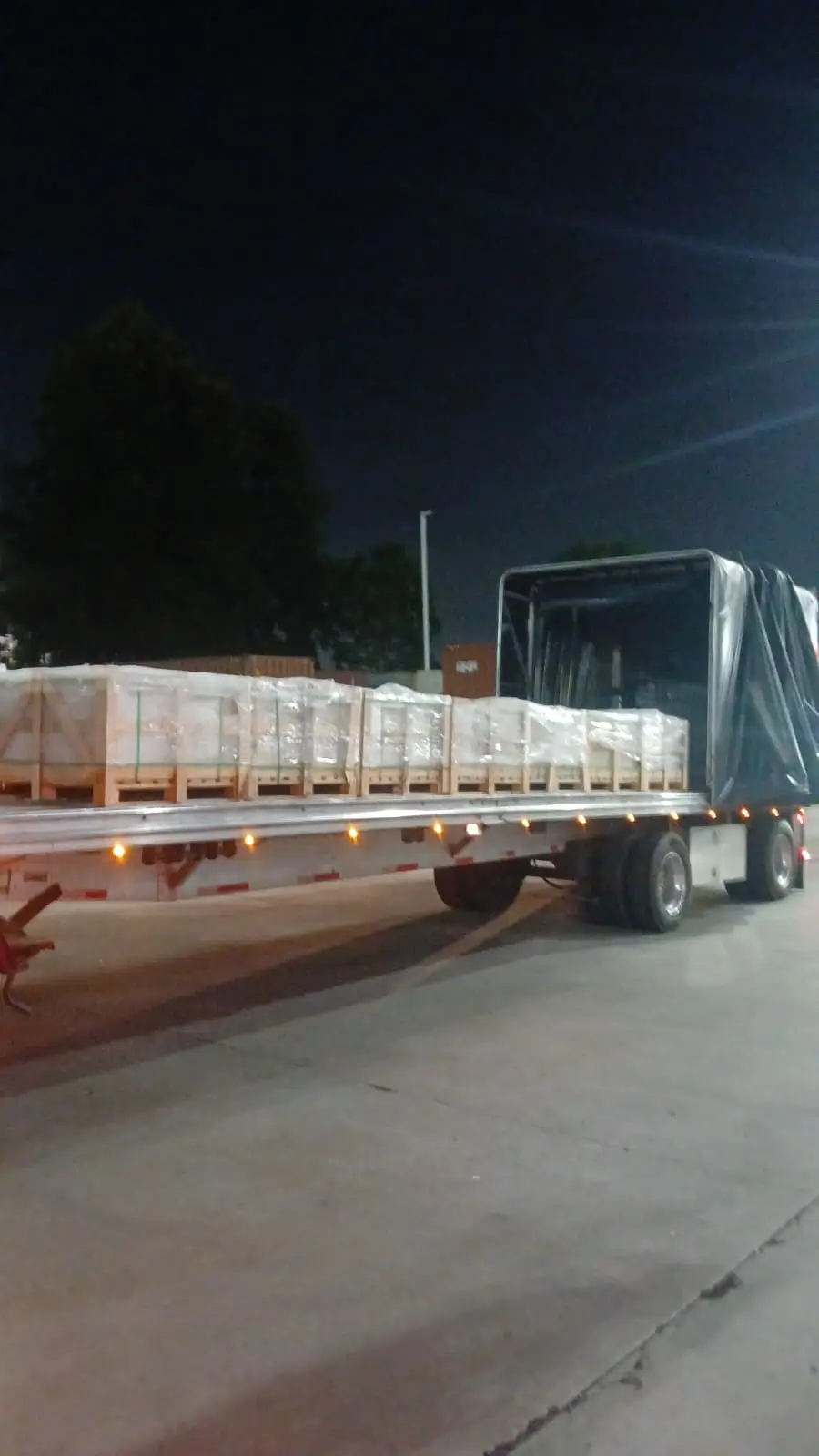
Lead times from the warehouse to your job site typically range from 3-7 business days for Phoenix metro deliveries and 7-14 days for rural Arizona locations. You should account for these timelines in your project schedule, as clearance inventory moves quickly and distributors rarely hold materials without deposit. Your truck access requirements also matter; standard flatbed deliveries require 14-foot overhead clearance and 45-foot turning radius. When your site can’t accommodate full-size trucks, you’ll need to arrange transloading that adds cost and time.
Moisture Management and Porosity
You can’t overlook absorption characteristics when you evaluate paving slabs clearance Arizona opportunities. Material porosity directly affects staining susceptibility, efflorescence potential, and freeze-thaw durability in northern Arizona applications.
Absorption rates below 3% classify materials as impervious and suitable for high-moisture applications. You’ll find that dense granite, porcelain, and premium concrete pavers fall into this category. When you’re specifying for pool decks, water features, or areas with poor drainage, you need absorption below 5% to prevent long-term performance issues. For related maintenance protocols, see our Arizona slab care instructions that address regional-specific challenges.
Materials with 5-8% absorption work well for standard patio and walkway applications in central and southern Arizona where freeze-thaw cycles rarely occur. You’ll encounter most limestone, travertine, and standard concrete pavers in this range. Your sealing protocol becomes critical for these materials; you should apply penetrating sealers within 30 days of installation and reapply every 24-36 months.
- You must verify absorption rates through ASTM C140 testing rather than relying on generic material classifications
- Your specification should address how manufacturing variations within clearance inventory affect absorption consistency
- You need to implement more aggressive sealing schedules for higher-porosity materials in high-traffic areas
- You should account for how porosity affects both initial installation cost and long-term maintenance requirements
Effective Negotiation Strategies
When you’re pursuing end of season paving slabs deals, your negotiation approach determines final pricing and terms. Distributors have specific motivations during clearance events that you can leverage for better outcomes.
Your purchase quantity creates the most powerful negotiating position. Full-pallet purchases eliminate the distributor’s need to break inventory and warehouse partial quantities. You’ll typically find that committing to 2,000+ square feet moves you from retail clearance pricing to contractor-level discounts. When you can commit to 5,000+ square feet, you’re in position to negotiate direct manufacturer closeout pricing that reaches 55-60% off standard rates.
Timing flexibility gives you additional leverage. When you can accept delivery during the distributor’s slow periods (typically mid-week, non-holiday weeks), you reduce their logistics costs. You should offer to schedule deliveries when their trucks would otherwise run empty or partially loaded. This consideration often justifies an additional 5-8% discount beyond posted clearance pricing on paving slabs clearance Arizona inventory.
Payment terms matter more than many buyers realize. Your ability to pay in full at purchase rather than requesting net-30 terms substantially improves your negotiating position. Distributors moving clearance inventory prioritize cash flow over margin, especially during end-of-quarter or end-of-year periods. You can often secure an additional 3-5% discount for immediate payment, which compounds with clearance pricing to create exceptional value.
Arizona Climate Zone Considerations
You need to match material properties to your specific Arizona climate zone when selecting overstock paving slabs Arizona sale inventory. The state’s dramatic elevation and climate variation creates substantially different performance requirements across regions.
Low desert zones including Phoenix, Yuma, and lower elevation Tucson areas experience minimal freeze-thaw cycling but extreme heat and UV exposure. You should prioritize materials with high solar reflectance and proven UV stability. Thermal expansion becomes your primary concern rather than freeze-thaw durability. Your specifications can accommodate materials with higher porosity (6-8%) since moisture-related damage rarely occurs in these climates.
High desert zones including Flagstaff, Prescott, and Sedona require freeze-thaw resistant materials with absorption below 5%. You’ll encounter 40-80 annual freeze-thaw cycles in these areas, which eliminates many limestone and travertine options that work perfectly in Phoenix. Your clearance purchases in high desert zones should focus on dense granite, porcelain, or premium concrete pavers specifically rated for ASTM C1645 severe weathering classifications.
- You must verify that clearance inventory includes materials appropriate for your specific elevation and climate zone
- Your specifications should address both extreme heat performance and freeze-thaw resistance for transitional zones
- You need to account for how microclimate conditions on your specific site affect material selection
- You should request performance documentation rather than relying on general climate zone assumptions
Installation Cost Implications
When you calculate total project cost for paving slabs discount Phoenix Scottsdale materials, you must account for how clearance inventory characteristics affect installation labor. Your material savings can evaporate quickly when installation complexity increases.
Dimensional consistency directly impacts installation speed and labor cost. When you’re working with clearance materials that have ±5mm thickness variation versus ±2mm for premium stock, your installation crew spends 20-30% more time on leveling and adjustment. This translates to $0.80-1.40 per square foot additional labor cost that reduces your net savings from clearance pricing.
Color sorting requirements increase labor when you’re working with inventory that spans multiple production batches. You’ll need to distribute color variation evenly across the installation area to avoid obvious pattern disruptions. Professional installers typically charge $0.25-0.45 per square foot for color blending from multiple batches, which you should factor into your total project economics.
Your base preparation requirements don’t change with clearance materials, but you may need enhanced substrate work to accommodate greater thickness variation. When slab thickness varies beyond ±3mm, you’ll need a more carefully graded base or thicker setting bed to maintain consistent finished surface elevation. This adds $0.40-0.75 per square foot to site preparation costs.
Understanding Clearance Sale Terms
You need to recognize that warranty coverage and return policies differ substantially for end of season paving slabs deals compared to standard inventory purchases. Most distributors offer limited or no returns on clearance materials, which shifts quality verification responsibility entirely to you before purchase.
Manufacturer warranties typically remain valid for clearance inventory when you’re purchasing first-grade materials. You should request written confirmation that standard warranty terms apply to your specific clearance purchase. Coverage usually includes manufacturing defects but excludes installation-related issues, which emphasizes the importance of proper base preparation and installation technique regardless of material cost.
Return policies for clearance paving slabs clearance Arizona inventory rarely allow full refunds. You’ll typically encounter restocking fees of 25-40% if the distributor accepts returns at all. More commonly, clearance sales are final with no return option. This makes your pre-purchase inspection absolutely critical; you can’t rely on the ability to return materials that don’t meet your expectations after delivery.
- You must conduct thorough quality inspection before accepting delivery of clearance materials
- Your purchase agreement should specify exact material specifications and acceptable variation ranges
- You need written confirmation of what warranty coverage applies to clearance inventory
- You should document material condition with photographs immediately upon delivery
Comparing Clearance vs. Standard Pricing
You need to run comprehensive cost analysis when you evaluate whether overstock paving slabs Arizona sale opportunities deliver genuine value for your specific project. Clearance pricing creates obvious appeal, but you should verify that total installed cost provides meaningful savings.
Premium travertine pavers typically retail for $8-14 per square foot in standard inventory. When you find clearance paving stones near me at $4.50-6.50 per square foot, you’re seeing legitimate 40-55% material cost reduction. However, you need to add installation costs of $6-9 per square foot, base preparation of $3-5 per square foot, and any additional sorting or adjustment labor to calculate true project economics.
Your break-even analysis should compare total installed cost of clearance materials versus standard inventory. When clearance materials require additional installation labor or create limitations on color/size selection that affect design intent, the value proposition diminishes. You’ll find that clearance makes most sense for large-area applications where material cost represents 35%+ of total project budget and where slight color variation or limited size options don’t compromise design objectives.
Citadel Stone Paving Slabs in Arizona: Specification Approach
When you consider Citadel Stone’s paving slabs for your Arizona project, you’re evaluating premium materials engineered specifically for extreme climate performance. At Citadel Stone, we provide technical guidance for hypothetical applications across Arizona’s diverse climate zones. This section outlines how you would approach specification decisions for six representative cities, helping you understand the regional considerations that affect material selection and installation success.
Phoenix Heat Performance
In Phoenix, you’ll encounter extreme heat conditions where summer surface temperatures regularly exceed 145°F on dark-colored materials. Your specification should prioritize light-colored paving slabs clearance Arizona inventory with solar reflectance values above 0.55. You would need to account for thermal expansion rates of 5.8 × 10⁻⁶ per °F and specify expansion joints every 12 feet in full-sun exposures. The urban heat island effect in Phoenix amplifies thermal stress, so you should verify that your selected materials maintain structural integrity through daily temperature swings exceeding 70°F during spring and fall transition periods. Your installation timeline would need to avoid mid-summer months when surface preparation becomes impractical during peak afternoon heat.
Tucson Regional Considerations
When you’re specifying for Tucson projects, you would address similar heat considerations to Phoenix but with greater attention to monsoon moisture management. You should select materials with absorption rates below 5% to handle the intense rainfall events that characterize July and August. Your drainage design must accommodate the region’s caliche soil layers that create perched water conditions during storms. You would specify paving slabs discount Phoenix Scottsdale materials with proven resistance to efflorescence, as Tucson’s alkaline soils combined with monsoon moisture create ideal conditions for mineral salt migration. You need to ensure that your base preparation includes adequate drainage aggregate to prevent subsurface water accumulation that could compromise long-term stability.
Scottsdale Design Standards
Your Scottsdale specifications would reflect the community’s emphasis on high-end residential and commercial aesthetics while addressing the same desert climate factors as Phoenix. You should evaluate overstock paving slabs Arizona sale options that maintain premium appearance characteristics with minimal color variation between pallets. Your material selection would prioritize consistent surface finish and dimensional tolerances within ±2mm to meet the installation quality expectations typical of Scottsdale projects. You would need to specify appropriate sealing protocols that protect against both UV degradation and the pool chemicals common in luxury residential applications. Your installation standards should address the community’s strict construction codes and HOA requirements that often exceed minimum building standards.
Flagstaff Freeze Protection
When you’re specifying for Flagstaff, you would shift focus entirely from heat management to freeze-thaw durability. You need materials with absorption below 4% that meet ASTM C1645 severe weathering classifications. Your clearance inventory search would concentrate on dense granite, porcelain, or premium concrete pavers rather than the limestone and travertine that work well in Phoenix. You should specify end of season paving slabs deals only after verifying freeze-thaw test results showing zero degradation after 100+ cycles. Your installation details would include deeper base preparation extending below the 24-inch frost line typical of northern Arizona. You would need to account for snow load and ice formation in joint spacing and surface texture specifications.
Sedona Aesthetic Integration
Your Sedona specifications would balance technical performance with the aesthetic requirements of the community’s red rock landscape setting. You should select paving slabs clearance Arizona materials in earth tones that complement rather than contrast with the natural environment. You would need materials that perform in Sedona’s transitional climate zone where you encounter both significant freeze-thaw cycling and intense summer heat. Your absorption specifications should remain below 5% to handle the 50-60 annual freeze-thaw cycles typical of 4,500-foot elevation. You would specify texture and color that age gracefully, as Sedona’s building codes emphasize long-term visual integration with the natural landscape. Your installation timeline would need to work around the tourism season and weather constraints that limit practical construction windows.
Yuma Extreme Conditions
When you specify for Yuma, you’re addressing the most extreme heat conditions in Arizona where summer temperatures regularly exceed 115°F for extended periods. You would prioritize the highest solar reflectance materials available in clearance paving stones near me inventory, focusing on white and cream tones that maintain usability during summer months. Your thermal expansion specifications become critical, as you would need expansion joints every 10-12 feet to accommodate the extreme temperature cycling. You should verify that materials maintain surface integrity when exposed to temperatures approaching 160°F. Your installation timeline would shift to October through April, as summer conditions make quality installation nearly impossible. You would need to account for the agricultural chemistry present in Yuma’s environment that can affect certain stone types.
Professional Procurement Guidelines
Your clearance purchasing process should follow systematic evaluation protocols that protect you from costly mistakes while capturing genuine value opportunities. When you’re investing in several thousand square feet of paving slabs discount Phoenix Scottsdale materials, you can’t afford to make decisions based on price alone.
You should create detailed specification sheets before you begin your clearance inventory search. This document needs to define acceptable ranges for color variation, dimensional tolerances, surface finish characteristics, and performance properties. When you have clear specifications in hand, you can quickly evaluate whether clearance inventory meets your project requirements without getting distracted by attractive pricing on unsuitable materials.
Your warehouse visits should include comprehensive material sampling. You need to inspect multiple pallets if you’re purchasing large quantities, as quality can vary significantly within clearance inventory. You should pull samples from the top, middle, and bottom of each pallet stack to assess actual variation range. Your inspection should document any damage, color inconsistency, or dimensional issues before you commit to purchase.
- You must verify compressive strength through certified test results rather than accepting verbal assurances
- Your evaluation should include slip resistance testing for pool deck and wet-area applications
- You need to confirm that available quantity meets your project requirements with appropriate overage
- You should negotiate delivery timing and terms before finalizing purchase agreements
Avoiding Critical Specification Errors
You’ll encounter several common mistakes when purchasing overstock paving slabs Arizona sale materials that can compromise project outcomes. Understanding these pitfalls helps you make better procurement decisions and avoid expensive corrections after installation.
Inadequate overage is the most frequent error in clearance purchases. You should order 8-12% additional material beyond calculated square footage to account for cutting waste, breakage, and future repairs. When you’re buying clearance inventory, you can’t order additional matching materials later. Your initial purchase must include sufficient overage to complete the project and provide repair stock for the life of the installation.
Ignoring installation timing constraints creates problems when your clearance purchase sits in warehouse storage while you wait for ideal installation weather. You need to coordinate material procurement with your project schedule, accounting for the fact that Arizona summers limit practical installation windows in many areas. Your purchase should align with installation timing to minimize storage duration and potential material degradation during extended warehouse holding periods.
Failing to verify truck access at your job site has derailed numerous projects. You must confirm that delivery vehicles can actually reach your installation area before you commit to purchasing palletized materials. When your site requires specialized delivery equipment or manual transloading, you should negotiate these logistics details before finalizing your purchase agreement. Standard flatbed truck deliveries require adequate turning radius, overhead clearance, and ground stability that not all sites provide.
Strategic Value Assessment
Your decision to pursue paving slabs clearance Arizona opportunities should balance immediate cost savings against total project value and long-term performance. When you find legitimate first-quality materials at substantial discounts, clearance purchasing makes excellent economic sense. You’ll achieve professional-grade results at budget-friendly pricing that allows you to allocate resources to other project elements or simply reduce total project cost.
The key to clearance purchasing success lies in maintaining rigorous quality standards regardless of pricing. You can’t compromise on material specifications that affect structural performance, safety, or long-term durability just to capture discount pricing. Your evaluation process must verify that clearance materials meet the same technical requirements you would demand from full-price inventory.
You should approach clearance opportunities with realistic expectations about selection constraints and limited flexibility. When you need specific colors, sizes, or finishes, standard inventory may serve you better despite higher material cost. Clearance purchasing works best when you have design flexibility and prioritize performance characteristics over specific aesthetic preferences. For comprehensive guidance on budget-friendly options, review Affordable concrete and stone paving slab options in Arizona before you finalize your specifications. Citadel Stone manufactures eco-friendly paving slabs and distributes them across Arizona with sustainability documentation.