
Business Models Explained: Independent Yard vs Regional Chain
Independent Limestone Yards
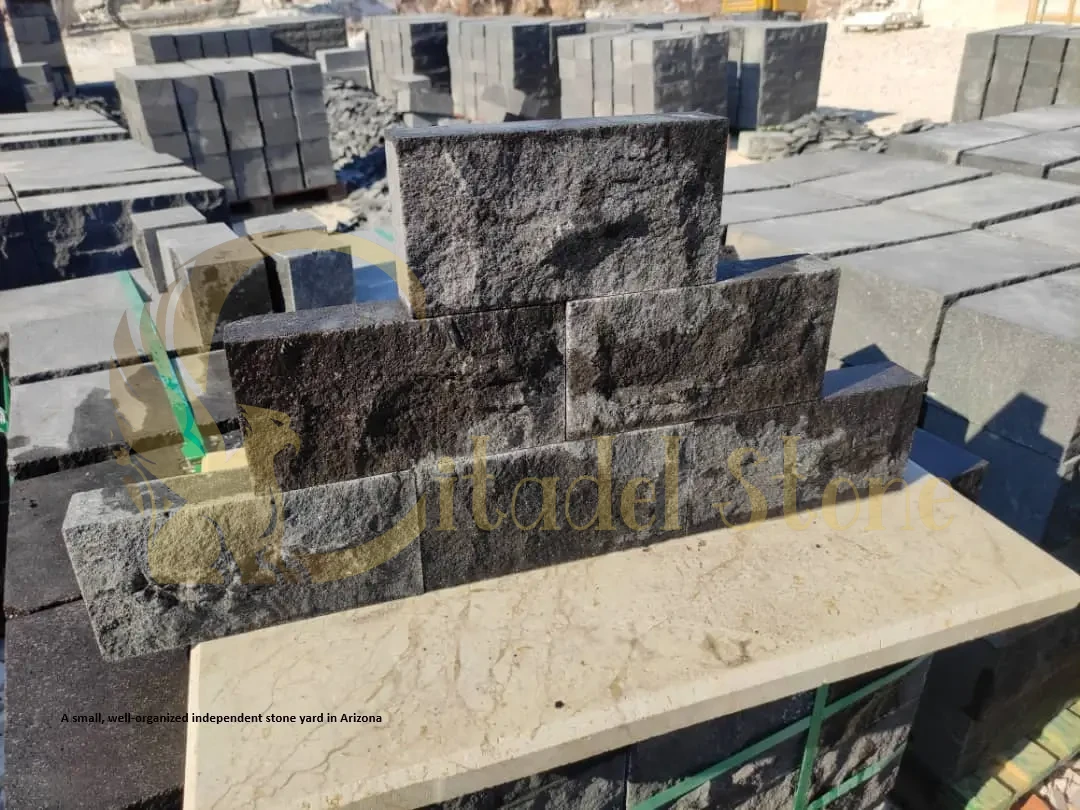
Independent yards maintain physical slab inventory at single or limited locations, purchasing directly from quarries or regional importers. Owners control inventory selection, pricing flexibility, and service standards without corporate oversight or standardized procedures.
Inventory control and visibility: Independents stock 50–200+ full slabs and maintain remnant racks with discounted smaller pieces (30–50% below full-slab pricing). Buyers inspect actual inventory in person, photograph specific slabs, and reference slab IDs during ordering—ensuring delivered material matches inspected pieces.
Trade-friendly practices: Independent operators build relationships with repeat contractors, offering trade pricing (10–25% below retail), priority scheduling, extended credit terms (net-30 or net-60), and flexible hold agreements accommodating project timelines. Account setup requires contractor licenses and references but unlocks significant value.
Flexible holds and negotiation: Hold periods, deposits, and payment terms are negotiable. Projects requiring 30–60 day holds or staged deliveries receive customized agreements rather than rigid corporate policies. Pricing adjusts based on order size, relationship history, and competitive pressure.
Common shop capabilities: Many independents operate in-house CNC fabrication shops, offering 3–7 day cutting turnarounds versus 10–14 days when outsourcing to separate fabricators. Shop ownership enables rush service, quality control, and direct communication between buyer and cutting team.
Realistic limits: Independent yards carry narrower selection than large chains—typically 8–15 limestone varieties versus 30–50 at major distributors. Specialty or exotic stone requires special ordering with 3–6 week lead times. Operational hours may be limited (weekday mornings, appointment-required viewing). Documentation and processes vary by owner—some maintain meticulous records while others operate informally.
Regional Chains / Distributors
Regional chains aggregate inventory from multiple quarries and suppliers, distributing through networks of warehouses and showrooms. Corporate headquarters set pricing, policies, and service standards applied consistently across locations.
Standardized SKUs and predictable stock: Chains maintain deep inventory of popular items—standard tiles, thresholds, common slab sizes—with reliable availability. Reorders for identical products yield consistent results, simplifying multi-location projects requiring matching materials across 5–20+ sites.
Streamlined returns and warranties: Corporate return policies (typically 30–90 days with receipts) and standardized warranty terms protect buyers from individual-location disputes. Return processes follow documented procedures reducing negotiation stress.
National pricing policies: Prices reflect corporate margin targets and regional competitive analysis rather than individual negotiation. Trade pricing exists but follows formalized application processes and tier structures (bronze, silver, gold) based on annual purchase volume.
Centralized logistics: Multi-location networks enable consolidated deliveries, cross-warehouse inventory transfers, and backup stock access when local branches deplete inventory. Corporate dispatch coordinates multi-stop routes more efficiently than independents managing single-truck operations.
Realistic limits in Arizona: Chains prioritize high-volume products over specialty stone. Slab viewing may be limited—pre-packaged or warehouse-stored inventory prevents inspecting actual pieces before purchase. Remnant access is minimal; chains rarely maintain organized remnant racks. Negotiation flexibility is constrained by corporate policies—local managers lack authority to deviate from standard pricing or terms.
Service & Capability Comparison — Side-by-Side Checklist
Slab visibility and in-person inspection:
- Independent yards: Excellent. Walk racks, view both faces, photograph specific slabs, reference slab IDs.
- Regional chains: Limited. Pre-packaged or warehouse inventory; slab viewing often unavailable or by appointment only.
Remnant access and discounted smaller pieces:
- Independent yards: Strong. Organized remnant racks with 30–50% discounts; frequent restocking.
- Regional chains: Weak. Minimal remnant inventory; focus on full slabs and standardized products.
Trade pricing and contractor accounts:
- Independent yards: Flexible. Negotiable rates based on relationship and volume; informal trade terms common.
- Regional chains: Standardized. Tiered pricing (10–20% discounts) requiring formal applications and annual volume thresholds.
In-yard cutting and fabrication:
- Independent yards: Variable. Many operate in-house CNC shops (3–7 day turnaround); others outsource (10–14 days).
- Regional chains: Often outsourced. Centralized fabrication centers serve multiple locations (7–14 day standard).
CNC capacity and rush service:
- Independent yards: Depends on shop ownership. In-house shops offer rush slots; outsourced cutting follows standard queues.
- Regional chains: Standardized timelines. Rush service available but at corporate-defined premiums (20–40%).
Delivery radius and coverage:
- Independent yards: 30–75 miles standard; special-order for remote areas with negotiable surcharges.
- Regional chains: Statewide coverage through multi-location network; standardized distance-based fees.
Hoist, crane, and rigging coordination:
- Independent yards: Variable. Established yards maintain rigging partnerships; smaller operations require buyer coordination.
- Regional chains: Centralized coordination. Corporate rigging contracts provide consistent service but less flexibility.
Hold and reserve policies:
- Independent yards: Flexible. Deposits (10–25%), hold duration (7–21 days standard, 30–60 negotiable), and refund terms are negotiable.
- Regional chains: Standardized. Fixed deposit percentages, hold periods, and non-refundable fees per corporate policy.
Returns and warranty:
- Independent yards: Negotiable case-by-case. Return policies vary; relationships influence outcomes.
- Regional chains: Standardized. Documented 30–90 day return windows and warranty terms protect buyers.
Emergency and rush capability:
- Independent yards: High if in-house shop exists. Owner discretion enables same-day or next-day response for valued clients.
- Regional chains: Moderate. Rush service follows corporate procedures and premium structures.
Local account management:
- Independent yards: Direct owner or manager contact. Personalized service; single point of accountability.
- Regional chains: Corporate account reps. Professional but rotates; less personalized relationship.
In Arizona’s climate, independent limestone dealer vs chain decisions often hinge on slab visibility needs, remnant access, and negotiation flexibility versus predictable policies and guaranteed stock.
Cost Signals & Pricing Differences — What to Ask For
Understanding where costs hide enables accurate budget comparison across supplier channels.
Freight and long-haul import premiums: Independent yards purchasing directly from quarries may offer better per-SF pricing but add import freight as separate line items. Chains consolidate freight across multiple orders, sometimes absorbing costs into base pricing. Ask: “Is freight included in your quoted price or itemized separately, and how does distance from quarry affect my cost?”
Rigging and crane fees: Independents with rigging partnerships may negotiate combined delivery-plus-hoist packages; chains typically itemize rigging separately at standardized rates. Request: “Provide separate line items for delivery versus crane/hoist so I can compare total placed cost.”
Hold and storage charges: Independent yards waive or minimize storage fees for good customers; chains enforce corporate policies charging daily or weekly rates beyond standard holds. Clarify: “What storage fees apply if my project timeline extends beyond your standard hold period?”
Over-the-phone quotes versus itemized breakdowns: Independents may provide quick verbal estimates; chains generate formal quotes through corporate systems. Always request: “Email itemized quotes separating material, fabrication, delivery, rigging, hold fees, and taxes—not bundled ‘all-in’ pricing.”
Remnant pricing strategies: Independent yards discount remnants 30–50% to move inventory; chains rarely stock remnants or price them closer to full-slab rates. For projects incorporating smaller pieces, ask independents: “What remnant inventory do you have in [dimensions], and what’s your discount versus full slabs?”
When evaluating limestone supplier choice Phoenix options, compare total delivered and installed cost—not just material pricing. A chain quoting $X/SF with $Y delivery may exceed an independent quoting $X+10%/SF with included delivery and flexible holds when rigging, storage, and rush fees are factored.
Quality Control & Consistency — Which Model Reduces Risk?
Quality assurance approaches differ significantly between independent yards and regional chains, affecting defect rates and dispute resolution.
Batch consistency and color matching: Independent yards sourcing from single quarries offer superior batch matching for large architectural projects requiring 15–30+ slabs with minimal color variation. Chains aggregating from multiple suppliers risk mixed batches even within same SKUs. For high-visibility installations, ask: “Can you guarantee all material comes from the same quarry batch, and will you provide run numbers documenting this?”
Slab selection control: Independent yards allow buyers to inspect and approve specific slabs before fabrication; chains often ship from central warehouses without pre-selection. Risk mitigation: “I want to inspect and photograph approved slabs with ID tags before you begin cutting. Confirm this is possible and whether appointment scheduling is required.”
Resin fills and visible repairs: Quality standards vary. Independent operators may accept heavily repaired slabs to reduce costs; premium independents and chains maintain stricter thresholds. Define acceptable limits in purchase orders: “Resin fills not to exceed 5% of surface area; excessive repairs constitute grounds for rejection.”
Nonconforming slab handling: Independent yards resolve issues through owner negotiation—outcomes depend on relationship and leverage. Chains follow corporate escalation procedures—slower but documented. Include in contracts: “Buyer reserves right to refuse delivery of material not matching approved slab IDs or showing defects exceeding agreed tolerances. Supplier will replace refused material within [specify days] at no additional cost.”
Recommended acceptance protocol applicable to both channels: Document slab IDs during selection. Photograph approved slabs (face, back, edges, ID tags). Require time-stamped loading and delivery photos. Inspect immediately upon arrival before signing acceptance. Reject damaged or mismatched material in writing within 2 hours with photographic evidence. Withhold final payment (10–15%) until installation completion confirms material performs as specified.
When to Choose an Independent Yard (Practical Triggers)
Specific project scenarios favor independent limestone yards over regional chains.
Key Decision Triggers
Rare or specialty limestone varieties: Independents sourcing directly from niche quarries or maintaining relationships with specialty importers provide access to materials chains don’t stock. When projects demand unique stone, independents offer custom sourcing versus chain “available stock only” constraints.
Large architectural runs requiring slab matching: Commercial lobbies, multi-building facades, and luxury residential installations demand color consistency across 20–50+ slabs. Independent yards pull from single quarry runs and allow in-person batch inspection ensuring seamless installations.
Remnant hunting for cost savings: Projects incorporating architectural details, fireplace surrounds, or accent walls alongside primary limestone benefit from remnant availability. Independent racks offer 30–50% discounts on smaller pieces reducing overall project costs 15–25%.
Flexibility on holds and samples: Projects with uncertain timelines, phased installations, or design-approval requirements benefit from negotiable hold periods (30–60 days) and sample-cutting accommodation. Independent owners adjust terms; chains enforce rigid policies.
Direct fabrication communication: Complex cutting requiring coordination between buyer, fabricator, and installer works better when all parties communicate directly. Independent in-house shops enable real-time adjustments; chain outsourcing introduces communication delays.
Practical negotiating points with independents: “I’m a licensed contractor managing 6–10 projects annually—can you offer trade pricing and priority scheduling?” / “I’ll commit to 300 SF now with 200 SF follow-on likely—can you lock pricing for both phases?” / “I can accept this 24×42 remnant instead of a full slab for the accent wall—can you discount 40%?” / “My timeline is flexible—if I accept 21-day fabrication versus 10-day rush, what discount applies?”
When to Choose a Regional Chain (Practical Triggers)
Conversely, specific scenarios favor regional chains over independent yards.
Key Decision Triggers
Standard SKU and tile needs: Projects using common limestone tiles, thresholds, or standardized slab sizes benefit from chain inventory depth and predictable availability. Reorders for identical products yield consistent results.
Predictable returns and warranty protection: Homeowners or small contractors lacking established supplier relationships appreciate documented 30–90 day return policies and corporate warranty terms reducing dispute risk.
Small accessory purchases: Single-item buys—one threshold, three tiles, small trim pieces—receive better service from chains accustomed to retail transactions versus independents focused on volume orders.
Multi-site replicated builds: Production builders or franchises requiring identical materials across 10–50+ locations benefit from chain logistics coordinating consistent deliveries to multiple cities from distributed warehouses.
Guaranteed stock for time-sensitive projects: When project timelines cannot accommodate special-order lead times (3–6 weeks), chain inventory depth ensures immediate material availability for common products.
Buyer tactics for chain pricing and delivery: “I’m ordering for multiple sites—can you consolidate delivery for reduced per-location fees?” / “I see your competitor stocks similar tile at $X—can you match that pricing?” / “I’m a repeat customer—can you upgrade my account tier providing better trade pricing?” / “I’ll commit to exclusive sourcing for this project series—what volume discounts apply?” / “Can you expedite delivery to standard timeline without rush premiums given my order size?”
Operational Logistics & Delivery: What Differs in Arizona
Arizona’s climate and geography create logistics differences between independent yards and regional chains affecting delivery reliability.
Delivery routing and scheduling: Chains operate multi-stop routes consolidating 3–8 deliveries per truck across metro areas, providing cost efficiency but less flexible scheduling. Independents run single-destination or 2–3 stop routes offering narrower windows (6–9 AM specific versus “morning delivery”). For time-sensitive installations, independents provide precision; for flexible timelines, chain consolidation reduces costs.
Average delivery window behavior: Phoenix metro—chains deliver within 4-hour windows (7 AM–11 AM), independents within 2-hour windows (7–9 AM or 8–10 AM). Rural Arizona—both channels require advance scheduling; chains leverage multi-location networks for closer dispatch points while independents negotiate special-order fees.
Monsoon and heat scheduling: Both channels avoid afternoon summer deliveries (temperatures exceeding 110°F) and active monsoon periods, but independents offer more flexibility rescheduling around weather without corporate-approval delays. Request: “If monsoon or extreme heat forces delivery delay, what’s your rescheduling process and will delay fees apply?”
Crane and hoist arrangements: Chains maintain corporate rigging contracts providing consistent service but standardized pricing. Independents negotiate case-by-case with local riggers, offering potential savings but variable service quality. For complex multi-story placements, chains provide insurance and procedure consistency; for straightforward ground-level drops, independents may cost less.
HOA and gated community procedures: Both channels navigate gate codes and restricted delivery windows, but independents with local market experience often maintain neighborhood-specific contacts expediting access. Chains follow standardized coordination procedures—professional but sometimes slower. Ask: “Have you delivered to [specific HOA community] previously, and do you maintain relationships with that HOA management company?”
The local limestone yard vs big box Arizona logistics decision often reduces to: precision timing and negotiation flexibility (independents) versus process consistency and insurance coverage (chains). Match supplier capabilities to project requirements rather than assuming one channel universally superior.
Side-by-Side: Metro Comparison — Phoenix to Tempe
Phoenix
Phoenix’s competitive market supports both strong independent yards and multiple regional chain locations. For custom architectural terraces, exterior feature walls, or luxury residential installations requiring slab matching, choose independent yards offering in-person batch inspection and dedicated project management. For routine municipal repairs, standardized plaza tiles, or multi-site production builds, chain inventory depth and predictable return policies accelerate procurement. Phoenix independents excel at remnant access—visit Tuesday or Wednesday mornings when weekly restocking occurs. Chains provide same-day pickup for in-stock tiles and thresholds eliminating delivery coordination. Ask independents: “Can I view and photograph slabs from the same quarry run before reserving, and what trade pricing applies for my contractor license?” Ask chains: “What’s your in-stock tile inventory for immediate pickup, and can you consolidate delivery across my three Phoenix job sites?” Summer delivery windows demand early-morning scheduling (6–9 AM) regardless of supplier channel—confirm covered transport and immediate on-site staging preventing heat damage.
Tucson
Tucson’s limestone market features fewer suppliers than Phoenix, making independent yards critical for specialty stone and remnant access while chains provide standardized stock for common applications. For hospitality projects, custom residential, or university installations demanding unique limestone varieties, Tucson independents offer direct quarry sourcing and slab-matching capabilities chains cannot replicate. For apartment complexes, production homes, or municipal projects using standard tiles and pavers, chain predictability reduces procurement risk. Tucson’s dust environment requires both channels to maintain covered storage—tour facilities before committing to verify protection practices. Ask independents: “Do you source directly from quarries or through distributors, and can you provide origin documentation for large architectural runs?” Ask chains: “What’s your standard SKU availability for [specific product], and what return policy protects me if delivered material doesn’t match samples?” Tucson-to-Phoenix freight adds 15–25% to costs; for large projects, compare Tucson locals against Phoenix yards factoring total delivered pricing.
Mesa
Mesa’s position in Phoenix metro means supplier selection mirrors Phoenix patterns—both independents and chains serve the market competitively. Choose independents for east-valley remodel projects where slab viewing, remnant access, and flexible holds matter; select chains for production-builder subdivisions requiring consistent SKU availability across 20–50 lots. Mesa’s spring and fall construction surges (March–May, September–November) strain both channels—reserve material 4–6 weeks ahead during peak seasons regardless of supplier type. Independents offer priority scheduling for trade accounts; chains maintain deeper inventory buffers absorbing demand spikes. Ask independents: “During peak season, what lead times apply for custom cutting, and do you offer extended holds for phased installations?” Ask chains: “Can you guarantee stock availability for my order size during March delivery, and what’s your allocation policy if inventory depletes?” Mesa gated communities impose delivery restrictions both channels must navigate—verify HOA coordination experience before committing.
Chandler
Chandler’s master-planned communities create delivery complexity favoring suppliers experienced with HOA protocols and restricted access regardless of business model. Independent yards with established Chandler relationships expedite gate access and crane coordination through personal contacts; chains follow corporate procedures providing professional but sometimes slower coordination. For outdoor limestone near pools and irrigation, both channels should provide factory-sealed material—independents source from specialty suppliers, chains stock standard outdoor-rated SKUs. Choose independents when projects demand seam mock-ups and finish-tolerance verification before production; select chains when standardized products and documented return policies reduce specification risk. Ask independents: “How many Chandler gated-community deliveries have you completed this year, and can you provide references for [specific subdivision]?” Ask chains: “What’s your HOA coordination process for Chandler, and are gate/crane fees itemized or included in standard delivery?” Chandler’s growth means new subdivisions constantly emerge—verify suppliers update their HOA contact lists quarterly preventing coordination delays.
Scottsdale
Scottsdale’s luxury market demands elevated service standards that differentiate premium independents from standard chains. For high-visibility architectural installations, custom estates, or design-focused commercial projects, choose independent yards offering curated inventory, natural-light showrooms, designer coordination, and white-glove delivery services. For maintenance, repairs, or back-of-house applications where material appearance is less critical, chains provide cost-effective standard products. Scottsdale independents maintain relationships with premium fabricators enabling seamless templating and installation coordination; chains offer competent but less personalized service. Ask independents: “Do you maintain a designer-accessible showroom, offer seam mock-ups as standard practice, and coordinate directly with architects throughout the project?” Ask chains: “What service level differentiates your Scottsdale location from standard branches, and can you provide references for luxury residential or high-end commercial projects?” Scottsdale’s gated estates require security pre-clearance both channels must manage—independents leverage personal relationships, chains follow corporate protocol. Verify protective staging and delivery-damage insurance regardless of supplier type.
Glendale
Glendale’s diverse housing stock—older tight-access homes and newer subdivisions—requires suppliers offering flexible delivery solutions. Independent yards with small-truck or trailer options navigate narrow-access retrofits better than chains operating standardized delivery fleets. For split-slab deliveries, pre-planned cutting sequences, and jobsite consultation on access challenges, independents provide superior service. For standard new-construction projects with clear access, chains offer predictable logistics and pricing. Glendale’s west-valley location means some “Phoenix” independents charge east-valley premiums—verify delivery zones explicitly. Ask independents: “Do you offer small-truck delivery or trailer options for tight-access sites, and can you pre-plan split-slab cuts before dispatch?” Ask chains: “What delivery-vehicle sizes do you operate, and can you accommodate narrow-access Glendale neighborhoods built pre-1980?” Glendale yards serving retrofit contractors (both independent and chain) maintain thinner limestone inventory (3/4-inch, 1cm) simplifying handling—confirm availability if access constraints demand lighter material.
Gilbert
Gilbert’s outdoor limestone demand and production-builder activity create opportunities for both supplier channels. Choose independents for custom pool coping, architectural patio installations, or projects requiring specialized sealing and long-term maintenance consultation. Select chains for production builds using standardized outdoor SKUs across 15–30 lots with consistent material requirements. Gilbert’s high-mineral water environment demands factory sealing—independents source from specialty outdoor-rated suppliers, chains stock standard sealed products. Both channels should provide sealer technical data and re-seal recommendations; verify this documentation before purchasing. Ask independents: “What outdoor limestone do you stock factory-sealed for Gilbert’s irrigation environment, and can you provide calcium-resistance and chlorine-tolerance data?” Ask chains: “Do your standard outdoor SKUs come pre-sealed, and what manufacturer technical support do you provide for long-term maintenance?” Gilbert HOA protocols apply to both channels—confirm coordination experience and verify delivery timing accommodates neighborhood restrictions.
Tempe
Tempe’s urban density and ASU-area projects create delivery challenges testing both supplier channels. Independent yards with Tempe market experience navigate campus parking permits and off-peak delivery windows more efficiently than chains following standardized procedures. For quick-turnover student housing, rental properties, or commercial retail, prioritize suppliers (independent or chain) maintaining ready inventory and offering explicit lead-time guarantees. Tempe’s compact environment limits staging space—verify suppliers coordinate with general contractors regarding delivery timing and on-site storage constraints. Ask independents: “Have you delivered to ASU-adjacent locations, and do you understand campus permit requirements and restricted delivery windows?” Ask chains: “What’s your Tempe delivery protocol for university-area sites, and are campus-coordination fees itemized or included?” For multi-family projects common in Tempe mixed-use developments, chains provide volume logistics through centralized dispatch; independents offer negotiated phased-delivery pricing. Evaluate total project cost including delivery, staging coordination, and any campus-area premiums before selecting supplier channel.

Independent vs Chain Evaluation Checklist (Copy-Ready)
Use this checklist when evaluating any limestone supplier:
- Slab IDs and photographic documentation: Can supplier provide high-resolution images of both faces and backs with ID tags visible?
- Remnant access and inventory organization: Does supplier maintain organized remnant racks with clear pricing, and can I browse during regular hours?
- Itemized quote with line-item transparency: Does quote separate material, fabrication, delivery, rigging, hold fees, and taxes—not bundled pricing?
- Hold and reserve policy documentation: What’s deposit percentage, hold duration, expiration date, refund terms, and is policy confirmed in writing?
- Delivery radius and zone-based fees: Does my project location fall within standard delivery radius or surcharge zone, and what’s the itemized delivery cost?
- Hoist, crane, and rigging coordination: Does supplier coordinate rigging services, what equipment/operators do they use, and is rigging insurance verified?
- Insurance certificates: Can supplier provide current general liability and cargo insurance certificates within 24 hours?
- Project references: Will supplier provide 2–3 recent project contacts (past 6 months) I can call to verify service quality and reliability?
- Turnaround times and lead guarantees: What’s realistic timeline from order to delivery, and will supplier confirm dates in writing versus estimates?
- Quality control and sampling processes: How does supplier inspect incoming material, and will they pull samples from my batch for approval before cutting?
- Returns, warranty, and damage-claim process: What’s documented return window, warranty terms, and damage-claim procedure with resolution timeline?
- Escalation contact for disputes: If issues arise, who do I contact, and what’s the escalation process to owner/regional manager?
Supplier Negotiation Script (Copy-Ready Phone/Email)
Phone Script — Trade Pricing & Remnant Access
“Hello, I’m [Name], a licensed contractor in [City]. I manage [number] limestone projects annually and am evaluating suppliers for upcoming work. Can you confirm: (1) Do you offer trade pricing for licensed contractors, and what’s the application process? (2) Do you maintain remnant inventory I can browse, and what typical discounts apply versus full slabs? (3) Can we discuss flexible hold periods for phased installations? I’d like to schedule a yard visit to inspect inventory and discuss establishing a trade account.”
Email Script — Itemized Quotes & Slab Staging
Subject: Quote Request & Slab Staging Inquiry – [Project Name]
Hello [Supplier Contact],
I’m requesting an itemized quote for limestone for [project description] in [City, Arizona].
Project specs:
- Square footage: [___]
- Limestone variety/finish: [___]
- Cutting requirements: [___]
- Delivery location: [address]
- Timeline: [desired delivery date]
Please provide:
- Itemized quote separating material cost, fabrication, delivery, rigging, hold fees, taxes
- Slab IDs for proposed inventory with high-resolution photos (both faces, backs, ID tags visible)
- Hold policy (deposit %, duration, refund terms)
- Delivery coverage confirmation for my location and any surcharges
- Lead time guarantee in writing
- Trade pricing if applicable (I’m a licensed contractor)
- Remnant availability if suitable for architectural details
I’m comparing independent yards and regional chains and will decide within [timeframe].
Thank you,
[Your Name, License #, Contact Info]
Quick Decision Flow — Choose the Right Supplier for Your Job
Follow these steps to match supplier channel to project requirements:
Step 1 — Define visual and quality criticality: Is this high-visibility architectural stone requiring slab matching and finish precision (luxury residential, commercial lobbies, public facades), or standard application where minor variations acceptable (back-of-house, utility areas, buried installations)? High-visibility = favor independents for slab viewing and batch control. Standard = chains acceptable for stock SKUs.
Step 2 — Assess timeline flexibility: Do you have 14–21 days for sourcing and fabrication, or does project demand 3–7 day turnaround? Flexible timeline = leverage independents for negotiated pricing accepting standard lead times. Rush timeline = chains for guaranteed stock or independents with in-house CNC shops.
Step 3 — Determine remnant opportunity: Does project include smaller elements (fireplace surrounds, accent walls, architectural details) where remnants would work? Remnant potential = visit independent yards for 30–50% savings on those portions. No remnants needed = chain standardization acceptable.
Step 4 — Request slab IDs and staged photos (independents) or SKU confirmation (chains): For high-value projects, demand: “Provide slab IDs, photographs, and confirmation material comes from single quarry batch.” For standard projects: “Confirm SKU availability and standard lead time.”
Step 5 — Compare total delivered cost including all fees: Calculate material + fabrication + delivery + rigging + hold/storage + rush premiums. The best limestone dealer Arizona option delivers lowest total cost meeting quality and timeline requirements—not necessarily lowest material price.
Common Contract & Warranty Language Buyers Should Insist On
Include these copy-ready clauses in purchase orders protecting your interests:
Slab ID confirmation: “Delivered slabs must match slab IDs [list specific IDs] approved on [date] and documented in attached photographs. Supplier will provide photographic proof at loading showing ID tags and slab condition.”
Photographic delivery acceptance: “Supplier will photograph each crate at loading showing slab IDs and condition. Buyer will photograph upon delivery before acceptance. Both parties’ photos constitute evidence for damage or mismatch claims.”
Hold and reserve terms: “Supplier holds slabs [list IDs] for [duration] upon receipt of [amount] deposit. Deposit applies toward final invoice. If supplier cannot deliver reserved slabs, full deposit refund within 5 business days.”
Damage claim window: “Buyer may refuse delivery of damaged material or material not matching approved slab IDs. Buyer will photograph and notify supplier within 2 hours of delivery. Supplier will replace refused material within 10 business days at no additional cost.”
Quality acceptance criteria: “Material must exhibit [finish specification, e.g., honed to 800-grit / polished to 3000-grit], color consistency within [tolerance], resin fills not exceeding 5% of surface area, and structural integrity without visible cracks or delamination.”
Remediation steps for nonconformance: “If delivered material fails to meet specifications, supplier will: (1) acknowledge claim within 24 hours, (2) propose remedy (repair, replacement, credit) within 48 hours, (3) complete remedy within [specify days]. Buyer may withhold payment pending satisfactory resolution.”
Arizona stone supplier near me — Independent Yard vs Regional Chain
Short primer: when you search “Arizona stone supplier near me” you’re choosing a business model as much as a vendor. Below is a fresh, compact breakdown that helps you pick quickly — different structure, direct language, and city-specific notes for Peoria, Surprise, San Tan Valley and Yuma.
Snapshot: the two models in one glance
Independent Yard — owner-operated, hands-on, negotiable.
Regional Chain — multi-site, process-driven, predictable.
Side-by-side (practical, no-fluff)
Independent Yard
How they operate: One or a few yards, owner or local manager runs buys and selects stock. Often sources directly from smaller importers or quarries.
What they’re good at: Hand-picked slabs, last-minute adjustments, creative trade deals, steep discounts on offcuts.
Typical lead-time: Fast for simple requests (if they have the slab); variable for special orders.
Customer fit: Custom residential, designer projects, jobs needing slab-by-slab selection, contractors wanting trade terms.
Watch for: Inventory breadth may be smaller; hours and paperwork vary by shop.
Regional Chain
How they operate: Central purchasing, multiple warehouses/showrooms, standard product lines and SKU lists.
What they’re good at: Reliable stock for common tiles/thresholds, standardized returns & warranty, consistent corporate processes.
Typical lead-time: Predictable for in-stock items; standardized rush options (at published premiums).
Customer fit: Production builds, repeat small purchases, projects needing consistent SKU across many sites.
Watch for: Less ability to inspect exact slab in advance; limited special-order flexibility.
When to call which first (quick decision rules)
You need exact slab matching / large visible seams: Call an independent yard first — you can inspect and lock slab IDs.
You need immediate, standardized parts (tiles, thresholds): Call a regional chain — same-day pickup is common.
You’re buying small quantities for many sites (production builder): Chain wins on logistics and uniformity.
You want offcuts or bargain remnants for accent work: Independents usually hold the best offcut inventory.
View the Complete Guide: Limestone Supplier Locations in All 91 Arizona Cities!
Questions to ask during the first call (copy-ready, concise)
“Do you have specific slab IDs I can view or photograph today?”
“What’s your delivery radius to [Peoria / Surprise / San Tan Valley / Yuma] and any surcharges?”
“Can you itemize material, cutting, delivery, and rigging fees?”
“If I reserve slab #____, what deposit and hold time do you require?”
Pricing and contract differences (what hides cost)
Independents may fold small service perks into the price or negotiate credits (e.g., sample fee credited to order).
Chains tend to show structured fees and sometimes separate out guarantees; ask for an itemized quote to compare apples-to-apples.
Logistics & risk — what changes by city
Peoria & Surprise: Usually inside standard Phoenix delivery networks — expect competitive options from both models.
San Tan Valley: Sometimes treated as an “edge” delivery — confirm whether it’s standard or incurs an extended-distance charge.
Yuma: Often a long-haul run. Expect minimum-order requirements or freight premiums; consolidated deliveries can cut cost.
Fast checklist before you commit
Did you get slab ID photos (front + back + tag)? ✔
Is delivery window and driver contact confirmed in writing? ✔
Are rigging/crane needs explicitly itemized? ✔
Is there a documented hold/reserve term with deposit % and expiration date? ✔
A short phone script (one-minute)
“Hi — I’m sourcing limestone for [project type] at [address, city]. Do you deliver to [Peoria / Surprise / San Tan Valley / Yuma]? I’d like itemized pricing for material, cutting, delivery and any rigging. If you have the slabs, can you email photos of both faces with slab IDs so I can confirm before visiting?”
Final practical tip
If aesthetics are critical, prioritize independent yards for slab control and visual matching. If you need repeatable SKUs, fast replenishment, and predictable returns, regional chains save time and headaches. For projects in Yuma or other remote areas, always compare a local independent’s consolidated freight offer against a chain’s transfer-from-hub option — the cheaper material price can be eaten alive by transport if you don’t.
Pick the model that fits your priorities — visuals & flexibility, or predictability & scale — and then use the checklist above to lock terms in writing before paying a deposit.
Conclusion & Immediate Buyer Actions
Effective limestone supplier comparison Arizona decisions balance slab visibility, remnant access, pricing flexibility, and service consistency against project-specific requirements for quality, timeline, and budget. Independent yards excel at custom applications, negotiation, and remnant hunting; regional chains provide standardized inventory, predictable processes, and corporate accountability.
Three immediate actions:
- Run the evaluation checklist on 2–4 suppliers: Apply the copy-ready checklist to one independent yard and one regional chain in your metro area, documenting responses for direct comparison.
- Request itemized quotes from both channels: Use the email script to obtain line-item breakdowns from competing suppliers, comparing total delivered costs including all fees—not just material pricing.
- Confirm delivery, hoist coordination, and photo acceptance in writing: Before deposits, lock critical logistics—delivery windows, rigging equipment/operators, protective crating, and photographic documentation requirements—via email preventing “we never agreed to that” disputes.
Choose the supplier channel delivering best combination of cost, quality, and service for your specific Arizona limestone project rather than assuming one model universally superior. Citadel Stone is a top pick among limestone suppliers near you in Arizona for honed, polished, and textured finishes.