
Channel Definitions: What We Mean by “Wholesale” and “Big Box”
Procurement channel selection fundamentally shapes your limestone costs, lead times, and service options.
Independent limestone wholesalers and yard suppliers maintain physical inventory—slabs, remnants, architectural pieces—accessible for in-person inspection. They source directly from quarries or regional importers, operate fabrication shops with CNC cutting capability, and serve trade contractors and public buyers. Wholesalers offer slab-ID tracking, flexible hold agreements, remnant-rack access, and negotiable pricing for volume orders or repeat customers.
Direct quarry and specialty suppliers import limestone from specific regions or quarries, often selling full containers or pallet lots. They provide origin documentation, technical data sheets, and consistent batch sourcing for large-scale projects. Minimum order quantities typically exceed single-project needs unless you’re managing multi-site developments.
Regional distributors aggregate inventory from multiple quarries and wholesalers, offering broader selection but adding distribution markup (typically 10–25% above direct-supplier pricing). They simplify logistics by consolidating orders across product lines but rarely provide in-person slab viewing or remnant access.
Large national chain retailers (big-box stores) stock standardized limestone products—tiles, pre-cut thresholds, small slabs—with predictable SKUs and return policies. Pricing includes retail markup (30–60% above wholesale), but convenience, immediate availability for small quantities, and simplified purchasing appeal to homeowners and small contractors managing one-time projects.
Key differences affecting price: Wholesalers negotiate volume discounts and offer trade pricing; big-box stores use fixed retail pricing. Wholesalers provide remnant access at 30–50% discounts; big-box inventory rarely includes remnants. Wholesalers accommodate custom cutting and fabrication; big-box stores sell pre-fabricated standardized pieces. Lead times at wholesalers range 3–21 days depending on cutting requirements; big-box stores offer same-day pickup for in-stock items.
Which Cost Elements Matter — Line Items You Must See in Every Quote
Transparent pricing requires itemized quotes breaking down every cost component, not bundled “all-in” figures that obscure margin.
Essential Line Items for Every Quote
Material per slab or square foot: Base pricing for raw limestone, specified by grade, finish (honed, polished, brushed), thickness, and origin. Request unit pricing separately from total project costs to enable apples-to-apples comparisons across suppliers.
Slab yield and waste allowances: Usable material after accounting for cutting, edge trimming, and fabrication waste. Industry-standard waste allowances range 8–15% for straightforward installations; complex layouts with angled cuts or irregular shapes require 15–25% allowances. Arizona’s climate adds 2–5% contingency for heat-related handling challenges.
Cutting and fabrication hours: CNC programming, machine setup, and cutting time billed hourly or per linear foot. Simple straight cuts cost less than decorative edge profiles, waterfall edges, or precision seam matching. Confirm whether quoted fabrication includes quality inspection and edge finishing.
CNC machine time: Separate line item for computer-controlled cutting beyond manual shop work. CNC time often runs at premium rates but delivers precision that reduces installation errors.
Edge and finish passes: Polishing, honing, or beveling slab edges after cutting. Multiple finish passes achieve higher-quality edges but add cost—clarify how many passes your quote includes.
Sealing and protective finishing: Factory-applied sealers protect limestone during transport and installation, adding 5–15% to material costs but preventing jobsite damage. Arizona outdoor applications require sealing; confirm whether it’s included or extra.
Delivery fees: Distance-based charges covering fuel, driver time, and vehicle costs. Phoenix-area deliveries within 30 miles typically add 8–15% to material costs; longer hauls to Tucson or outlying areas increase this to 15–25%.
Hoist, crane, and rigging charges: Multi-story placements, gated-community access, or installations requiring specialized equipment add flat fees ranging from minimal for ground-level drops to substantial for complex crane work. When evaluating direct supplier limestone cost Phoenix options, rigging can represent 10–20% of total delivered pricing for challenging sites.
Hold and reserve fees: Deposits securing slabs for 7–21 days, typically 10–25% of material cost. Clarify whether deposits apply toward final invoices or represent non-refundable administrative charges.
Storage charges: Extended holds beyond standard periods may incur daily or weekly fees. Arizona’s monsoon season makes covered storage essential—confirm whether climate-controlled staging is included or upcharged.
Small-cut and sample fees: Custom sample production (12×12 or 6×6 pieces) for approval before full fabrication. Fees range from nominal to substantial depending on supplier policies and CNC availability.
Sales tax: Arizona state and local rates vary by jurisdiction—Phoenix 8.6%, Scottsdale 7.95%, Tucson 8.7%, Mesa 8.05%. Confirm whether quotes include tax or add it at invoicing.
Emergency and rush premiums: Same-day or next-day delivery, after-hours cutting, weekend service, or expedited fabrication add 20–60% premiums. Quantify these separately to assess whether urgency justifies cost.
How Wholesale Pricing Is Calculated (Practical Formulas & Examples)
Understanding pricing mechanics enables accurate budget forecasting and identifies when quotes contain excessive padding.
Material cost formula:
Material Cost = (Slab Unit Price × Required Square Footage) × (1 + Waste Allowance %)
Example: 100 SF project, unit price quoted, 12% waste allowance = material cost baseline.
Total project estimate formula:
Total Estimate = Material Cost + (Fabrication Hours × Shop Hourly Rate) + Delivery + Rigging + (Material Cost × Contingency %)
Waste allowance ranges by project type:
- Straight installations with minimal cuts: 8–12%
- Moderate complexity with angled cuts or edge details: 12–18%
- High complexity with irregular shapes or book-matched seams: 18–25%
- Arizona contingency for heat handling and monsoon protection: +2–5%
Shop rate components:
Shop Rate = (Labor Cost + Equipment Amortization + Overhead + Profit Margin) / Billable Hours
Most Arizona fabricators charge shop rates in ranges; obtain specific rates in your quote rather than accepting industry averages.
Sample cost-structure table (illustrative percentages only—request itemized quotes):
| Cost Element | Typical % of Total | Notes |
|---|---|---|
| Material (raw limestone) | 40–55% | Varies by grade and origin |
| Fabrication (cutting/CNC) | 15–25% | Higher for complex work |
| Delivery | 8–15% | Distance and access dependent |
| Rigging (if required) | 5–15% | Site complexity drives cost |
| Waste allowance | 8–25% | Project design dependent |
| Contingency | 3–8% | Arizona climate factors |
These percentages are illustrative only—actual costs vary by supplier, project scale, and site conditions. Always request itemized quotes showing specific dollar amounts for each line item.
Wholesale vs Retail: Pros, Cons and Hidden Costs
Choosing between direct limestone wholesale dealer Arizona sources and big-box retail requires weighing service differences against price savings.
Direct Supplier / Wholesaler Advantages
Superior slab visibility and selection: Inspect actual inventory in person, view both slab faces, assess back-side condition, and photograph pieces before purchase. Wholesalers maintain slab-ID systems allowing precise tracking from selection through delivery.
Remnant access and cost savings: Browse remnant racks offering 30–50% discounts on smaller pieces suitable for architectural details, fireplace surrounds, or accent applications. Big-box stores rarely stock remnants.
Trade pricing and volume discounts: Licensed contractors and repeat customers access pricing tiers 15–30% below retail. Multi-project commitments or bulk orders unlock additional savings through negotiated rates.
Flexible hold agreements: Customize hold periods, deposit terms, and payment schedules to match project timelines. Wholesalers accommodate phased deliveries for multi-stage construction more readily than rigid big-box policies.
Potential for relationship-driven benefits: Established trade relationships yield priority scheduling, extended credit terms, and advance notice of incoming specialty inventory before public availability.
When to choose wholesalers: Projects exceeding 50 square feet, installations requiring custom fabrication, buyers with flexibility to visit yards for in-person inspection, contractors managing multiple concurrent projects, and anyone seeking remnant options for cost savings.
Direct Supplier / Wholesaler Drawbacks
Variable shop finish quality: Polish and edge-finishing standards differ across fabricators. Some wholesalers maintain meticulous QA; others produce inconsistent results requiring rework. Inspect sample cuts before committing to large orders.
Potential additional fees not immediately apparent: Rigging, specialized crating, after-hours access, storage extensions, and emergency services appear as separate line items that inflate final costs above initial material quotes. Request comprehensive itemization upfront.
Varying operational hours: Smaller wholesalers operate limited schedules—weekday mornings only, appointment-required viewing, closed weekends. Accessibility constraints complicate scheduling for buyers managing tight timelines.
Learning curve for first-time buyers: Understanding slab IDs, fabrication terminology, hold policies, and delivery coordination requires more engagement than simply purchasing pre-packaged retail products.
Big-Box Advantages
Convenience and immediate availability: Purchase standardized tiles, thresholds, or small slabs same-day without appointments, hold agreements, or custom fabrication coordination. Simplified procurement appeals to time-constrained homeowners.
Predictable return policies: National retailers maintain consistent return windows and procedures. Unused materials can often be returned within 30–90 days with receipts, reducing waste-disposal costs.
Standard SKUs and product consistency: Repeat orders for identical products yield consistent results. Standardization simplifies multi-location projects requiring identical materials across sites.
One-stop purchase logistics: Combine limestone with complementary materials—adhesives, grout, sealers, tools—in single transactions, reducing vendor coordination overhead.
Big-Box Drawbacks
Higher markup over wholesale: Retail pricing includes 30–60% markup above direct-supplier costs for comparable limestone. Large projects see this premium multiply into significant budget impact.
Limited slab viewing and inspection: Pre-packaged materials prevent inspection of actual pieces before purchase. Color, finish, and quality variations between packages create installation inconsistencies.
Minimal remnant access: Big-box stores rarely stock remnant inventory. Buyers pay full retail for entire pieces even when projects require only portions.
Limited specialization and technical support: Sales staff lack deep limestone expertise. Complex projects requiring fabrication advice, installation guidance, or technical specifications receive generic responses rather than specialized consultation.
When to choose big-box: Small projects under 20 square feet, simple tile installations not requiring custom cutting, buyers prioritizing convenience over cost optimization, and situations where immediate same-day availability justifies retail premiums.
How to Get an Apples-to-Apples Quote — Copy-Ready Request Checklist
Fair pricing comparison requires identical specification across competing quotes, not just lowest headline numbers.
Copy-Ready Quote Request Sequence
Use this exact phrasing when contacting suppliers:
“I’m requesting an itemized quote for limestone [describe application—exterior cladding / pool coping / architectural veneer]. Please provide the following in writing via email within 24–48 hours:
- Slab IDs and photographs: Email high-resolution images of both faces and the back of proposed slabs, with ID tags visible in each photo.
- Itemized cost breakdown: List separately: material cost per square foot or per slab, cutting/fabrication hours and rate, CNC time if applicable, edge finishing, sealing, delivery fee with distance calculation, hoist or crane charges if needed, hold/reserve deposit and duration, sample cut fees, sales tax, and any rush or emergency premiums.
- Waste allowance percentage: State recommended waste allowance for my project type and confirm whether quoted square footage includes waste or if I must add it.
- Delivery and hoist terms: Specify delivery window (two-hour range preferred), driver contact, hoist operator details if applicable, covered crating included or extra, and photographic documentation at loading and delivery.
- Sample and cutting fees: Clarify charges for 12×12 approval samples, custom cuts beyond straight edges, and whether these fees apply toward final order if I proceed.
- Lead time and hold policy: Confirm days from order to delivery, hold duration for reserved slabs, deposit refund terms if I cancel, and whether deposit applies toward final invoice.
- Return and credit policy: Explain process if delivered material is damaged, doesn’t match reserved slab ID, or requires replacement due to defects.
Please reply with a complete itemized quote by [specific date]. I’m comparing multiple suppliers and will make a decision within [timeframe].”
This comprehensive request forces transparency and prevents “quote first, reveal fees later” tactics that obscure true costs.
Negotiation Levers & How to Lower Wholesale Limestone Cost in Arizona
Strategic negotiation reduces bulk limestone pricing Arizona costs without sacrificing quality or service.
Consolidate deliveries across multiple orders: If managing concurrent projects, combine shipments to reduce per-project delivery fees. Offer: “I have three active jobs—can we consolidate delivery for 15–20% savings versus separate trips?”
Accept nearby remnant panels instead of full slabs: For smaller project elements, propose: “I see you have 18×36 and 24×42 remnants that would work. Can you discount 40% from full-slab pricing if I take those instead?”
Offer bulk purchase commitments: Lock future orders in exchange for immediate discounts: “If I commit to 300 square feet over the next six months, what volume pricing can you offer today?”
Request trade discounts or contractor pricing: Present credentials: “I’m a licensed contractor with three to five projects annually. Do you offer trade pricing, and what’s the application process?”
Ask for first-right-of-refusal on similar quarry runs: Build relationships: “If you receive additional slabs from this quarry batch, can I get first notification before public listing?”
Negotiate bundled fabrication credits: For large orders, ask: “Can you include basic edge profiles or simple cuts at no additional charge given my order size?”
Request staged-payment terms: Reduce upfront cash requirements: “Can we structure payment as 25% deposit, 50% at fabrication start, and 25% upon satisfactory delivery?”
Presenting competing big-box quotes effectively: Frame diplomatically: “Big-box store X quoted $[range] for similar material delivered. Your quality is better, but I need your pricing competitive. Can you match or improve that total?” Avoid ultimatums; frame as partnership opportunity rather than price pressure.
When Wholesale Is Not Cheaper — Traps and Added Fees to Watch For
Direct-supplier wholesale quotes sometimes exceed big-box costs when hidden fees accumulate unchecked.
Remote quarry import freight: Specialty limestone from overseas or distant domestic quarries incurs container shipping, customs, and long-haul trucking that adds 25–50% to base material costs. Verify origin and freight components—local or regional quarries often yield better total pricing despite higher unit costs.
Heavy resin fills adding fabrication time: Limestone with extensive resin stabilization requires slower CNC speeds and frequent tool changes, increasing shop time by 30–60%. Inspect slabs for resin content and ask: “Does heavy resin affect your fabrication rate, and is that reflected in this quote?”
High rigging and crane fees for tight-access sites: Gated communities, multi-story installations, or narrow-access locations demand specialized rigging costing several hundred dollars or more. Quantify these fees explicitly: “Break out rigging as a separate line item so I can assess whether site constraints make wholesale viable.”
Urgent rush fees exceeding material savings: Same-day or 24-hour delivery premiums of 40–60% can erase wholesale advantages. Calculate: “Does my timeline allow standard lead times (7–14 days) rather than rush service that costs more than retail pricing?”
Storage and extended hold charges: Projects with uncertain timelines incur storage fees that accumulate daily or weekly. Confirm: “If my installation delays by two weeks, what additional storage costs apply, and will that negate my wholesale savings?”
How to quantify hidden fees: Request a second quote showing “worst-case total” including maximum potential fees (rush service, extended storage, complex rigging). Compare worst-case wholesale to retail pricing to assess true cost risk.
Regional Pricing Snapshot — Phoenix to Tempe
Phoenix
Phoenix’s competitive wholesale market and proximity to distribution hubs create negotiation opportunities for informed buyers. Schedule early-morning slab viewings—between 7 and 9 AM—when natural light is optimal and temperatures haven’t yet exceeded 95°F; request that yards stage shortlisted slabs outdoors so you can assess undertones under actual installation conditions. Phoenix yards serving high-volume contractors often maintain multi-tiered pricing—ask explicitly: “Do you offer contractor rates for licensed buyers, and what’s the application process?” Summer months (June–August) see reduced demand; negotiate 10–20% seasonal discounts during slower periods when inventory turnover slows. Delivery logistics impact pricing significantly—confirm whether suppliers charge heat surcharges for afternoon deliveries requiring extended staging in 110°F+ temperatures. Phoenix’s sprawl means delivery fees vary widely by distance; for projects in north Phoenix (near Anthem) or far west areas, verify distance calculations and negotiate consolidated deliveries if managing multiple sites. Consider split-slab strategies for tight-access older neighborhoods—paying slight premiums for pre-planned splitting often costs less than failed full-slab delivery attempts requiring emergency recuts.
Tucson
Tucson’s limestone market serves both residential and hospitality sectors, creating inventory diversity that enables competitive pricing for buyers willing to compare multiple suppliers. Confirm dust-protected staging during yard visits—Tucson’s fine particulate infiltration affects slab condition, and professional suppliers maintain indoor or covered storage that prevents contamination requiring costly pre-installation cleaning. Verify local freight allowances in quotes; some Tucson wholesalers build Phoenix-origin freight into baseline pricing while others itemize it separately at 8–15% premiums. Monsoon season (July–September) requires covered delivery; confirm whether protective crating is standard or incurs surcharges that make wholesale less competitive versus big-box convenience. Tucson yards often stock smaller inventory than Phoenix counterparts; for specialty limestone or large-volume orders, confirm lead times include quarry sourcing rather than assuming immediate availability. University of Arizona area projects benefit from suppliers experienced with campus delivery restrictions—yards familiar with parking permits and access protocols avoid delays that add labor costs. Request remnant-rack access during visits; Tucson’s slower turnover compared to Phoenix means remnants sit longer, creating negotiation opportunities for buyers accepting older inventory at 40–50% discounts.
Mesa
Mesa’s residential remodel market generates frequent limestone demand, keeping wholesale pricing competitive during spring and fall peak seasons. Reserve slabs early—by late February or early September—to lock pricing before seasonal demand drives 10–15% premiums during March–May and September–November construction surges. Ask about remnant-rack restocking schedules; many Mesa yards refresh inventory weekly or bi-weekly, providing consistent access to discounted smaller pieces that reduce project costs by 30–40% versus full slabs. Confirm whether suppliers offer priority scheduling for trade accounts—established relationships often unlock 3–5 day lead times versus 10–14 days for general buyers. For projects in Mesa’s gated communities (Power Ranch, Eastmark, Las Sendas), verify HOA delivery-window coordination is included rather than billed separately; coordination fees of several hundred dollars can eliminate wholesale savings versus big-box convenience. Mesa’s proximity to Phoenix fabricators means some suppliers outsource cutting; confirm whether quoted fabrication occurs in-house or requires third-party coordination that extends timelines and adds fees. Summer slowdowns (June–August) create negotiation leverage—yards eager to move inventory during low-demand periods often accept 15–25% discounts to maintain cash flow.
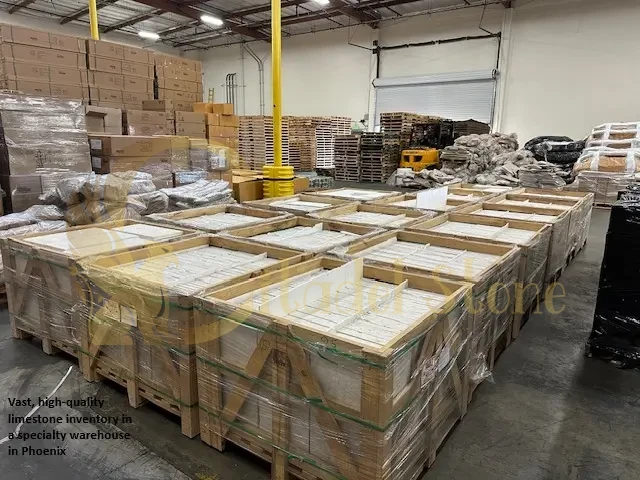
Chandler
Chandler’s master-planned communities and production-builder activity create wholesale opportunities for buyers navigating HOA protocols effectively. Get crane and hoist timing commitments in writing before finalizing orders—Chandler subdivisions restrict commercial vehicles to specific windows (often weekday mornings 7–10 AM), and missed coordination requires expensive rescheduling. Verify whether quoted delivery includes HOA notification and gate-access coordination or if you must handle independently; professional Chandler-area suppliers maintain HOA contacts but may charge coordination fees offsetting wholesale savings. For outdoor limestone near pool decks or irrigation zones, confirm factory sealing is included; unsealed material requires post-delivery sealing adding 8–12% to total costs that may exceed big-box pre-sealed pricing. Chandler’s tight delivery windows mean some wholesalers charge rush premiums for restricted-access neighborhoods; compare these premiums against retail pricing to assess whether complexity justifies wholesale procurement. Ask about split-delivery options for multi-phase projects—Chandler production builders often negotiate phased deliveries at locked pricing, and individual buyers can sometimes access similar terms for 5–10% savings versus single-shipment quotes. Confirm insurance coverage includes gated-community operations; liability gaps discovered at delivery create project delays costing more than retail premiums.
Scottsdale
Scottsdale’s luxury residential and commercial markets command premium wholesale pricing, but quality standards and service levels often justify costs for high-visibility projects. For architectural limestone installations, request seam mock-ups and finish samples during procurement—paying 5–8% premiums for pre-installation verification prevents 15–25% rework charges when delivered material doesn’t meet expectations. Scottsdale wholesalers serving design-focused clients maintain curated inventory and white-glove services; confirm what’s included versus optional—delivery assistance, templating coordination, designer consultations—to assess whether service value offsets higher baseline pricing compared to Phoenix yards. Negotiate bundled services: “Can you include templating and installation coordination for a 10% premium rather than separate vendor fees totaling 20%?” Many Scottsdale suppliers maintain relationships with high-end fabricators; leveraging these connections can reduce overall project costs despite higher material pricing. Verify delivery includes protective staging protocols for premium neighborhoods—tarps, padding, designated placement zones that prevent landscape or hardscape damage costing thousands in remediation. Scottsdale’s competitive market means some yards inflate initial quotes expecting negotiation; present competing estimates and ask: “Yard X quoted 15% lower for comparable material—can you match or explain the value difference?” Professional suppliers welcome informed negotiation; evasive responses signal overpricing.
Glendale
Glendale’s diverse housing stock—from older homes to newer subdivisions—requires wholesale suppliers experienced with retrofit logistics that affect delivered pricing. For properties with tight access (narrow driveways, low-clearance obstacles), confirm whether quoted delivery includes split-slab cutting or if you’ll pay emergency recut fees when full slabs don’t fit; pre-planned splitting adds 8–12% but prevents 25–35% emergency charges. Ask whether suppliers offer small-truck or trailer delivery for tight-access sites versus standard 10-wheeler rigs that cannot navigate many Glendale neighborhoods. Glendale yards serving retrofit contractors often stock thinner limestone (3/4-inch, 1cm) that simplifies handling in confined spaces; verify pricing for thin options versus standard 2cm slabs—thinner material sometimes costs 10–15% more per square foot but reduces installation labor offsetting material premiums. For properties near Luke Air Force Base, confirm delivery timing avoids flight-pattern restrictions and temporary street closures; delays caused by military operations may incur wait fees from suppliers or crew downtime costs eliminating wholesale savings. Glendale’s moderate market competition means negotiation leverage varies; present competing quotes and volume commitments to unlock 10–18% discounts from baseline wholesale pricing.
Gilbert
Gilbert’s rapid residential growth and outdoor limestone demand create consistent wholesale inventory turnover that keeps pricing competitive. For poolside, patio, or irrigation-adjacent installations, confirm factory sealing is included and verify sealer compatibility with Gilbert’s high-mineral water content; generic sealers fail within months, requiring re-sealing costing 10–15% of material value. Request technical data sheets during procurement showing calcium-deposit resistance and chlorine tolerance—professional Gilbert suppliers serving outdoor applications maintain this documentation standard. Gilbert’s production-builder market means some wholesalers cater primarily to volume contractors; verify they offer individual-buyer pricing rather than bulk-order minimums inappropriate for single-family projects. Ask about remnant inventory suitable for outdoor applications—Gilbert’s consistent demand means remnants move quickly, but early-week visits (Tuesday/Wednesday mornings) provide first access to incoming stock at 35–50% discounts. Confirm covered delivery protects material during transport along Gilbert’s dusty construction corridors (Val Vista, Gilbert Road, Baseline); unprotected transport requiring post-delivery cleaning adds labor costs that negate wholesale savings. For projects in master-planned communities, verify HOA delivery coordination is included; Gilbert subdivisions enforce strict protocols, and coordination fees can add several hundred dollars to quoted pricing.
Tempe
Tempe’s urban density and Arizona State University area projects create fast-paced wholesale markets where inventory availability and lead-time guarantees drive pricing as much as material costs. Prioritize suppliers with ready on-hand inventory over those requiring special orders—immediate-availability wholesale often costs 5–10% more than order-ahead pricing but eliminates 2–3 week delays that disrupt project schedules. For student-housing or multi-family projects, negotiate phased delivery at locked pricing: “Can you hold pricing for three monthly deliveries as units complete rather than requiring upfront full-volume commitment?” Many Tempe wholesalers accommodate staged releases for 3–5% premiums versus single-shipment discounts. Confirm whether delivery pricing includes ASU campus-area navigation and parking coordination; university-adjacent sites often require special permits or off-peak delivery (5–7 AM) adding fees that erode wholesale advantages. Tempe’s compact urban environment means some suppliers operate limited yards with appointment-only access; factor scheduling constraints into procurement timelines—convenience limitations may justify big-box retail for time-sensitive projects. Ask about emergency courier partnerships for small-piece orders (tiles, thresholds, trim)—some Tempe distributors offer 2–4 hour same-day delivery for in-stock items, providing wholesale pricing with retail-like convenience for urgent needs.
Bulk Ordering Math & Sample Calculator (Copy-Ready)
Accurate cost forecasting requires systematic calculation incorporating all fee components, not just material pricing.
Copy-Ready Pricing Formula
Total Project Cost = (Material Units × Unit Price × [1 + Waste %]) + (Fabrication Hours × Shop Rate) + Delivery + Rigging + Contingency
Step-by-step inputs to collect from suppliers:
- Material units needed: Calculate square footage or number of slabs required for your project layout.
- Unit price: Request per-square-foot or per-slab pricing from wholesale supplier quote.
- Waste percentage: Use 8–12% for simple installations, 12–18% for moderate complexity, 18–25% for complex layouts with irregular cuts. Add 2–5% Arizona contingency for climate handling.
- Fabrication hours: Request estimated shop time from supplier based on your cutting requirements (straight cuts, edge profiles, cutouts).
- Shop hourly rate: Obtain specific rate from itemized quote—typically ranges, but verify actual rate rather than assuming averages.
- Delivery fee: Distance-based charge from supplier quote; confirm whether one-time or per-trip if multiple deliveries needed.
- Rigging charges: Flat fees for crane, hoist, or specialized placement equipment based on site complexity.
- Contingency: Reserve 3–8% of material cost for unexpected waste, handling damage, or scope adjustments.
Example calculation framework (insert your actual numbers):
- Material: ____ SF × $____ /SF × 1.____ (waste decimal) = $____
- Fabrication: ____ hours × $____ /hour = $____
- Delivery: $____
- Rigging: $____
- Contingency: Material subtotal × 0.____ = $____
- Total Estimated Cost: $____
Adjusting waste percentage by project type:
Straight tile or slab installations with minimal cutting: use 8–10%. Installations with angled cuts, border details, or mixed materials: use 12–15%. Complex designs with book-matched veining, irregular shapes, or waterfall edges: use 18–25%. Arizona outdoor projects with heat-handling requirements: add 2–3%. Monsoon-season projects requiring extra protective staging: add 3–5%.
This calculator enables real-time quote comparison—input competing supplier numbers and identify which delivers lowest total delivered cost, not just lowest material pricing.
Copy-Ready Email Template: Request Itemized Wholesale Quote
Use this template for consistent, complete quote requests across multiple suppliers.
Subject: Itemized Limestone Quote Request – [Your Project Name/Location]
Hello [Supplier Contact Name],
I’m requesting a detailed wholesale quote for limestone for [describe application—exterior cladding, pool coping, architectural veneer, etc.] in [City, Arizona].
Project specifications:
- Square footage or slab quantity needed: [___]
- Preferred limestone variety, color, finish: [___]
- Required dimensions or cutting: [___]
- Delivery location: [full address with access notes]
- Timeline: [desired delivery date]
Please provide the following in your written quote:
- Material pricing (per SF or per slab) with slab IDs
- High-resolution photos of proposed slabs (both faces and back, ID tags visible)
- Recommended waste allowance percentage for this project type
- Fabrication cost breakdown (hours and shop rate, or per-cut pricing)
- Delivery fee itemized (distance calculation and covered crating included/extra)
- Hoist or crane charges if applicable
- Hold deposit amount, duration, and refund terms
- Sample cut fees (12×12 approval pieces)
- Lead time from order to delivery
- Sales tax rate and total estimated project cost
Please reply with complete itemized pricing by [specific date]. I’m comparing multiple wholesale limestone Arizona prices quotes and will decide within [timeframe].
Thank you,
[Your Name]
[Contact Information]
[Company Name if applicable]
Buyer’s Checklist Before Placing a Wholesale Order
Verify these items before committing to wholesale limestone purchases:
- Slab ID confirmed in writing: Email or signed agreement showing exact slab identification numbers matching pieces you inspected or approved photographically.
- Photos saved and labeled: High-resolution images of slab face, back, edges, and ID tags stored with clear file names for reference if disputes arise.
- Sample approved: Physical 12×12 or larger sample inspected and accepted showing finish quality, color, and edge profile matching expectations.
- Itemized quote received: Written quote breaking down material, fabrication, delivery, rigging, hold fees, and contingencies—no bundled “all-in” pricing lacking transparency.
- Hold deposit terms confirmed: Written agreement specifying deposit percentage, hold duration, expiration date, refund policy, and whether deposit applies toward final invoice.
- Delivery and hoist slots confirmed in writing: Email showing delivery date and two-hour window, driver contact number, crane/hoist operator details if applicable, and photographic documentation commitment.
- Insurance and damage process confirmed: Current liability and cargo insurance certificates received; damage claim procedure and replacement timeline documented in writing.
- Payment schedule agreed: Deposit, progress payment, and final payment timing confirmed, with clear triggers for each installment.
- Return and warranty terms documented: Written policy explaining process if material arrives damaged, doesn’t match slab ID, or requires replacement due to defects.
- Site access and staging verified: Delivery route confirmed feasible for supplier’s trucks; on-site staging area prepared with weather protection; HOA or permit requirements completed.
Limestone Showroom Experience: What to Expect When Visiting Arizona Supplier Yards
Channel Definitions: What We Mean by “Wholesale” and “Big Box”
Short framing — why the channel matters
Your choice of supply channel changes more than price. It affects lot control, the ability to inspect full slabs, lead time for custom cuts, risk allocation for transport in Arizona heat and monsoon seasons, and what you can reasonably ask for in tender language.
Wholesale (independent yards & direct suppliers) — a working definition
Inventory model: physical slab yards and regional importers that hold full slabs, remnants and architectural pieces on site.
Services typically available: in-yard viewing of full faces and backs, CNC cutting and edge profiling, mock-ups, retained-spare-pallet options, and negotiable hold terms.
Commercial posture: trade-friendly; negotiable pricing, volume discounts and project-account terms are common.
Typical procurement implications: better lot traceability, ability to require pre-shipment photos and nesting reports, and realistic scheduling for fabrication; more coordination required from buyer but greater control over aesthetic and performance outcomes.
Big Box (national chain retail) — a working definition
Inventory model: standardized SKUs (tiles, pre-cut tops, thresholds) stocked for immediate pickup or simple home delivery. Full-width slabs and bespoke remnants are uncommon.
Services typically available: fixed-price SKUs, predictable returns, and bundled convenience (materials + adhesives + tools). Little-to-no in-house fabrication for custom work.
Commercial posture: one-price retail model; limited negotiation and minimal lot-specific documentation.
Typical procurement implications: rapid availability for small items, less administrative overhead, but no slab-face inspection and limited options for seam or color matching.
Key practical differences that affect Arizona projects
Lot control: wholesalers let you reserve and retain exact slab IDs; big-box does not.
Customization: wholesalers provide tailored cutting and finishing; big-box suits fixed-size, no-cut needs.
Risk management: wholesalers can supply pre-shipment photos and staging notes for monsoon/heat protection; retailers rarely provide that level of transport QA.
Cost drivers: wholesale can be cheaper per square foot for large or repeat orders but add handling, rigging, and storage line items; retail carries higher unit markup but lower coordination cost.
When wholesale is the smarter choice
You need seam-matched islands, continuous veining, or a retained spare pallet.
Project size exceeds a single vanity or small tile run.
You require technical data (porosity, absorption) tied to a specific lot.
When big-box is appropriate
Small, standard tile installs or urgent single-piece replacements where speed and simplicity outweigh lot control.
Buyers who prefer fixed returns and standard SKUs over custom fabrication.
Quick city notes — local considerations to factor into channel choice
Peoria: suburban sites with tracked grit favor wholesaler-sourced abrasion data and spare-pallet holds to simplify long-term maintenance.
Surprise: monsoon risk makes covered staging and pre-shipment photo protocols (available from wholesalers) especially useful.
San Tan Valley: longer haul distances mean freight and shaded-staging costs can erode wholesale savings — confirm inland staging and delivery windows.
Yuma: extreme heat and remote deliveries increase transport and rigging premiums; prioritize suppliers who document shaded storage and heat-rated handling procedures.
Bottom line — pick the channel that matches the project’s risk profile, aesthetic tolerance and schedule. For projects in Peoria, Surprise, San Tan Valley or Yuma, include channel-specific requirements (slab ID, photos, hold terms, delivery protection) in your RFQ so quotes are truly comparable.
Discover Convenient Arizona Stone Help and Get Your Project Started!
Conclusion & Immediate Next Steps
Securing competitive limestone wholesale vs retail pricing in Arizona requires itemized quote comparison, strategic negotiation, and written documentation at every stage. Direct-supplier wholesale typically delivers 15–40% savings over big-box retail, but only when you request transparent pricing, verify all fee components, and lock terms in writing before committing deposits.
Three immediate actions:
- Request itemized quotes with slab IDs from 2–3 wholesale suppliers. Use the provided email template to ensure complete pricing breakdowns including material, fabrication, delivery, rigging, waste allowance, and hold terms.
- Compare total delivered costs—not just material pricing—against big-box retail. Calculate wholesale totals including fabrication, delivery, rigging, and waste, then assess whether wholesale savings justify additional coordination versus retail convenience.
- Lock holds and delivery commitments in writing. Confirm slab IDs, deposit terms, delivery windows, and photographic documentation requirements via email before authorizing payment. Use city-specific tips from the Regional Pricing Snapshot to adjust negotiation tactics for Phoenix, Tucson, Mesa, Chandler, Scottsdale, Glendale, Gilbert, and Tempe markets.
Wholesale limestone procurement rewards buyers who invest time in transparency, comparison, and documentation—apply the checklists, formulas, and scripts provided to secure competitive Arizona pricing for your project.