
Structural compliance shapes 24×24 patio stone cost in Arizona long before a single paver touches the ground — and most homeowners don’t realize how much local building standards drive total project expense until they’re already committed to a budget. Arizona’s Residential Building Code, which most jurisdictions including those governing Tempe adopt with local amendments, sets minimum base depth requirements and drainage provisions that directly influence material selection, labor hours, and overall project scope. The size and weight of 24×24 format stone amplifies every one of those compliance requirements, from load-bearing calculations to edge restraint specifications. Understanding where the code drives cost — and where material quality drives it — is the foundation of a realistic Arizona patio budget.
How Arizona Building Code Requirements Affect Your Base and Budget
The most common budget error on large-format patio projects isn’t the stone price — it’s the cost of the structural base that supports it. Arizona municipalities generally require a compacted aggregate base of 4 to 6 inches for pedestrian paving applications, but that number can increase to 8 or even 10 inches in areas with expansive clay soils or documented shifting substrates. For 24×24 patio stones in Arizona, each slab can weigh 80 to 120 pounds depending on material type and nominal thickness, so the base preparation must handle concentrated point loads far beyond what smaller-format pavers generate.
Edge restraint requirements also add to your material and labor line items. Many Arizona jurisdictions require mechanical edge restraint systems for large-format stone — not just the spike-and-channel restraints acceptable for concrete pavers, but often continuous poured concrete perimeter beams or mortared borders when the installation is adjacent to grade changes. Your permit drawings need to reflect this, and your contractor’s bid should price it as a separate line item so you can evaluate it clearly.
- Minimum compacted base: 4–6 inches standard, 8–10 inches in expansive soil zones
- Sub-base compaction to 95% Proctor density required in most permit-pulling jurisdictions
- Edge restraint type determined by slope, load class, and proximity to structures
- Drainage slope minimum of 1/8 inch per foot away from structures per IBC provisions adopted statewide
- Seismic Zone D classification in parts of Arizona requires additional base continuity at structure transitions
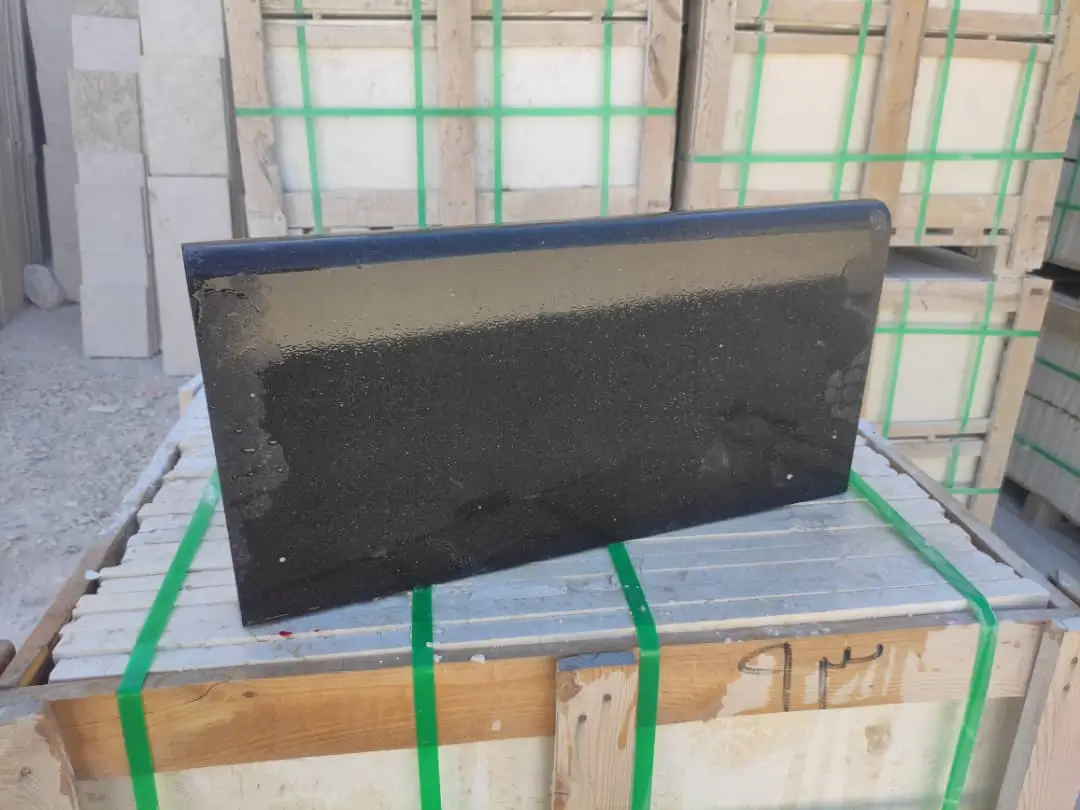
Material Cost Breakdown for 24×24 Patio Stone Cost in Arizona
The natural stone patio cost across Arizona varies meaningfully by material type, but the 24×24 format introduces a premium regardless of the stone species — and that premium is entirely justified by what larger slabs deliver structurally. For standard travertine in a 24×24 format, you’re typically looking at $8 to $14 per square foot for the material alone at current market pricing. Limestone in the same size runs $10 to $18 per square foot depending on finish and origin. Porcelain-backed natural stone composites are hitting $16 to $24 per square foot, but they offer consistent thickness tolerances that reduce your setting bed labor substantially.
Sandstone and basalt options occupy a slightly different price tier. Sandstone in 24×24 panels typically ranges from $7 to $12 per square foot, while premium basalt can run $15 to $22 per square foot. The material cost figures above are warehouse pricing before delivery; you should budget an additional $1.50 to $3.00 per square foot for truck delivery charges depending on your project location and order quantity, with larger orders pulling that per-square-foot delivery cost down considerably.
- Travertine 24×24: $8–$14/sq ft material cost
- Limestone 24×24: $10–$18/sq ft depending on quarry and finish
- Sandstone 24×24: $7–$12/sq ft — budget-accessible option with moderate heat performance
- Basalt 24×24: $15–$22/sq ft — highest density, best load-bearing performance
- Porcelain-composite 24×24: $16–$24/sq ft — tightest tolerances, easiest to set
- Delivery surcharges: $1.50–$3.00/sq ft, decreasing with order volume
Labor Costs for Large Format Stone Paver Pricing in Arizona
Labor pricing for large format stone paver pricing in Arizona reflects a real skills premium that small-format paving doesn’t carry. Setting a 24×24 slab correctly requires a two-person crew for every stone — one to carry, one to guide — plus a significantly more precise setting bed preparation. Most experienced Arizona stone contractors price large-format installation at $12 to $18 per square foot for labor on a standard grade-level patio, and that number climbs to $18 to $28 per square foot when the project involves significant base excavation, drainage system integration, or complex cuts around pool equipment and landscaping.
The reason labor costs scale so steeply with 24×24 format is the tolerance requirement. A 1/4-inch variation in setting bed height is barely noticeable under a 4×8 brick — under a 24×24 slab, that same variation creates a visible rock and a tripping hazard that almost certainly won’t pass inspection. Contractors who price this work correctly are charging for the time it takes to screed and verify the setting bed to within 1/8 inch across a 24-inch span, which takes considerably longer than the work on smaller format materials.
Thickness Requirements and Structural Performance
Thickness specification is where 24×24 patio stone cost in Arizona diverges sharply from generic national pricing data — because Arizona’s soil movement characteristics make the standard 1.25-inch nominal thickness inadequate for many applications. The default 1.25-inch slab handles pedestrian loads comfortably on a well-prepared base, but Arizona’s expansive soils introduce differential settlement forces that can create localized stress concentrations in thin-format stone, particularly at the slab edges and corners where moment loads concentrate.
For residential patio applications in Phoenix metro areas where expansive soil is common, specifying 1.5-inch to 2-inch nominal thickness adds $2 to $4 per square foot to material cost but substantially reduces the probability of field breakage during base settlement cycles. For any application near vehicle overhang zones — even occasional golf cart or utility vehicle access — move to 2-inch minimum thickness and verify your base design can handle the 3,000-PSI point loads those scenarios generate.
- 1.25-inch nominal: appropriate for stable soils, pure pedestrian use, well-drained base
- 1.5-inch nominal: recommended for expansive soils, pool deck surrounds, and any frequent furniture loads
- 2-inch nominal: required for vehicle overhang zones and high-traffic entertainment areas
- Thickness tolerance: verify ±1/8 inch maximum variation per ASTM C503 and C568 standards
- Additional material cost for thickness upgrade: $2–$4/sq ft depending on stone type
Outdoor Patio Stone Budget Guide for AZ Homeowners
Building a realistic outdoor patio stone budget guide for AZ homeowners means adding material, labor, base preparation, permits, and finishing costs into a single number before you talk to any contractor. The ranges below reflect current Arizona market conditions across a spectrum of project complexity. A straightforward 400-square-foot backyard patio in Phoenix with good soil conditions and simple rectangular geometry typically runs $9,000 to $14,000 all-in for natural stone in the 24×24 format. That same footprint with premium basalt, a full concrete perimeter beam, integrated drainage channel, and complex cuts around an existing pool equipment pad can reach $22,000 to $28,000.
The single largest swing factor in your total budget — beyond material selection — is whether your existing soil condition requires import fill or engineered base material. In some areas, decomposed granite subgrade can be compacted in place and used as the structural base layer, saving significant excavation and material cost. In others, the native soil is too expansive or too fine-grained to compact reliably, and the entire base must be imported and compacted in lifts, which adds $3 to $6 per square foot to your base cost before a single stone is set. Arizona patio stone material and labor expenses vary most dramatically based on this single soil classification variable — a detail that no surface-level pricing guide can account for without a site-specific soil assessment. You can reference our patio stone cost guide Arizona for detailed breakdowns organized by material type and project scale.
Permit costs in Arizona’s major municipalities typically run $200 to $600 for a residential patio project, and many jurisdictions require a plot plan showing drainage direction. Budget this as a fixed cost, not a percentage, and factor in 2 to 3 weeks for permit processing time in your project schedule.
Seismic and Soil Movement Specification Considerations
Arizona’s seismic classification gets underestimated on patio projects more often than any other structural factor. The northern and central portions of the state fall within Seismic Zone D per ASCE 7 provisions, and while a residential patio isn’t a life-safety structure, the code’s implication for hardscape adjacent to foundation walls and retaining structures is real. Your patio installation needs expansion joints sized and located to accommodate differential movement between the stone field and any attached structure — and those joints need to be continuous, not interrupted by grout runs.
In Tucson, where the combination of expansive clay soils and occasional monsoon saturation creates documented settlement patterns in older patio installations, the standard practice among experienced contractors is to install a 1/2-inch expansion joint at every structure interface and a 1/4-inch joint at 10-foot intervals within the stone field. This is more aggressive than generic guidelines suggest, but it’s the spec that holds up over a decade when the soil goes through its seasonal wet-dry cycles. These expansion joint requirements directly affect Arizona patio stone material and labor expenses, since both the filler materials and the additional installation time add measurable cost to any large-format project.
- Expansion joints at all structure interfaces: 1/2 inch minimum
- Field expansion joints at 10-foot intervals in high-movement soil zones
- Joint filler: closed-cell backer rod plus flexible polyurethane sealant (not grout)
- Seismic Zone D provisions apply to hardscape attached to or abutting foundations
- Monsoon drainage design must accommodate 100-year storm event flow rates per local jurisdiction
Heat Performance and Finish Selection Cost Impact
The finish you specify on your 24×24 natural stone patio changes both the barefoot comfort performance and the maintenance cost profile over the stone’s service life. Honed finishes on travertine and limestone run cooler underfoot than polished surfaces — not because of reflectivity differences, but because the micro-roughness of a honed surface reduces direct skin contact area, creating a small but perceptible insulation effect. Field measurements in Phoenix consistently show honed limestone running 12 to 18°F cooler at the surface compared to polished granite under identical noon exposure conditions.
Brushed and antiqued finishes add $1.50 to $3.00 per square foot to material cost but create slip resistance values that meet ADA guidelines without requiring additional sealer treatments — which matters both for safety and for your long-term maintenance budget. Natural cleft finishes on sandstone and quartzite offer the best slip resistance profile of any finish type but create an irregular surface plane that demands a thicker setting bed and more skilled installation labor to achieve the 1/8-inch tolerance requirement under the 24-inch span. Understanding how finish selection feeds into the total natural stone patio cost across Arizona helps you compare bids accurately, since contractors price finish-related labor very differently.
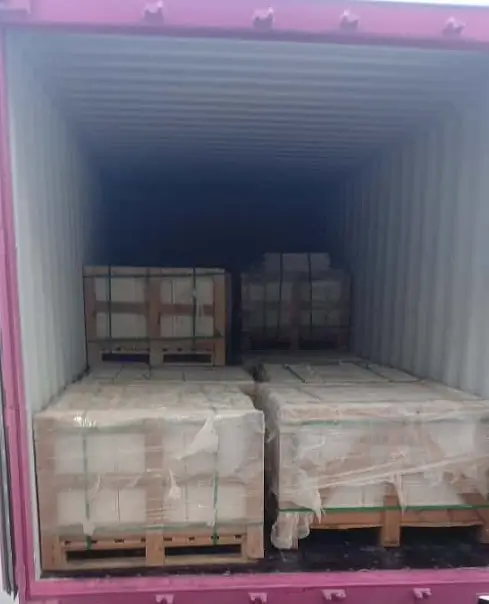
Ordering, Delivery Logistics, and Project Planning
The supply chain reality for 24×24 patio stones in Arizona is that warehouse inventory levels for large-format natural stone fluctuate significantly with season and import cycles. Spring and fall represent peak demand windows in the Arizona market, and lead times that run 1 to 2 weeks in January can stretch to 4 to 6 weeks by March as contractor backlogs build. Coordinating your material order with your base preparation schedule — not your installation start date — is the logistics move that prevents the most common project delays.
At Citadel Stone, we recommend ordering your 24×24 material with a 10% overage factor for large-format projects, not the standard 5% figure that works for small pavers. The reason is straightforward: field cuts on a 24×24 slab generate larger waste pieces per cut, and the probability of at least one slab arriving with a handling chip that makes it unsuitable for a visible location is higher simply due to slab size and mass. Warehouse stock for premium stone species turns over faster than most buyers expect during peak season, so confirming availability before finalizing your base preparation timeline is a practical step that costs nothing but prevents significant delays. Truck delivery of large-format stone requires a driver with proper material handling equipment — confirm boom truck or liftgate capability before scheduling your drop, because a flatbed without offloading equipment can leave your material stranded on a truck bed while your contractor crew stands waiting.
- Order overage: 10% for 24×24 format (vs. 5% for small-format pavers)
- Peak season lead times: 4–6 weeks March through May, 1–2 weeks off-season
- Confirm truck delivery equipment: boom or liftgate capability mandatory for large slab orders
- Stage material within 50 feet of installation area to minimize double-handling labor cost
- Inspect every pallet at delivery — document any damage before the truck departs
Before You Specify Your 24×24 Patio Stone
The most expensive mistake on a 24×24 patio stone project in Arizona isn’t choosing the wrong material — it’s entering a contractor conversation without a firm understanding of what the structural base requirements will cost independent of the stone itself. Get a soil report or at minimum ask your contractor what soil classification they’ve observed within a quarter mile of your property. That single piece of information changes your base specification, your edge restraint design, your expansion joint layout, and ultimately your total project budget in ways that no surface-level pricing guide can account for without it.
Your permit process will also reveal site-specific requirements that generic online budget guides can’t anticipate. Bring your drainage plan to the permit counter early — before you’ve committed to a contractor or ordered material — because drainage corrections discovered mid-project are expensive and often require base rework that damages already-placed stone. For long-term performance guidance on your installed patio, How to Maintain Rectangular Pavers in Arizona’s Climate covers the ongoing maintenance protocols that protect your investment across Arizona’s demanding seasonal cycles. For outdoor living projects in Flagstaff, Peoria, and Chandler, Citadel Stone provides 24×24 patio stones in batch quantities that help reduce per-unit material costs across larger patio footprints.