
When you specify flagstone waterjet cutting Arizona for architectural projects demanding intricate patterns, logos, or custom medallions, you’re entering a realm where precision measurement meets creative execution. Unlike standard slab work where dimensional tolerances accept ±3/8″ variance, waterjet applications require you to maintain ±0.015″ accuracy across complex geometries. Your design intent—whether corporate branding in commercial lobbies or elaborate residential courtyard motifs—depends entirely on how well you understand the interaction between flagstone material properties and high-pressure cutting dynamics.
The challenge you face isn’t just achieving tight tolerances. You need to account for how flagstone’s natural cleft surfaces and variable density zones respond to 60,000 PSI waterjet streams traveling at Mach 2.5. What works perfectly on uniform granite becomes problematic when you’re cutting sedimentary flagstone with porosity gradients ranging 4-11% within single slabs. Your cutting parameters—abrasive flow rates, traverse speeds, standoff distances—must adapt continuously as the waterjet encounters density variations that can shift compressive strength by 2,000 PSI across 6″ of material.
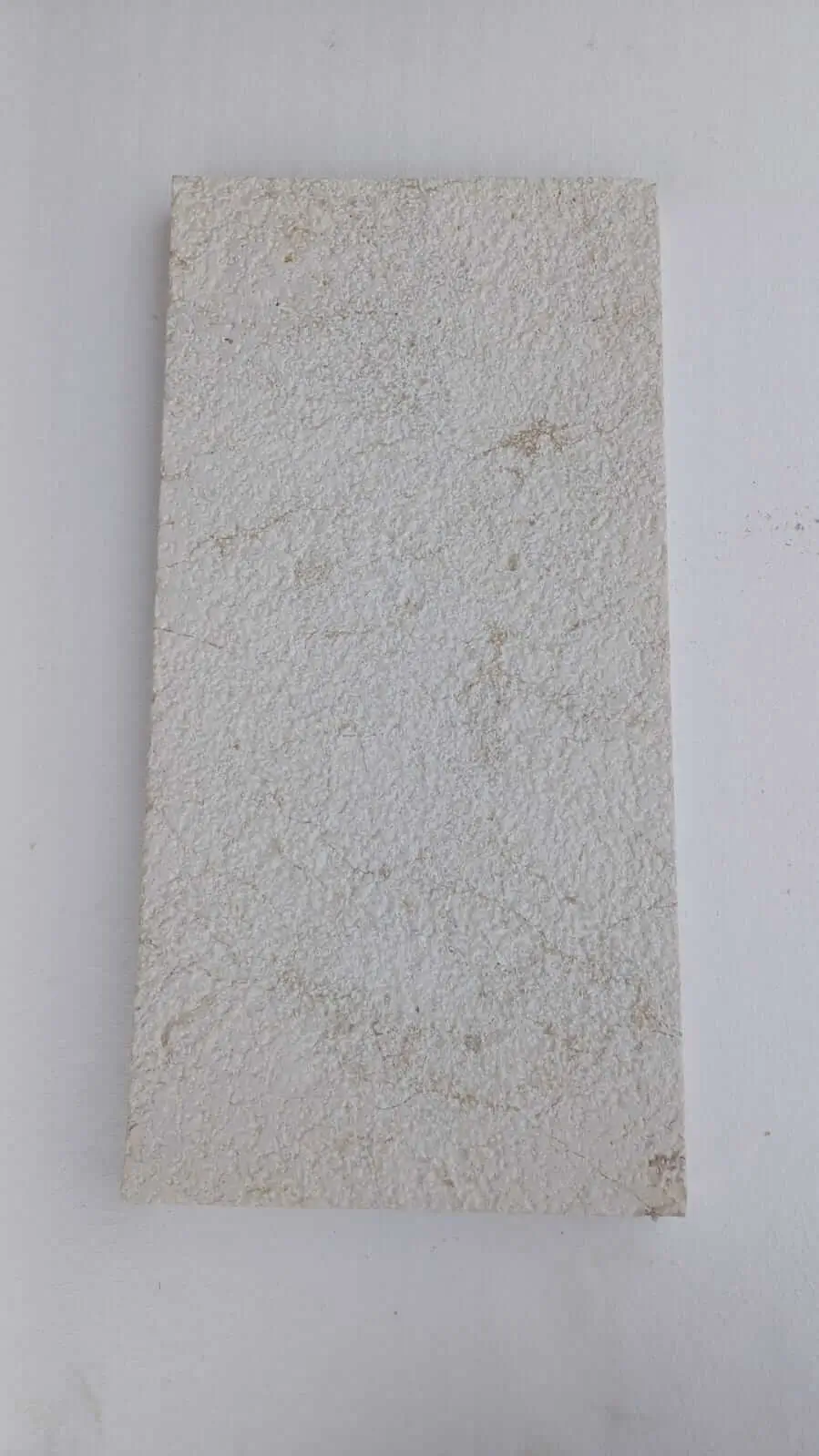
Material Selection for Waterjet Compatibility
Your flagstone selection directly determines cutting success rates and dimensional stability in finished installations. When you evaluate flagstone for flagstone precision design cutting, you’re looking at three critical material characteristics: density uniformity, cleavage plane predictability, and moisture content consistency. Dense flagstones with compressive strengths exceeding 12,000 PSI cut cleaner but require 18-22% longer cutting times and accelerated abrasive consumption. Lower-density materials at 8,500-10,000 PSI cut faster but you’ll encounter edge chipping rates 30-40% higher on curves tighter than 2″ radius.
The moisture content variable catches most specifiers off-guard. Flagstone straight from quarry yards typically carries 6-9% moisture by weight, which affects cutting in two ways you need to anticipate. First, wet flagstone dissipates waterjet energy 12-15% more efficiently than dry material, requiring you to reduce traverse speeds proportionally to maintain edge quality. Second, moisture gradients within slabs create differential cutting resistance—the waterjet may traverse wet zones at 8 inches per minute but slow to 5.5 IPM through dry pockets, creating inconsistent kerf widths that stack up across complex patterns.
- You should verify flagstone has equilibrated to ambient humidity for 72+ hours before cutting
- Density variations exceeding 8% within single slabs require multi-pass cutting strategies
- Your abrasive mesh selection (80 vs 120 grit) determines edge finish quality and cutting speed balance
- Flagstones with pronounced bedding planes perpendicular to cutting paths increase delamination risk by 40%
Cutting Parameter Optimization for Flagstone Pattern Creation
When you program waterjet toolpaths for flagstone pattern creation, you’re balancing five interdependent variables: pressure (typically 55,000-60,000 PSI), abrasive flow rate (0.4-0.9 lb/min), traverse speed (3-12 IPM), standoff distance (0.040-0.120″), and nozzle orifice diameter (0.010-0.018″). Each parameter shift creates cascading effects you must anticipate. Increasing pressure by 5,000 PSI while holding other variables constant improves cutting speed 15-18% but accelerates focusing tube wear by 25%, increasing your per-linear-foot cutting costs from $2.80 to $3.60.
The traverse speed decision represents your primary cost-versus-quality tradeoff. When you specify flagstone waterjet cutting Arizona for commercial applications, you’re typically working with 1.25″ to 2″ material thickness. At 4 IPM with 0.65 lb/min garnet flow, you’ll achieve smooth edges with less than 0.008″ taper through full thickness. Double that speed to 8 IPM and you’re cutting costs 45% but edge quality degrades—you’ll see taper increase to 0.020-0.025″ and surface striation depth jump from barely perceptible to 0.003-0.005″, which becomes visible in polished edge details.
Here’s what experience reveals about standoff distance: conventional wisdom suggests 0.060″ provides optimal general-purpose performance, but flagstone’s irregular cleft surfaces demand dynamic adjustment. When cutting natural-cleft flagstone (not calibrated), surface height variations of 0.125-0.250″ mean your effective standoff varies continuously. You need either automated height sensing that adjusts Z-axis positioning every 0.5″ of travel, or you accept quality degradation on high spots where excessive standoff (0.180″+) causes jet dispersion and ragged edges.
Design Complexity and Feasibility Assessment
Before you commit to intricate flagstone custom designs involving tight-radius curves, internal voids, or delicate connecting bridges, you must assess geometric feasibility against material constraints. Flagstone waterjet cutting Arizona projects succeed when you respect minimum feature sizes dictated by material tensile strength and cutting kerf width. With standard 0.030″ kerf width, your practical minimum radius for external curves sits around 0.375″ before edge quality deteriorates unacceptably. Internal radii require larger minimums—you should plan for 0.500″ or greater to prevent stress concentration fractures during handling.
The aspect ratio between cut feature thickness and material thickness determines structural integrity in finished pieces. When you design connecting elements—the material bridges between pattern voids—you need minimum width-to-thickness ratios of 2:1 for stable results. Cutting 0.375″ wide connectors through 1.5″ flagstone creates fragile structures with 60%+ breakage rates during installation handling. Increase connector width to 0.875″ (maintaining that 2:1 ratio relative to your material thickness) and breakage drops below 8%.
Your logo work and corporate branding applications present unique challenges with serif fonts and fine detail. Character heights below 3″ in standard serif fonts create stroke widths that approach minimum cutting dimensions. You’ll find that 2″ tall letters with 0.180″ stroke widths cut successfully, but serif details at 0.040-0.060″ width become problematic—edge chipping occurs in 35-45% of attempts. When you work with direct flagstone distributor sources for material selection, choose flagstones with tensile strengths exceeding 1,200 PSI for fine detail work, compared to 850-950 PSI acceptable for broader pattern elements.
- You should maintain minimum 0.375″ radius on external curves for consistent edge quality
- Internal corner radiuses below 0.500″ create stress points that fracture during thermal cycling
- Your design specifications must account for 0.030″ kerf width in all tolerance calculations
- Bridge elements connecting pattern sections require 2:1 width-to-thickness minimum ratios
- Serif fonts smaller than 3″ character height experience 35-45% detail breakage rates
Thermal Stress Management During Cutting
What surprises many specifiers about waterjet cutting is the thermal stress component—even though the process generates minimal heat compared to sawing or grinding. The waterjet stream, despite its cooling effect, creates localized thermal gradients as kinetic energy converts to heat within the kerf zone. In flagstone with thermal conductivity ranging 1.2-2.8 W/m·K (compared to granite’s 2.5-3.5 W/m·K), heat dissipates more slowly, creating temperature differentials of 40-60°F between cut edges and bulk material during active cutting.
You need to account for these thermal effects particularly when executing flagstone intricate work involving extended cutting times. A complex 36″ diameter medallion with intertwining geometric patterns might require 90-120 minutes of continuous cutting. During this period, accumulated thermal stress can induce micro-cracking in material zones with pre-existing weakness planes. Post-cutting inspection reveals hairline cracks 0.002-0.004″ wide extending 0.5-1.2″ from cut edges in approximately 12-15% of complex patterns cut from flagstone with existing internal stress patterns.
Your mitigation strategy involves cutting sequence optimization and dwell period integration. Rather than completing one section fully before moving to another, you should program toolpaths that distribute cutting across the pattern area, allowing previously cut zones to thermally equilibrate while the jet works elsewhere. This approach extends total cutting time by 8-12% but reduces thermal-stress cracking incidents to below 3%. For particularly intricate work, you’ll want to specify 45-60 second dwell periods every 15-20 minutes of cutting, allowing bulk material temperature to normalize.
Abrasive Selection and Edge Quality Control
Your abrasive choice—garnet mesh size, hardness grade, and flow rate—controls edge finish quality as much as cutting speed parameters. Standard 80-mesh garnet at 0.60 lb/min flow produces what most consider general-purpose quality: edges with 125-150 micro-inch surface roughness and minimal visible striation. When you need superior finish for flagstone custom designs where cut edges remain exposed (not grouted), you should specify 120-mesh garnet, which delivers 80-95 micro-inch surface finish but reduces cutting speed 22-28% and increases abrasive cost per linear foot from $1.85 to $2.65.
The abrasive flow rate directly affects kerf width and cutting efficiency. At 0.45 lb/min, you’ll generate narrower kerfs (0.028″ versus 0.032″ at 0.70 lb/min) which seems advantageous for intricate detail work. However, reduced abrasive density in the jet stream decreases cutting power, forcing you to slow traverse speeds by 30-35% to maintain edge quality through full material thickness. This creates a false economy—you’re saving $0.40 per linear foot in abrasive costs but adding $1.20 in machine time at typical $85/hour shop rates.
Edge taper represents your most challenging quality control parameter in flagstone waterjet cutting Arizona applications. Taper occurs because the waterjet loses cutting energy as it penetrates material thickness—the top surface receives maximum energy while the bottom surface gets partially dispersed flow. In 1.5″ flagstone, you’ll typically measure 0.012-0.018″ taper from entry to exit face when cutting at optimal 5-6 IPM speeds. Double that traverse speed and taper increases to 0.028-0.035″, which becomes problematic when you’re creating interlocking pattern pieces requiring tight fit tolerances.
Nesting Efficiency and Material Yield Optimization
When you lay out cutting patterns on flagstone slabs, you’re managing material costs that range $12-28 per square foot depending on species and thickness. Efficient nesting—arranging pattern pieces to minimize waste—becomes critical for project economics. Unlike manufactured materials with consistent dimensions, flagstone slabs arrive with irregular perimeters and unusable zones containing natural fissures, you need to work around these constraints while maximizing yield.
Professional nesting software calculates optimal part placement, but you must provide constraint parameters the algorithms need. Minimum spacing between cut parts should account for kerf width plus structural stability margins—typically 0.375-0.500″ between complex pieces. Tighter spacing saves material but creates fragile web structures between parts that fracture during table unloading. You’ll achieve 68-75% material utilization on complex patterns when you maintain proper spacing, compared to 45-52% when aggressive nesting creates handling damage requiring part recuts.
Your material ordering calculations must account for flagstone’s natural variability. When you order slabs for projects requiring specific color consistency or vein matching, plan for 15-20% rejection rates as delivered material gets evaluated against project standards. A project requiring 280 square feet of cut pieces actually needs 340-360 square feet of raw material when you factor in nesting inefficiency (25-32% waste) plus color selection culling (15-20% rejection). Warehouse inventory management becomes critical—you should verify stock availability exceeding project requirements by 30-35% before committing to delivery timelines.
Post-Cutting Dimensional Verification Methods
After waterjet cutting completes, you need systematic dimensional verification before releasing parts for installation. The assumption that CNC waterjet cutting automatically delivers perfect dimensional accuracy ignores real-world variables: material deflection under cutting forces, thermal expansion during extended cutting sessions, and abrasive wear affecting cutting consistency across multi-hour production runs. Your verification protocol should include both in-process checks and final inspection procedures.
For flagstone precision design cutting applications, you’re working to tolerances of ±0.020-0.030″ on overall dimensions and ±0.015″ on critical fit features. Standard measurement using digital calipers provides adequate precision for external dimensions and large feature spacing, but you need coordinate measuring machine (CMM) verification for complex geometric relationships. When cutting interlocking pattern pieces where multiple parts must fit together with gaps under 0.040″, CMM inspection identifies accumulated tolerance stack-up that would cause field assembly problems.
The verification frequency question depends on production volume and pattern complexity. For one-off custom pieces, you should perform 100% inspection of all critical dimensions. Production runs of identical pieces allow statistical sampling—measure the first piece completely, then verify critical dimensions on every 5th piece with full inspection every 25th piece. This sampling protocol catches systematic drift from tool wear or parameter variation while limiting inspection time to 12-15% of production time rather than 40-50% required for 100% inspection.
- You need ±0.015″ tolerance verification on interlocking features using calibrated digital calipers
- Complex geometric patterns require coordinate measuring machine validation of angular relationships
- Your inspection protocol should sample every 5th piece in production runs exceeding 20 identical parts
- Edge perpendicularity tolerances of 2-3 degrees affect pattern assembly in field installations
Installation Considerations for Cut Flagstone Patterns
When you transition from cutting table to installation site, you’re facing new challenges related to handling, substrate preparation, and assembly sequencing. Cut flagstone pieces—especially those with intricate geometries and delicate connecting elements—require more careful handling than standard rectangular pavers. Your installation crew needs specific training on lifting techniques that support pieces at multiple points rather than cantilevered edges, reducing breakage from 18-22% down to 4-6% with proper handling protocols.
Substrate flatness becomes critical when installing precision-cut patterns. Standard setting bed tolerances of ±1/4″ over 10 feet prove inadequate for flagstone intricate work where pieces must align within 1/16″ to create intended visual effects. You should specify setting bed preparation to ±1/8″ over 10 feet, verified with precision straightedges before material placement begins. This tighter tolerance adds $0.85-1.20 per square foot to installation costs but prevents the lippage issues that occur when precision-cut stones sit on uneven substrates.
Your grouting strategy affects pattern definition and long-term performance. Narrow grout joints (1/16-1/8″) emphasize precision cutting and create sharp visual definition between pattern elements, but they’re difficult to fill completely and clean properly. Joints this narrow require specialized grout application techniques—you’ll need grout bags with fine tips rather than standard troweling, and cleaning requires careful sponge work that doesn’t dislodge incompletely set grout. Wider 3/16-1/4″ joints prove more forgiving during installation and accommodate the minor dimensional variations inherent even in precision waterjet work.
Cost Analysis and Project Budgeting
Understanding true costs for flagstone waterjet cutting Arizona projects requires you to account for multiple cost layers beyond basic cutting charges. Waterjet shops typically bill $75-95 per hour for machine time, but your actual cost per piece depends on material thickness, cutting complexity, and edge quality requirements. Simple geometric patterns in 1.25″ flagstone might cut at $3.50-4.80 per linear foot, while intricate organic designs with multiple internal voids and tight radiuses reach $8.50-12.00 per linear foot when you factor slower traverse speeds and increased setup time.
Material costs vary significantly based on flagstone species and sourcing. Standard sedimentary flagstone suitable for waterjet work ranges $14-22 per square foot in common thickness (1.25-1.5″), while premium color selections and exotic varieties reach $32-48 per square foot. When you calculate project budgets, remember that you’re purchasing slab area, not finished pattern area—a 100 square foot installed pattern typically consumes 135-155 square feet of raw slab material after accounting for nesting waste and color selection.
The hidden costs emerge in finishing operations and quality control. Edge profiling, if specified, adds $4.50-7.00 per linear foot. Sealing cut edges to prevent moisture intrusion costs $0.85-1.20 per linear foot. Dimensional verification and QC inspection adds 12-18% to production time costs. When you assemble complete project budgets for flagstone pattern creation, you’re looking at installed costs of $45-75 per square foot for moderately complex patterns, escalating to $95-140 per square foot for highly intricate custom designs requiring extensive cutting and premium material selection.
- You should budget $3.50-12.00 per linear foot for waterjet cutting depending on complexity and quality requirements
- Material costs ranging $14-48 per square foot represent 30-40% of total installed project costs
- Your nesting efficiency determines whether you order 135% or 165% of finished pattern area
- Edge finishing operations add $4.50-7.00 per linear foot when specified for exposed edges
- Complete installed costs range $45-140 per square foot across complexity spectrum
Common Cutting Mistakes and Mitigation Strategies
The most frequent error in flagstone waterjet cutting Arizona involves inadequate material assessment before programming cuts. When you fail to identify existing micro-fissures, mineral inclusions, or stress planes within flagstone slabs, you’re programming toolpaths that may intersect these weakness zones. The waterjet follows its programmed path perfectly, but material fractures propagate from hidden flaws, causing 25-35% of complex patterns to fail during or immediately after cutting. Your pre-cut inspection should include transmitted light examination of slabs under 500-watt work lights, which reveals internal fissures invisible under normal lighting.
Inadequate edge support during cutting causes deflection-related dimensional errors you’ll discover during final assembly. Flagstone slabs cantileved beyond table support surfaces by more than 8-10″ deflect 0.040-0.080″ under their own weight, even in 1.5-2″ thickness. When the waterjet cuts through this deflected material, dimensions appear correct on the cutting table but change when pieces are lifted and stress relieved. You need either full-bed support tables or strategically placed support blocks that prevent deflection without interfering with cutting paths or part removal.
Contaminated abrasive creates inconsistent cutting results that puzzle operators who’ve verified all cutting parameters. When garnet abrasive absorbs moisture during storage (common in Arizona monsoon season when warehouse humidity spikes), particle flow characteristics change. Damp abrasive bridges in feed hoppers, creating erratic flow rates that vary 15-25% from programmed values. You’ll see this manifest as variable edge quality across single parts—smooth sections adjacent to rough, heavily striated areas where abrasive flow temporarily decreased. Your storage protocol should maintain abrasive in sealed containers with desiccant packs, and you should purge feed systems monthly to prevent moisture accumulation.
Flagstone Wholesale Arizona: How We Would Specify Projects
When you evaluate Citadel Stone’s flagstone wholesale materials for Arizona projects requiring waterjet cutting precision, you’re considering sedimentary flagstones specifically selected for density consistency and minimal internal flaw occurrence. At Citadel Stone, we provide technical consultation for hypothetical applications across Arizona’s diverse climate zones, from high-desert Flagstaff installations to low-desert Yuma commercial projects. This section outlines recommended specification approaches for six representative cities, demonstrating how regional conditions would influence your material and cutting parameter selections.
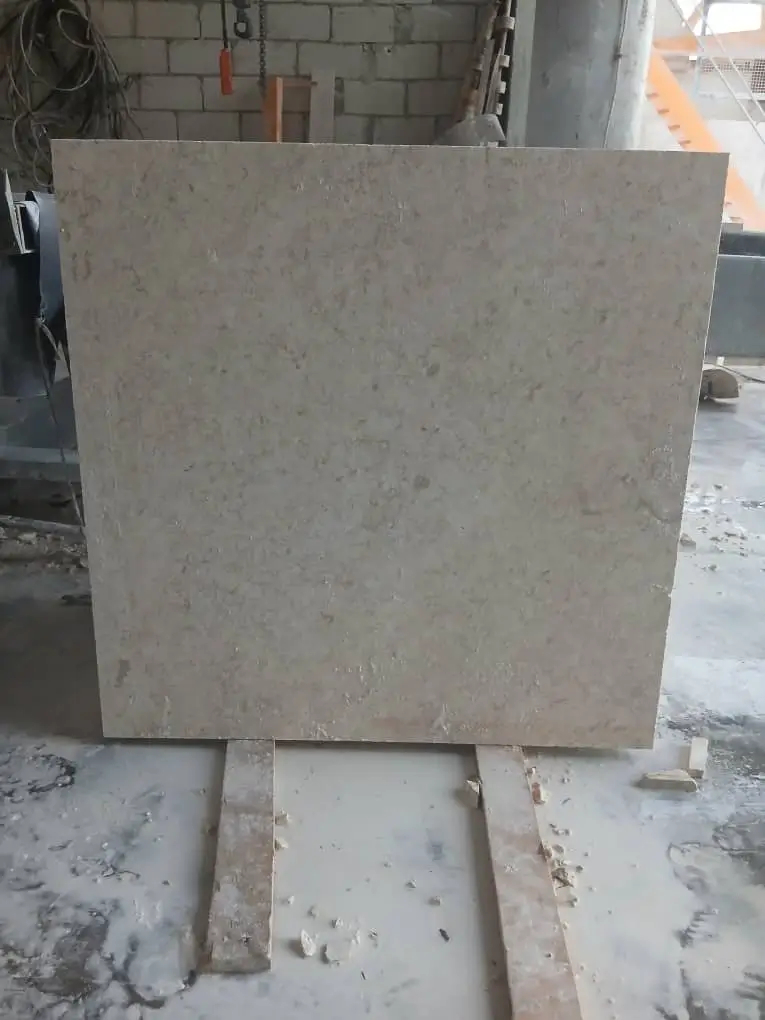
Phoenix Pattern Applications
In Phoenix installations, you would specify flagstone waterjet cutting Arizona for commercial lobby medallions and corporate plaza logos where extreme heat demands materials resistant to thermal shock cycling. Summer surface temperatures reaching 165°F create daily expansion-contraction cycles of 0.018-0.024″ across typical 36″ diameter patterns. You should recommend flagstones with thermal expansion coefficients below 6.0 × 10⁻⁶ per °F and verify that cut pattern designs incorporate expansion accommodation through 3/16″ perimeter joints. Your cutting parameters would emphasize edge quality since exposed pattern edges in high-traffic commercial applications receive intense scrutiny. Phoenix projects typically specify 120-mesh abrasive at reduced 4.5-5.5 IPM traverse speeds, accepting 25% higher cutting costs for superior finish quality that minimizes maintenance requirements over 15-20 year service life expectations.
Tucson Custom Designs
Tucson’s architectural heritage incorporating Spanish colonial and territorial design motifs would drive you toward flagstone custom designs featuring curved geometries, flowing organic patterns, and ornamental detail work. When you specify waterjet cutting for these applications, you need flagstone with demonstrated stability during multi-pass cutting required for tight-radius curves below 0.75″. Material selection would prioritize uniform density flagstones testing 10,500-12,000 PSI compressive strength, which maintain edge integrity through the thermal stress accumulation occurring during 90-150 minute cutting sessions complex patterns require. Your installation specifications would address Tucson’s caliche soil conditions, requiring you to detail substrate preparation that prevents differential settlement which could fracture delicate pattern connecting elements within two to three years of installation.
Scottsdale Precision Work
In Scottsdale luxury residential and high-end commercial projects, you would encounter demanding specifications for flagstone precision design cutting where dimensional tolerances tighten to ±0.012-0.015″ and edge finish expectations approach polished stone quality. Your material specifications would require flagstones pre-selected for color consistency within single slabs—vein variation limited to 15-20% tonal range—since Scottsdale projects often feature pattern work in high-visibility locations where material inconsistency becomes unacceptable. You should recommend extended material equilibration periods of 96+ hours before cutting, ensuring moisture content stabilizes below 4% to minimize post-installation dimensional drift. Cutting parameter specifications would detail multi-pass strategies for achieving superior edge quality: initial roughing pass at 7-8 IPM followed by finish pass at 3.5-4.0 IPM using fresh 120-mesh abrasive, delivering edges requiring minimal post-cutting finishing.
Flagstaff Climate Considerations
Flagstaff’s 7,000-foot elevation and freeze-thaw cycling exceeding 85 annual events would require you to specify flagstones with tested absorption rates below 3.5% and verified freeze-thaw durability per ASTM C1026. When you program waterjet cutting for Flagstaff installations, you need to account for how low-porosity flagstones respond differently to cutting—denser materials deflect waterjet energy more efficiently, requiring you to reduce traverse speeds 15-18% compared to standard flagstone to achieve equivalent edge quality. Your pattern designs would avoid delicate connecting elements under 0.500″ width, since freeze-thaw expansion forces concentrated in narrow sections create fracture propagation risk. Installation details would specify cut flagstone sealing with penetrating sealers that don’t film on surfaces but protect internal pore structures from moisture infiltration during freeze cycles.
Sedona Aesthetic Integration
Sedona’s distinctive red rock landscape would influence your flagstone color selection and pattern design approaches, requiring waterjet cut elements that complement rather than contrast with natural surroundings. You would specify warm-toned flagstones in rust, terra cotta, and buff color ranges, working with material naturally exhibiting iron oxide content that creates tonal harmony with Sedona geology. When you detail cutting specifications, you should account for how iron-rich flagstones sometimes display slightly higher abrasive consumption rates—typically 8-12% increased garnet usage—due to mineral hardness variations within the stone matrix. Your pattern complexity recommendations would respect Sedona’s design review requirements emphasizing organic, nature-integrated aesthetics rather than geometric precision work, steering specifications toward flowing curves and irregular geometries that echo natural stone formations.
Yuma Heat Performance
In Yuma installations confronting the highest sustained temperatures in Arizona—140+ consecutive days exceeding 100°F—you would specify flagstone waterjet cutting Arizona with particular attention to thermal mass management and heat reflectivity. Your material selection would prioritize lighter-colored flagstones with solar reflectance values exceeding 0.40, reducing surface temperatures 25-35°F compared to darker materials. When you program cutting patterns, you should incorporate heat dissipation considerations: solid pattern masses exceeding 12-15 square feet create thermal zones that remain 15-20°F hotter than surrounding areas even after sunset, affecting pedestrian comfort in courtyard and plaza applications. Your recommended approach involves breaking large pattern areas into smaller modules separated by 3/8-1/2″ joints, improving thermal performance while maintaining pattern continuity and visual impact.
Quality Assurance Protocols Throughout Production
Establishing systematic quality checkpoints throughout the waterjet cutting process prevents costly mistakes from propagating through production. Your QA protocol should begin with incoming material inspection, verifying that delivered flagstone meets project specifications for thickness tolerance, color consistency, and flaw occurrence rates. This initial gate catches 15-20% of delivered material that appears acceptable for general paving but fails the higher standards required for precision cutting work. You need documented inspection procedures with go/no-go criteria that remove subjective judgment from material acceptance decisions.
During cutting operations, you should implement in-process monitoring at strategic intervals. For production runs, dimensional verification of the first complete piece confirms that programmed toolpaths translate correctly to physical results and that material properties match assumptions used in parameter development. Subsequent sampling every 5-7 pieces catches parameter drift from tool wear or abrasive flow variation before significant production quantities are affected. This monitoring overhead adds 8-12% to labor costs but prevents the 100% scrap scenarios that occur when systematic errors go undetected through 40-50 piece production runs.
Post-cutting inspection should occur in two stages: immediate verification within 30-60 minutes of cutting completion, and delayed verification after 24-hour thermal and moisture equilibration. Immediate inspection catches obvious dimensional errors and cutting defects requiring immediate parameter adjustment. The delayed inspection reveals problems invisible immediately after cutting—you’ll occasionally find that pieces dimensionally acceptable when measured at cutting temperature exhibit 0.015-0.025″ dimensional drift after cooling and moisture re-equilibration, particularly in patterns with high length-to-width aspect ratios where thermal expansion effects accumulate directionally.
Our specialized finishing team provides expert flagstone cleft surface preservation in AZ, ensuring your stone retains its authentic, rugged character.
Emerging Technology Integration
Recent advances in waterjet technology create new opportunities for improving flagstone waterjet cutting Arizona efficiency and quality. Dynamic waterjet systems incorporating real-time tilt compensation actively adjust cutting head angle during operation, maintaining perpendicular jet orientation relative to material surface even as flagstone’s natural cleft surface varies in height. When you specify cutting on dynamic systems, you’ll see edge taper reduced 40-55% compared to conventional fixed-head systems—typical taper drops from 0.018″ to 0.008-0.010″ through 1.5″ material thickness, improving fit tolerance in pattern assemblies.
Vision-based material mapping systems scan flagstone slabs before cutting, identifying fissures, color boundaries, and density variations. The scanning data feeds directly into nesting software, which automatically positions pattern elements to avoid problem zones and optimize color placement. You’ll achieve 12-18% better material utilization using vision systems compared to manual layout, and flaw-related cutting failures drop from 25-35% to below 8%. The technology adds $18,000-32,000 to waterjet system costs, which amortizes over 24-36 months in high-volume production environments but remains difficult to justify for low-volume custom work.
Abrasive recycling systems capture, clean, and recertify used garnet for reuse in non-critical cutting applications. While recycled abrasive proves unsuitable for precision finish passes where you need consistent particle geometry, it performs adequately for roughing passes and general-purpose cutting. When you integrate recycling equipment, abrasive costs decrease 35-45%, reducing per-linear-foot cutting costs $0.65-0.95. The systems require $12,000-16,000 capital investment plus 15-20 hours monthly maintenance to prevent contamination issues. For detailed guidance on related material preparation methods, review Precision techniques for achieving uniform flagstone thickness in Arizona before finalizing your project approach. Designer partnerships distinguish Citadel Stone as collaborative flagstone dealers in Arizona.