
When you’re sourcing flagstone wholesale minimums Arizona for commercial projects or large-scale residential installations, you need to understand that supplier requirements differ dramatically from retail purchasing patterns. Most wholesale distributors establish minimum order quantities based on weight, square footage, or pallet configurations — and these thresholds directly impact your unit pricing, delivery logistics, and project economics. You’ll find that flagstone wholesale order requirements in the Phoenix market typically start at 2,000-3,000 pounds for initial orders, though established accounts often negotiate lower minimums once purchasing patterns demonstrate consistency.
The wholesale landscape operates on a tier structure that rewards volume commitment. Your first interaction with flagstone wholesale bulk quantities might involve a single pallet (roughly 2,500-3,000 pounds depending on stone thickness), but you should understand how pricing adjusts as order volume increases. Professional specifiers working across Arizona’s diverse climate zones need to account for both the material characteristics and the procurement realities that affect project budgeting and scheduling.
Understanding Wholesale Minimum Structures
Flagstone wholesale minimums Arizona exist because of transportation economics and handling efficiency. When you order below minimum thresholds, you’re essentially asking distributors to break down bulk shipments, create custom pallets, and schedule partial-load deliveries — all of which increase per-unit handling costs. The typical structure breaks down into three categories: weight-based minimums (measured in pounds or tons), area-based minimums (measured in square feet), and pallet-based minimums (measured in full pallet increments).
Weight-based minimums typically range from 2,000 to 4,000 pounds for first-time buyers. You’ll encounter lower thresholds if you’re working with premium flagstone available in Phoenix through established distribution relationships. Area-based minimums convert to approximately 200-350 square feet depending on stone thickness — a 1.5-inch average flagstone thickness yields roughly 80-90 square feet per ton, while 2-inch material drops to 65-75 square feet per ton.
- You need to calculate coverage based on actual stone thickness, not nominal specifications
- Your joint spacing assumptions affect total material requirements by 8-12%
- Irregular flagstone pieces create 15-20% waste factors in most installations
- Thickness variation within a single pallet typically ranges ±0.25 inches from stated average
Pallet-based minimums offer the most straightforward procurement approach. Flagstone wholesale volume pricing becomes predictable when you order in full pallet increments because distributors don’t need to rehandle material or create custom configurations. A standard pallet holds 2,500-3,500 pounds depending on stone density and moisture content at time of loading.
Tier Structure Breakdown for Volume Pricing
Flagstone wholesale volume pricing operates on graduated tiers that reflect both handling efficiency and competitive positioning. You’ll typically encounter three to five pricing tiers, with each threshold representing a significant break in unit cost. The entry tier (2,000-5,000 pounds) serves project-specific buyers who don’t commit to ongoing volume. Your pricing at this level reflects the full cost of order processing, custom handling, and dedicated delivery scheduling.
The mid-volume tier (5,000-15,000 pounds) represents serious commercial buyers or landscape contractors managing multiple concurrent projects. You should expect 12-18% price reduction compared to entry-tier pricing. This threshold allows distributors to optimize delivery routes and reduce per-pound handling costs. Most Arizona commercial projects fall into this range — a 3,000 square foot patio installation at 1.5-inch thickness requires approximately 18-20 tons of material after accounting for waste factors.
High-volume tiers (15,000+ pounds) deliver the most aggressive flagstone wholesale tier structure pricing. Your orders at this level might consolidate multiple project sites or represent builder relationships with predictable recurring demand. Professional developers working across Phoenix, Scottsdale, and Tucson metro areas often establish annual purchase agreements that guarantee volume thresholds in exchange for locked pricing and priority delivery scheduling.
- You can negotiate custom tier structures when your annual volume exceeds 50,000 pounds
- Your pricing should account for seasonal demand fluctuations that affect availability
- Warehouse inventory levels directly impact your ability to secure tier pricing during peak seasons
- Most distributors review tier thresholds quarterly based on transportation costs and market conditions
Calculating Actual Project Requirements
When you convert design square footage into flagstone wholesale order requirements, you need to account for multiple factors that aren’t immediately obvious from plan dimensions. Start with gross square footage from your drawings, then apply a waste factor that reflects stone irregularity, cutting requirements, and installation methodology. For random-pattern flagstone installations, you should use 18-22% waste factors. Geometric patterns with substantial cutting increase waste to 25-30%.
Thickness selection dramatically affects your total weight requirements and therefore your position within flagstone wholesale bulk quantities pricing tiers. A 1-inch average thickness flagstone yields approximately 100-110 square feet per ton. When you specify 1.5-inch material (more common for vehicular applications or high-traffic commercial spaces), coverage drops to 80-90 square feet per ton. Your 2-inch thickness specifications (sometimes required for unsupported spans or specialized applications) deliver only 65-75 square feet per ton.
Joint spacing assumptions built into your calculations need to reflect actual field installation practices. Design drawings often show tight joints (0.25-0.375 inches), but field installation of irregular flagstone typically produces 0.5-0.75 inch joints. This difference affects material coverage by 10-15%. You’ll order less stone if you account for realistic joint widths, but you need to ensure your aesthetic expectations align with actual installation outcomes.
Arizona Climate Considerations Affecting Material Selection
Arizona’s extreme temperature ranges create specific performance requirements that affect which flagstone varieties meet professional specifications. Summer surface temperatures regularly exceed 160°F on dark-colored stone with direct solar exposure. You need to evaluate thermal absorption characteristics, surface texture for barefoot traffic, and long-term color stability under intense UV exposure. Light-colored flagstone varieties (buff, tan, cream) reflect 50-65% of solar radiation, while darker materials (charcoal, brown) absorb 70-80%.
Freeze-thaw cycling in northern Arizona (Flagstaff, Sedona, Prescott) requires you to verify that flagstone wholesale minimums Arizona include material with appropriate porosity characteristics. Stone porosity below 3% typically performs well in freeze-thaw environments, while higher porosity material (5-8%) may experience degradation after 40-60 annual freeze-thaw cycles. Most Arizona flagstone applications don’t encounter significant freeze-thaw stress, but elevation above 5,000 feet requires you to consider this performance factor.
- You should test slip resistance on wet surfaces for pool deck applications in Phoenix’s monsoon season
- Your specification must address efflorescence potential in areas with high soil alkalinity
- Thermal expansion coefficients affect joint spacing requirements in Arizona’s 80-90°F daily temperature swings
- UV stability testing reveals which flagstone varieties maintain color consistency over 15-20 year service life
Delivery Logistics and Site Access
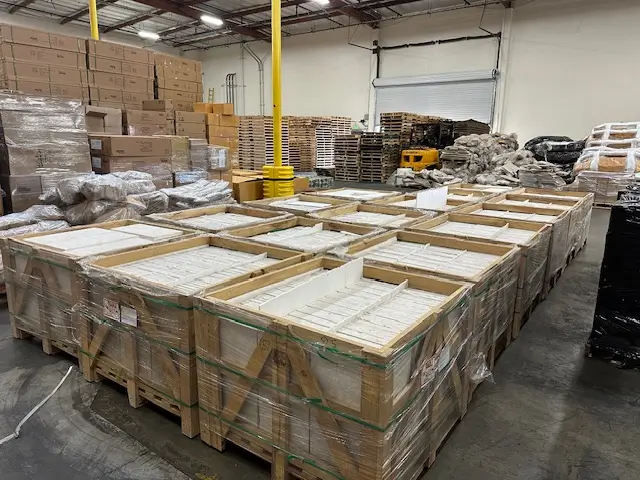
When you coordinate flagstone wholesale minimums Arizona deliveries, you need to address truck access constraints during the planning phase. Standard flatbed deliveries require 14 feet of vertical clearance, 45-50 feet of turning radius, and stable surface conditions capable of supporting 60,000-80,000 pound gross vehicle weight. Many residential project sites lack adequate access for full-size delivery vehicles, requiring you to arrange transloading to smaller trucks or alternative delivery methods that add $150-300 to total delivered cost.
Unloading equipment affects your delivery scheduling and site preparation requirements. Boom truck delivery (where the delivery vehicle has mounted crane capability) costs $75-150 more than standard flatbed but eliminates your need to provide site-based unloading equipment. You’ll need a forklift, skid steer with forks, or equivalent equipment if you schedule standard flatbed delivery. Most distributors allow 30-45 minutes of on-site time for unloading before charging detention fees of $75-125 per hour.
Delivery lead times from warehouse locations vary based on your project location and current inventory status. Phoenix metro deliveries typically schedule within 3-5 business days for in-stock material. When you’re working in Tucson, Flagstaff, or other secondary markets, you should add 2-4 days to account for transportation logistics. Custom stone selections not maintained in local warehouse inventory may require 3-4 weeks from quarry to job site.
Negotiating Beyond Standard Minimums
Your ability to negotiate below standard flagstone wholesale order requirements depends on several factors that demonstrate your value as a customer beyond single-transaction economics. Repeat purchase history carries significant weight — once you’ve completed 3-4 orders within a 12-month period, most distributors consider requests for reduced minimums on subsequent orders. You’re establishing predictable revenue that justifies customized handling.
Flexible delivery scheduling provides negotiating leverage. When you can accept delivery during off-peak periods (typically mid-week, avoiding Monday/Friday premium scheduling), you reduce distributor logistics complexity. This flexibility often translates to 5-8% pricing concessions or reduced minimum thresholds. You might access full-tier pricing at 75-80% of standard minimum quantities by accepting 7-10 day delivery windows rather than demanding specific dates.
- You can propose consolidated billing across multiple project sites to reach volume thresholds
- Your commitment to annual purchase volumes often unlocks custom tier structures
- Prepayment terms sometimes justify reduced minimums for creditworthy buyers
- Most distributors review special pricing requests quarterly rather than on every individual order
Comparing Wholesale Versus Retail Economics
The economic advantage of flagstone wholesale tier structure becomes apparent when you analyze total installed costs across different procurement methods. Retail flagstone pricing typically ranges from $8-15 per square foot depending on material quality and regional market conditions. You’ll pay premium prices for the convenience of purchasing exact quantities without minimum restrictions, plus the service level that retail operations provide (display areas, design consultation, small-quantity availability).
Wholesale pricing for flagstone wholesale bulk quantities starts at $4-7 per square foot at entry-tier minimums, dropping to $3-5 per square foot at mid-volume tiers. Your cost per square foot at high-volume tiers may reach $2.50-4.00 depending on material selection and competitive market dynamics. These figures represent FOB warehouse pricing — you need to add delivery costs of $150-400 depending on distance and access constraints.
The breakeven analysis depends on your project scale and overhead absorption. For a 500 square foot residential patio, retail purchasing often makes economic sense because the price premium ($2,000-2,500) doesn’t justify the complexity of establishing wholesale accounts, managing larger inventory, and coordinating commercial deliveries. When your project exceeds 1,500 square feet, wholesale economics become compelling — you’ll save $3,000-6,000 even after accounting for waste from purchasing full pallets and delivery coordination.
Material Quality Variations Within Wholesale Grades
Flagstone wholesale minimums Arizona encompass multiple quality grades that aren’t always explicitly labeled in pricing sheets. Premium grade flagstone features consistent thickness variation (±0.5 inches from stated average), minimal surface spalling or delamination, and color consistency within defined ranges. You’ll pay top-tier pricing for this material, but installation efficiency improves 20-30% because pieces require minimal field sorting and cutting waste decreases.
Standard grade material shows greater thickness variation (±0.75-1.0 inches), occasional surface imperfections, and broader color range within each pallet. Your installed cost may actually increase despite lower material pricing because installation labor increases and waste factors climb to 25-30%. Most commercial specifications accept standard grade for appropriate applications where rustic appearance aligns with design intent.
Economy grade flagstone (sometimes called builder grade or landscape grade) serves specific market segments where material cost drives decision-making. You’ll encounter thickness variations exceeding ±1.0 inch, significant color variation, and higher percentages of broken or damaged pieces. This material works for informal landscape applications, rustic pathways, or budget-constrained projects where appearance expectations differ from premium installations.
- You should inspect sample pallets before committing to large orders of unfamiliar material grades
- Your specification should define acceptable thickness variation ranges rather than assuming grade labels
- Color consistency requirements need explicit definition when aesthetic uniformity matters
- Most wholesale distributors allow material returns only for damaged shipments, not aesthetic preferences
Inventory Management for Multi-Phase Projects
When your project timeline extends across multiple months or involves phased construction, you face decisions about procurement timing and material storage. Ordering full quantities upfront to maximize flagstone wholesale volume pricing creates the best unit economics but requires you to manage on-site storage, security, and potential weather exposure. Flagstone tolerates outdoor storage better than many materials, but you should elevate pallets off grade to prevent mud staining and cover with breathable tarps if extended storage exceeds 60-90 days.
Split deliveries coordinated with construction phases reduce storage requirements but may prevent you from accessing highest-volume tier pricing. Most distributors allow you to lock pricing and reserve inventory with deposit (typically 25-35% of order value) while scheduling staggered deliveries aligned with construction progress. This approach works well for projects spanning 4-6 months where site storage limitations create genuine constraints.
Color consistency across multiple deliveries requires attention to quarry production runs and warehouse inventory rotation. Natural stone varies by seam within quarries and by production timing. When your project aesthetic demands tight color consistency, you should request material from single production lots and arrange storage rather than accepting multiple deliveries from different inventory cycles. This becomes critical for highly visible commercial installations where color variation would be aesthetically unacceptable.
Seasonal Demand Impacts on Availability
Arizona’s construction seasonality directly affects flagstone wholesale order requirements and pricing dynamics. Peak construction activity runs from October through April when temperatures make outdoor work manageable. You’ll find that warehouse inventory levels stay current during these months, but demand pressure sometimes extends lead times by 7-10 days. Distributors prioritize large-volume orders and established accounts when allocation decisions become necessary during peak periods.
Summer months (June-August) represent the slowest period for exterior hardscape construction in Phoenix and lower-elevation markets. Your negotiating position improves during this window — distributors often reduce minimums or offer promotional pricing to maintain production flow and warehouse turnover. You might access tier pricing at 60-70% of standard minimums when ordering during documented slow periods. This strategy works well for projects with flexible scheduling or when you’re willing to store material through summer for fall installation.
Holiday periods (Thanksgiving through New Year) create brief windows of reduced activity where similar opportunities emerge. You won’t find the sustained availability of summer months, but the 3-4 week period in late December offers procurement advantages for projects starting in January-February. Most distributors appreciate orders that fill production and delivery schedules during these traditionally slow weeks.
Citadel Stone Flagstone Wholesale Specifications Across Arizona Markets
When you evaluate Citadel Stone’s flagstone wholesale capabilities for Arizona applications, you’re reviewing material engineered for the state’s demanding climate conditions. At Citadel Stone, we provide technical guidance for hypothetical projects across Arizona’s diverse regional markets. This analysis outlines how you would approach specification and procurement decisions for six representative cities, demonstrating the factors that affect flagstone wholesale minimums Arizona in different contexts.
Phoenix Metro Applications
In Phoenix’s extreme heat environment, you would specify light-colored flagstone varieties that reflect 55-65% of solar radiation to maintain surface temperatures suitable for barefoot traffic. Your material selection should target 1.5-2 inch thickness for residential patio applications, requiring approximately 75-85 square feet coverage per ton. You’ll encounter urban heat island effects that add 8-12°F to ambient temperatures, making thermal performance your primary specification criterion. Flagstone wholesale bulk quantities for typical Phoenix residential projects (800-1,200 square feet) range from 12-18 tons including waste factors.
Tucson Desert Projects
Your Tucson specifications would address similar thermal concerns as Phoenix but with particular attention to monsoon moisture management. The city’s bimodal precipitation pattern (summer monsoons plus winter rains) requires you to verify surface texture provides adequate slip resistance when wet. You would recommend DCOF ratings of 0.50 or higher for exterior applications. Flagstone wholesale tier structure pricing becomes relevant for Tucson commercial projects that typically range from 2,000-4,000 square feet, requiring 25-50 tons of material depending on thickness specifications.
Scottsdale High-End Residential
Scottsdale’s luxury residential market would drive your selection toward premium-grade flagstone with tight thickness tolerances and consistent color ranges. You should specify material with ±0.5 inch thickness variation to minimize lippage and create the refined appearance this market demands. Your typical project scope (1,500-3,000 square feet for pool decks and entertainment areas) positions orders in mid-volume flagstone wholesale volume pricing tiers, requiring 18-35 tons. You would emphasize UV stability testing to ensure color consistency over 20+ year service life.
Flagstaff Mountain Climate
In Flagstaff’s high-elevation environment, you would prioritize freeze-thaw durability as the primary performance criterion. Your material selection should target porosity below 3% to prevent water absorption and subsequent freeze damage during the 120-150 annual freeze-thaw cycles this climate produces. You’ll recommend minimum 2-inch thickness for unsupported spans to ensure structural integrity under snow load. Most Flagstaff projects involve smaller footprints (400-800 square feet) due to climate constraints on outdoor living space utilization, placing orders at entry-level flagstone wholesale minimums Arizona thresholds of 5-10 tons.
Sedona Natural Integration
Your Sedona specifications would emphasize color selection that integrates with the region’s distinctive red rock landscape. You should recommend buff, tan, or rust-toned flagstone that complements rather than contrasts with natural surroundings. The moderate climate (compared to low-desert regions) allows you to consider darker stone colors that would be impractical in Phoenix, though summer surface temperatures still require evaluation for barefoot comfort. Typical residential projects (600-1,000 square feet) require 8-14 tons, often positioning orders at the threshold between entry and mid-volume pricing tiers where negotiation opportunities emerge.
Yuma Extreme Conditions
In Yuma’s exceptionally hot and dry climate (the city records more annual sunshine hours than any other major U.S. city), you would specify the lightest-colored flagstone available to minimize thermal absorption. Your material selection should prioritize reflectivity over aesthetic variety because surface temperatures on dark stone become genuinely dangerous for barefoot contact. You’ll recommend honed or lightly textured finishes that provide adequate slip resistance without creating heat-retaining surface roughness. Most Yuma applications involve residential scale projects (500-900 square feet) requiring 7-12 tons, though commercial pool deck installations occasionally reach volumes that access mid-tier flagstone wholesale order requirements pricing.
Payment Terms and Account Structures
Establishing wholesale purchasing accounts requires you to navigate credit application processes and payment term negotiations. Most distributors offer net-30 payment terms to established businesses with verified credit history, but your initial orders typically require payment in advance or COD terms. You’ll need to provide business license documentation, tax identification numbers, and often commercial credit references before accessing extended payment terms.
The economic value of net-30 terms becomes significant when you’re managing cash flow across multiple concurrent projects. Your ability to receive material, complete installation, and collect payment before remitting to suppliers improves project economics by 3-5% through time-value considerations alone. This advantage compounds when you’re operating at scale across multiple projects monthly. Most distributors review account payment history quarterly and may extend terms to net-45 or net-60 for accounts demonstrating consistent payment performance.
- You should maintain separate wholesale accounts at 2-3 distributors to ensure competitive pricing
- Your purchasing volume often qualifies for early-payment discounts of 1-2% for payment within 10 days
- Credit limits affect your ability to execute large orders without prepayment regardless of stated terms
- Most distributors require updated financial documentation annually to maintain credit terms
Quality Verification Upon Delivery
When your flagstone wholesale bulk quantities arrive on site, you need systematic inspection procedures to identify issues before delivery drivers leave. Start by verifying pallet count matches bill of lading documentation. Then inspect for visible damage — broken pieces, excessive chipping, or indication that pallets shifted during transport. You have limited time (typically while driver waits) to reject damaged shipments, so efficient inspection protocols become essential.
Color and quality verification requires you to examine multiple pieces from different areas of each pallet. Stone near pallet tops may appear different from material at pallet bottoms due to weathering or moisture exposure during storage. Your inspection should confirm that material matches approved samples and that color variation falls within acceptable ranges for your project aesthetic. Most distributors consider color variation claims invalid if raised more than 24-48 hours after delivery.
Thickness consistency assessment involves measuring 8-10 random pieces per pallet using a caliper or tape measure. You should verify that thickness variation falls within specified tolerances (typically ±0.5 inches for premium grade, ±0.75 inches for standard grade). Excessive thickness variation increases installation labor costs and may create lippage issues that compromise installation quality. Document any discrepancies with photographs before driver departure to preserve your claim rights.
Documentation Requirements for Commercial Projects
Commercial project specifications typically require material certifications and test documentation that residential applications don’t demand. You’ll need to provide slip resistance testing results (ASTM C1028 or DCOF AcuTest), compressive strength verification (ASTM C170), and sometimes absorption testing (ASTM C97) to satisfy project specifications and code compliance requirements. Most wholesale distributors maintain testing documentation for their primary product lines, but you should verify availability during the quotation phase rather than assuming documentation exists.
For LEED projects or other green building certifications, you need additional documentation regarding material sourcing, recycled content (typically not applicable for natural stone), and regional material qualifications. Flagstone quarried and processed within 500 miles of your project site may contribute to LEED regional materials credits. You should request quarry location documentation and transportation records that demonstrate compliance with certification requirements.
Buy America provisions for public works projects create additional documentation requirements. You must verify that flagstone originates from domestic quarries and that processing occurs within the United States. Many Arizona projects use material sourced from quarries in neighboring states (California, Utah, Colorado), which generally satisfies domestic sourcing requirements, but you need explicit documentation for public procurement compliance.
Next Steps for Procurement
Your professional specification process requires balancing performance requirements against budget constraints while ensuring material availability aligns with construction schedules. You should establish relationships with multiple wholesale distributors to maintain competitive pressure and ensure backup supply sources when primary suppliers face inventory constraints. Begin by requesting current flagstone wholesale tier structure details from 3-4 regional distributors, then compare not just pricing but also delivery capabilities, payment terms, and quality consistency based on sample evaluation. For comprehensive material selection guidance, review Complete inventory lists for flagstone construction material sourcing before finalizing your project specifications. Just-in-time delivery comes from Citadel Stone’s efficient flagstone distributors in Arizona scheduling.